| OCR Text |
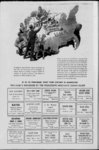
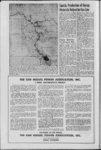
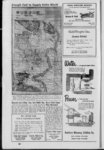
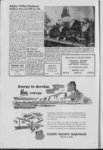
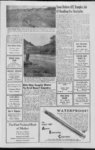
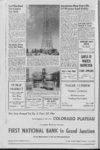
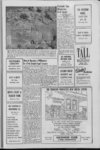
Show Search, Production of Energy Materials Helped by Gas Line the Pacific Northwest Pipeline Corps. natural gas line to the northwest is completed in late 1955, search for deposits of energy materials on the Colorado Plateau may be increased, according to a noted firm of economists When in Washington. This firm. Stead, Clark and Hitchcock, has expressed an opinion that deposits of potash, uran- ium and vanadium, phosphate, trona, glass sand, and other minerals and materials along the route of the pipeline could be developed (when) natural gas (is) available to provide heat in processing. . . According to Pacific Northwests board chairman, Ray C. Fish, natural gas will be available for industrial use along the entire route from the San Juan Basin in New Mexico to Oregon and Washington, end of the pipeline. Enroute from New Mexico to Washington and Oregon, the pipe- - Nucla Gateway To Uranium Belt NUCLA This small Western Colorado community, already a lumbering, farming and cattle town, is rapidly becoming a small city of miners, mill workers and unshaven uranium prospectors with geiger counter in hand and riches in their eyes. Within an 11 mile radius of Nucla is the number one producing uranium mill, the Vanadium Corp. of Americas Naturita mill southeast of Nucla. The rating is from a recent issue of Engineering and Mining Journal, which also n reports that U. S. Vanadiums mill, the same distance north, east, was close behind VCA in total uranium production for 1953. To support these mills are over 750 miles scattered throughout the Gateway, Uravan, Paradox, Bull Canyon and Slick Rock regions near Nucla. With the growth in population has come cultural and civic growth too. The town has seven active churches, and a Lions Club was formed with Naturita business men also on the membership rolls. CounThere is a Parent-Teachcil, VFW, American Legion, Moose and Masonic Lodges, and other social and civic organizations. Ur-ava- NATURAL GAS from the San Juan Basin in New Mexico, and from gas fields in Colorado, Utah and Wyoming, will be piped to the northwest Pacific areas of Oregon and Washington when the pipeline being installed by Pacific Northwest Pipeline Corp. is completed in late 1955. Also to be served are areas in Colorado, Utah, Wyoming, Idaho, and eventually natural gas will be transported to Denver on a proposed line to join the present system near Green River, Wyoming. In the map above, dark areas are the present fields from which supplies will be taken, lighter areas represent geologic basins from which gas can be drawn, and the stars represent recent gas well discoveries. Squared areas represent districts to be served 1y the pipeline which have no natural gas at present. er fine will tap route in Colorado and southwestern Wyoming, and will serve Dolores, Mancos, Cortez, and Dove Creek, Colo., with natural gas for the first time. Estimating its known reserves at 3.646 trillion cubic feet. Pacific Northwest will draw natural gas from near Cortez, Piceance Basin east of Douglas Arch, the Clay Basin, Baxter Basin, Salt Wells, Middle Mountain, in Wyoming, and from the Powder Wash, Sugar Wash and West Hiawatha areas of northern Colorado. Much of the gas also will come from the Ran-gel- y field, including Douglas Creek, Twin Buttes, Piceance Creek and White River districts. Utah communities of Moab and Monticello also will benefit from the pipeline by being served with natural gas. Gas will be drawn from the Uinta Basin west of Douglas Arch, where several natural gas wells are located. While serving these areas with natural gas, Pacific Northwest will also be contributing economically to the Colorado Plateau, according to C. R. Williams, president and director of the company. He estimates that 4,500,090 residents in Washington, Oregon, Idaho, Wyoming, Colorado and New Mexico will benefit from installation of tho pipeline. In dollars and cents, the pipeline will mean an outlay of $189 million for 1,466 miles of main line steel pipe and valves, equipment and building materials for main line, and and facilities. Also provided will be jobs for workers in areas with substantial unemployment at present. An estimated $59 million will be spent on wages and salaries for construction of the system alone. Taxes and royalties mount up, too. Pacific Northwest relates that $220 million in increased government revenues, including total royalties amounting to $53 million paid mostly to the federal government, $54 million for state, local and miscellaneous federal taxes, and $116 million federal income taxes. The report of Hie economics firm estimates that the sum total of direct benefits will be more than $1 billion over a twenty-yea- r period. THE SAN MIGUEL POWER ASSOCIATION, INC. A nURAL ELECTRIFICATION PROJECT In Southwestern Colorado, on an Immense tablea rugged, desland known as the Colorado Plateau olate area ot sharply rising mesas and deep cut canyons vast uranium ore mining operations are going on 24 hours a day in the endeavor to insure our countrys security. The immensity of the uranium country can best be visualized by knowing that its area of 65,000 square miles is far bigger, for instance, than Englands 58,000 square miles and even larger than New York States 49,000 square miles. Coloradans generally speak of this huge area as country. They mean, roughly, the sparsely populated region surrounding the only place in the U. S. where the corners of four states Colorado, Utah, Arizona and New Mexico meet at one point. Four Corners It is one of the last frontiers of America, but today is a beehive of mining activity in the search for the uranium ore which has become vitally important The Colorado Plateau is now the second largest source of uranium in the world, ranking only behind the Belgian Congo. The U. S. Vanadium Company, a division of Union Carbide and Carbon Corporation, which also operates the Oak Ridge, Tenn., Atomic Laboratory, has 10 uranium ore processing mills scattered over the general area. The hottest of all the spots on the Colorado Plateau today is centered In the area of small communities on the San Miguel River near the Utah line that are shown on your Colorado maps as Nucla, Naturita and Uravan. This is the center of a region that has many workable ore veins happily near processing mills that extract the few pounds of uranium yellow cake concentrate and vanadium red cake from each ton of waste rock. These are the very minerals with which the Navajos and Utes, a hundred and more years ago, decorated their bodies with brilliant red and yellow war paints. In this area, near where the San Miguel River d joins the Dolores to flow on into Utah, the town of Uravan has the countrys biggest uranium processing mill. It is here that the San Miguel Power Association, Inc., a rural electric put into operation in 1940, is performing one of the most unusual and important power supply roles of any of the 22 rural electric in Colorado. canyon-walle- po-o- ps This with headquarters at Nucla, about Grand Junction, is an outstanding example of how a rural electric cooperative has gone far beyond its original and continuing purpose of supplying electricity to farmers by being on the right spot at the right time to serve these uranium processing mills. The importance of these mills and the importance of keeping electric power flowing to them day and night cannot be overestiCo-o- p, 95 miles south of mated. The seven present directors of the San Miguel Power Association, Inc., include: Gordon Palmer, n of Norwood; Joe president, a Willoughby, vice president, a mining man of Nucla; G. Wilson, Nucla merGeorge chant; Glen Jacobs, Norwood rancher; Margaret Murphy, teacher in the Nucla Grade School; Don rancher-stockma- secretary-treasure- r, Watson, rancher of Nucla; and Otho Ayers, rancher-stockmof Bedrock, Colorado. The San Miguel Co-olike all rural electrics. Is a big taxpayer in its community, paying property tax of $8,402.34 and sales tax of $6,323.73 in 1953. Taxes in 1954 were even higher. Payroll during 1953 was $51,402.97 forCo-o- 16 full time and 13 part time employees. The p is $67,000 ahead on its required payments to the REA on its original loans. The Distribution and Transmission equipment is valued at $700,000 and general plant equipment at $50,000. an 20 COLORADO 26 $314,-043.1- has 1,750 connected Today, San Miguel Co-o- p consumers and 340 miles of line, of which 65 miles are transmission. Source of power Is at Telluride, and lines run through about 25 miles of canyon country with very few connected meters until it comes out on the high fiatland of San Miguel Basin. It then runs up the San Miguel River past Uravans mill, on out into the Paradox Valley, and into the La Sal, Utah farming and mining area, a total distance of 115 miles from end to end. If anyone has any thought that the new frontier that is the Colorado Plateau may be too remote to be practical, he should take a trip to prosperous San Miguel Basin and to Nucla, then swing up the canyon to Uravan, where U. S. Vanadium Co., has several thousand people feverishly seeking out new uranium veins, hauling in the ore, and extracting the precious mineral day and night. The Uravan plant clusters from the San Miguel river bottom up a canyon wall for 450 feet and its activities never stop. The mighty U. S. Vanadium Co. looks upon the Colorado Plateau, and particularly the areas, as having an unlimited future, which it assuredly will have as long as it can get sufficient electric power. ' costs for 1953 were $156,668.82 for kwh purchased and 14,582,928 used. Average Power cost per kilowatt hour was .01 and average selling 3. price was .0214. Total revenue for 1953 was This compares to $246,898.74 in 1952. Thus, the Nucla merchant, the Paradox Valley stockman and the Nucla grade school teacher are guiding the reins of a tremendously vital corporation, an enterprise that is more directly concerned with the security and welfare of our country than anyone would even suppose until he has gone into that country and seen it for himself. p, Thats why the thousands of of other Colorado rural electrie cooperatives have one more reason to be proud of the free enterprise that enabled them to join together to bring themselves electrie power in thfa state. SAN F1IGUEL THE SAN MIGUEL POWER ASSOCIATION, INC. A Rural Electrification Proiecti NUCLA, COLORADO ft gas fields along fts member-consume- rs |