| OCR Text |
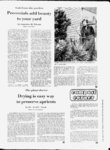
Show MiiiMtaMaite Gab from tin garden Perennials add beauty to your yard by Genevieve II. Folsom Tribune Garden Editor PERENNIALS add much to the garden and once planted they will come up year after year to furnish lovely blooms. Grandmothers garden featured perennials much more than our modem gardens do. Today we add lots of annuals for quick and beautiful color. That, together with the bulb flowers, adds up to a perfect flower border. Yuccas are interesting perennials that are native of our own deserts. They have sword-shapeleaves and tall stalks of flowers that resemble huge Use them as specimens or plant them in front of the shrubs. They like a sandy soil and it should be The Yuccas are drought-resistaand will do well in a spot in the garden that is dry. You can find a good assortment of perennials at your local nurserymans. They will be planted in containers ready to set into the garden. A VERY VERSATILE perennial is the hemeroeallis or daylily. These beautiful flowers bloom but for a day, hence the common name. However, the plant is covered each day with many lovely flowers. The modem daylily is a far cry from the orange variety that bloomed in grandmothers garden. Colors are lovely and include yellow, cream, orange, red, purple, pink, brown and many You can naturalize the daylilies under the trees or alongside a stream or pool, or set them in the flower border. They are a flower that requires little care. Plant them in the sun or in partial shade and they will take either a moist or dry location. Use the blooms for elegant flower designs. d back of the border. It has spikes of beautiful blooms in white, lilac, rose, yellow and purple. Interesting shadings and markings are on the blooms. These plants prefer a soil that is on the acid side, so add some peat moss to it. They will grow in full sun or in partial shade. One of the most interesting perennials is Doronicum or Leopardbane. It is a large daisylike bloom and flowers in the early spring with the tulips and daffodils. The color is a sunny yellow. Plants grow to three feet. Plant them in mass effect or in clumps of five or more plants in the flower border. They will do well in sun or shade and like a rich soil. well-draine- Foxglove or digitalis is another stately plant that will do well in the PERENNIAL PHLOX is the mainstay of the summer garden. They come into bloom in when bloom is lacking in the garden. The large clusters of flowers are fragrant and the plant grows tall. Plant them in mass effect for a good show. Give them plenty of moisture especially in hot weather. However, to avoid mildew, water by irrigation rather than sprinkling. If you must sprinkle, do so in early morning so the plant will have time to dry off before evening. Plant them in a good soil and it should be well drained. The balloon flower of platycodon is another unique perennial. It is named the balloon flower because the buds resemble small balloons. They are white or blue in color. Starting in June they will flower throughout the summer. Give them a soil on the sandy side and when planting set the crown of the plant one inch below soil furface. A very dainty and lovely perennial is with its bell-lik- e the white flowers and sweet scent. They like the shade and a good rich soil. THE TRUE GERANIUM is an excel- mid-summ- Esther Cook admires the sword yucca which is blooming in her attractive garden. lent perennial for the rock garden. It is a native of our mountains and the flowers are a rose purple in color. Foliage is very attractive. Give it a rather moist place in the garden perhaps by the pool and a semi-shad- y location. Liatris should be in the back of the flower border. It adds a unique touch because the flowers start from the top of the stalk and go downward as they bloom. Colors of the flower are white or purple. This plant will do well in almost any soil or location. However, if you will provide plenty of moisture they will thrive. The plant doctor Drying is easy way to preserve apricots by Dr. Arvil L. Stark Tribune Garden Consultant MOST APRICOT trees in this area are loaded with fruit again this year. What a shame to see so much of the fruit drop on the ground when it is so delicious fresh, canned, in jam, juice, syrup and dried. The commercial crop is usually harvested but there are thousands of home lot trees where much of the crop is wasted. Drying is an easy ar.d inexpensive way to preserve apricot fruit. Wash the ripe fruit and cut in half along the suture. Remove the pits and soak the halves for 10 minutes in a solution of two tablespoons of sodium bisulfite (at drug stores) in a gallon of water. Drain and place cup side up on trays in full sun and cover with nylon net to keep bees, flies and other insects out. Prop the net up at least an inch or two above the fruit and extend it under as well as over the trays. Move trays inside if it rains. Dry until fruit feels about like your ear. Fruit in full, hot sun will dry in four or five days. Its easy, fast, requires no sugar, no energy but the sun and yields a delicious product that is a good source of vitamin A, potassium and iron. Snackers, backpackers, hikers, bike riders, campers, kids and their parents will all enjoy this delicious, dehydrated drupe. Store it in plastic bread bags, bottles, cans, or whatever is handy, but be sure to keep a supply in the kitchen counter for a handy, healthful snacking. Drying trays may be made by nailing a couple of lath 18 inches long to two pieces of one by four, 15 inches long. Cut a piece of nylon net by 34 inches. Double it over and drop a lath in the bottom of the fold. Set the two one by fours on edge and nail the covered lath on the end of each. Wrap the doubled net around the other lath and pull tight before nailing in place on the other end of the boards. A piece of lath nailed over the boards will secure the net on four sides. Nylon netting is cheap, does not rust, can be washed and is inexpensive and can be used year after year for drying other fruits including apple and pear slices, peaches, prunes, cherries and sweet grape for raisins. Grandmother simply cut up the fruit and put it in the sun to dry. The sodium bisulfite treatment reduces browning and enhances flavor. Grapes, cherries, and prunes do not need it. Any kid half as smart as his parents can dry fruit. tall willowlike plant is the It is a rose color and the tall flower spikes are graceful. Plant near the pool, by the stream or any place A Lyt-hru- where it is moist. They like partial shade as well. FOR A SHADY spot in the garden you should plant ferns. They like a rather moist and shady location and will add graceful beauty to any garden. Add a few impatiens, tuberous rooted begonias of fibrous rooted begonias for color and you will have a beautiful garden picture. Give your ferns good drainage. They like a porous soil as r IJJJJ !XI The Q. I have a Norfolk Island Pine. Should I pinch out the make it grow bushy? My tree is also shedding its needles. What causes this? M.L.C., Murray, Utah. Salt top to Lake A. Do not pinch or cut out the top of the Norfolk Island Pine. You can perhaps get it to bush out more by giving it plenty of light. Turn it from time to time so it will grow even. You might provide it with more humidity by spraying the branches with lukewarm water. This will perhaps stop the needles from falling. Q. I am going to put in a new garden in soil which has never been cultivated. It is presently in lawn grass. I would like to know the best method to prepare the soil. Should I cut the grass sod off or just cultivate it into the soil? Should the soil be tested for sand, and clay content and then adjusted accordingly if possible? M A S., Salt Lake City A. It would probably be best to remove the sod and then you can dig up the soil. Incorporate into it some humus such as screened compost, peat moss or such. If your soil is on the clay side you might want to add a little sand. Yes, it would be well to test your soil and then build it up as to its needs. You can purchase a soil testing kit at your nurserymans or you can have it tested by the Utah State University extension services for a small fee. June 29, 1980 II 1 I |