| OCR Text |
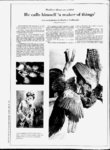
Show fr9t , " . y-- 2 E The Salt Lake Tribune. Sunday. June t"' w y yyi-- c ...-y..i- . 29, 1980 limueent Bhwd." by P. D. James; Scribners, 311 pp., 10.95. P.D. James is the author of seven detective novels featuring Inspector Adam DalgLiesh of Scotland Yard, innocent Blood," the June mam selection of the Club, is billed as her first mainstream novel. It is, however, less a journey into the mainstream than a detour into the tributary of the psychological thriller As such it is very successful tingling with . suspense, difficult to put down. The central character is Philippa Palfrey, the adopted daughter of a suave sociologist and his mousey wife. Philippa, who is beautiful, intelligent and emotionally repressed, doesnt much like her adopted parents and has long nurtured the fairytale fantasy that she is the ; of g handsome aristocrat. When she turns 18, she sets ' about tracing her real parents under a new British law opening adoption records. Fairytale Turned Nightmare Uie result of her search is quite unlike a fairytale more like turning over a rock to discover a slimy ! nastiness. Philippas father, she learns, died in prison I after being convicted of raping a girl. Philippas mother, Mary Ducton, is just about to be paroled after serving 10 years for murdering the girl .to stop her crying. Philippa is only temporarily daunted by this turn oj vents. She meets her mother in prison and, after her release, sets up housekeeping with her in London, ; Where they sightsee, work as waitresses and, for the most part, ignore the terrible past. Over a period of months, the two grow to love each other (though Philippa, who plans to be a writer, is also quite gaining experience for a book). But Philippa is not the only one who is interested in Mary Ducton. Norman Scase, the father of the child she murdered, is meticulously planning his revenge. Will he succeed in killing Mary? suspense is terrific, and there are chilling pie revelations to come. -- , - mild-manner- e. Janes' life. Parties For Toadies has a father, as But Anna-Luis- e young women tend to do a millionaire inventor. Dr. Fischer, whom Jones quickly comes to detest, not "for his money," but for his pride, his contempt of all the world, and his cruelty. Fischer is so indifferent to his daughter that he cant even be bothered to attend her wedding. His only interest seems to lie in giving parties for a group of calls his Toads people Anna-Luis- e who are she means his toadies grilling to suffer any humiliation at ruel Fischers hands, as long as he rewards them with the sumptuous prizes that invariably climax his entertainments. Jones attends one of these dinners, out of a mixed sense of duty and fascination, and is thoroughly disgusted. Final Party is killed in a But when Anna-Iiis- e ; 'skiing accident shortly after the wedding, Jones, for reasons he admits he doesn't in the least understand, decides to attend Fischers Final Party, at which he intends to put his Toads greed to the ultimate test, by offering each of them a chance to gamble his life for two million francs. I suppose I had better not reveal the exact outcome of Greene's clever climax, except to say that Fischer proves his point about human greed, but ends up committing suicide when Jones observes aloud Fischer must detest himself. It is all very neat and entertaining, as I said, until one begins asking certain questions. For example, why is the relationship between Jones and Anna- how-muc- P.D. James, author of seven detective novels, has written a psychological thriller. one-tim- ed gentile capital Corinne, the Gentile Capital of Utah, by Brigham D. Madsen; Utah State Historical Society, 331 pp., Illus- Wicked humor zips but what does it all mean? Doctor FIsc her of Geneva or The Bomb Party, by Graham Greene; Simon & Schuster, 150 pp. $9.95. ' On the surface at least, Graham Greene's new novell, Doctor Fischer tf Geneva or the Bomb Party, Is a wickedly inventive piece of black humor that will whip you through its pages in an hour or two and leave you sorry it had to end so quickly. Its plot is as simple and evocative as a fairytale. Alfred Jones, the typically downcast Greenean protagonist, supports himself in his late middle age by writing and translating letters for a Swiss chocolate manufacturer. One day, quite by accident. he meets and falls in love with Anna-Luisa pretty woman half his age who, inexplicably to him, returns his love and agrees to marry him. They embark on the happiest few weeks of multi-millio- The burg on the Bear trated, Luise so pertunctonly developed and so unbelievable? And why is her death imposed on the plot so gratuitously? The most obvious answer is that she is merely an instrument for bringing Jones together with her father, so that the two can go about their business together. Once she has served that purpose, she can be dispensed with. Troubling Questions what is Jones' business with Fischer? Greene labors mightily to pump Fischer up into God or the devil or some sort of mixture of the two. When Jones asks Anna-Luis- e what her father is really like, she replies. Hes hell. Later, when Jones insists over her objections on attending his first party at Fischers, she tells him: Oh, all right. Go and be damned. Elsewhere, they refer to him as Our Father in Heaven His will be done on earth as it is in Heaven." Finally, after Fischer (of mens souls?) is dead, Jones explains his loss in belief in an afterlife with Anna-Luis"Evil was as dead as a dog, and why should goodness have more immortality than evil? There was no longer any question to follow Anna-Luis- e if it was only into nothingness. But all of this theologizing seems glib and hollow. Nor is Fischers misanthropy ever plausibly explained. What impresses a reader more is the sense that in Jones and Greens mind. Fischer is the avenging father who forbids his sons relationships with women. And e: True Subplot have so far neglected to mention the subplot in which Fischer tnes to destroy a man named Steiner for having once befriended Fischer's wife. Needless to add, Steiner joins Jones at the climax of the Final Party in time to witness Fischers I $17.55. Corinne, known with little affection by its Mormon neighbors as "the burg on the Bear, was both a town and a vivid dream that rather quickly faded in the sunlight of reality. Dr. Brigham Madsen, professor of history at the University of Utah, has masterfully recreated that wild, psychedelic imagining that gave to the West for one instant one of its most interesting frontier towns. Named after a daughter of a railroad agent, Gen. J. A. Williamson, Corinne was bom at the Bear River crossing of the Union Pacific railroad, on its way to Promontory summit in the spring of 1869. In the caustic pen of J. H. Beadle, she quickly found her voice to scream or to cajole in the columns of the local Reporter, and when Beadle was gone, in the bombastic tones of Dennis J. Toohy, and after him, the even more cutting rhetoric of S. S. Johnson of the Corinne Daily Mail. Gentile Dream Corinne was the dream of a gentile town in the midst of Mormondom the dream of a metropolis with its lifelines extending northwest to the Columbia River, north to the Montana mines, northeast even to the Dakota gold fields, and south by lake steamer to the Tintic mines of Utah. It was a conglomerate of schemes political, social and economic united only in its focused upon the practice of polygamy. Dr. Madsen, a master storyteller, has skillfully woven these dreams In the colorful phraseology of the newspaper editors of the day, both Mormon and However, his is the story told mainly from the point of view of the Corinne thi ans . Queea of the West' Corinne is a melange of the dreams and the realities of g and braggadocio, of cooperatives and free market, of lake steamers and the "Uncertain Railroad," of a steam wagon and mule trains, of mud and whiskey and long winters, of hotels and a world faltering religious missions so obviously masculine that it could not even comprehend the womens suffer-ag- e it spawned. Queen City of the West"! It was a ballot-stuffin- dream so big that as the Idaho Statesman observed, one would think from the columns of the Reporter New York, Chicago and San Francisco were situated too far from Corinne ever to amount to much." Far From Dreams Yet, far from the dreams was a towr described by one traveler, Baron de Hubner, in this manner; The streets of Corinne are full of white men armed to the teeth, miserable-looking Indians dressed in ragged shirts and trousers furnished by the Central Government, and yellow Chinese with a business-lik- e air and hard intelligent faces. No town in the Far West gave me so good an idea as this little place of what is meant by border-life- , i.e., the struggle between civilization and savage men and things." The dream lasted but 10 years at most. Corinne was a small town, perhaps not more than a thousand residents at its height in 1873. Yet, it could boast as residents many names known through the West; J. W. McNutt. S. L. Tibbals, Hiram House. J. W. Guthrie. John Kupfer, J. W. Graham, Samuel Auerbach, Fred J. Kiesel, the Walker and the Hurlbut brothers. And there were famous visitors such as Jay Cooke and Horace Greeley. Minor Irritation I Corinne, would think, is a must not only for the history buff, but for the formal scholar as well. One minor irritation is that the chapter footnotes are identified by chapter numbers, but the chapter headings are not so numbered, a difficulty overcome by a separate page marker. On the other hand, the reader ought to be forewarned that he must mentally return and retrace the decade once again as he begins a new chapter. Madsen has chosen to structure his storytelling to different aspects of the Corinne dream and the Mormon response. Hie problem is that one easily forgets that it all happened in the brief span of a few years. Corinne still exists, but not the Corinne of the story. In the space of 10 years, the nasty child moved on, but if you stand beside the Bear River today at the steamer landing, you can still hear her nasty tantrums if you have listened to the story of her bards, so skillfully orchestrated by Dr. Madsen. The Rt. Rev. Msgr. Jerome Stoffel. BTlST Mu.-eu- m to Vorfc lifting bt'ow June For 3. 29. 3(H) PM of Fine Arts, FREE CONCERT RDT. danced by Workshop Student si 8 30 P M , Kingsbun Hall $4 OO & 5 further information, contact -- i Sino-Japane- half-doze- n Looking for '? a'Gold Why Mine-i- n' not settle for Sell old the WANT ADS! cau. 2000 SeS. yjux, jetihMgjfojjA NOtVT.wdka Brighten up your day with a rtf Bargain! Shop I the Cbsaifod Mel Hold R, Inspector! cell your bike now. while youre on top. ..with a CLASSIFIED AD, jULatapaht! of course (Copyright) 'Pageaijt of the Catt 'Arts SJ7JZV' Tommy O'Toole!.. Jupc 0 So you say you haue an old VJorti Warl rocket?... And it has through July 11, i960 Ak about Our Discount " Hon iw o b ttvnnl 7 mhu t rt I Anjcrlcai? Fork High School Theater a ticking dock inside?' Great Balls of Fire, Tommy, GET RID OF IT FAST! SELL if!! Sell it vith a Want Ad! ... But not to anyone taking our newspaper Instead, try placing an ad in tne MO North tf00 Eaat Call 7M-S- MI or M&-0- M1 Curtain: 8:00 p.n?. (SLC toll-fr- eel Antarctica times Ai? Exciting Tradition! But f t Can 2ST - ,. ft a tcco 7 Mary. Mary ... the contrary on jt m f. ! SrJI what your ganden grow3.. .with a CLASSIFIED AD! Mary, in Artists-in-Hesidenc- e Ml 6702 three-motore- ! RDT at the University of Utah ic life-wor- Ttmas Sarvica r$ baiad on eomautar-rtCMttMi from 1,400 boofcltorot throughout tto Unitod Stotot Tha But whatever is really going on, the wicked comedy of the novel's surface doesn't seem to mesh with its underlying meaning. This explains, I think, why Doctor Fischer of Geneva zips along so entertainingly, but leaves one feeling undernourished when it's over. New Christopher Lehmaan-Haup- t, York Times. NEW DANCESSTUDENT C roated by non-log- n DANCE June L ocean-spannin- sei.tjkrs Audience Participatory Event of fact-findin- the-Sky- 1980 I ir father. THE REPERTORY DANCE THEATRES SUMMER DANCE FESTIVAL i one-tim- W All of which seems to suggest that Greenes novel is less a moral or religious parable, and more the enactment of an Oedipal drama in which the son fulfills his fantasy of destroying the Utah -3 Ice Crash: Disaster in the Arctic, planes; the loss of Roald Amundsen by Alexander McKee; St. Mar- aboard a crashed French seaplane. tins Prewt, 318 pp., $12.95. Lest you've forgotten, Amundsen, famous Arctic and Antarctic most An American Saga: Juan Trippe of the period, had had a and His Pam Am Empire, by Robert explorer mammoth "falling out with Nobile, $15.95. Daly; Random House, 449pp., but nevertheless tried a foolhardy When Umberto Nobile and Juan rescue attempt. Lest you ve forgotten too. Nobile fell rapidly from his rank of Trippe set out each in his own way to chart new paths in the sky, the world hero to that of Italian scapegoat aviator was a real pioneer, as free to by permitting himself to be flown from come and go as a clipper ship skipper, a drifting ice floe before others of the as caught up in a great adventure as a crew were saved. Throughout his remaining life, Nobile maintained Magellan or a Drake. is nghtly so when the evidence weighed in aloft went first Juan Young Trippe that he consented to leave the floe a Curtis flying boat in 1917. By the time orders of the he consented to let loose the reins of .his first only on the direct insisted the who aviators n dollar Pan American Norwegian must command the rest Nobile injured empire, tra jet travel was of the lengthy, ticklish attempts to commonplace, the huge 747 was about men and the to take its place on global routes, and rescue both the Red Tent who were hiking out. trio helpless Am Trippes mammoth Pan building Grand Saga dwarfed Grand Central Station, the e transportation hub of Nobile's adventure, although it added little to mankinds knowledge of Arctic Survived Disaster skies and seas, remains a grand saga of men in peril, a saga of heroic dimene As for Italys hero whose sion. flight in the lighter-than-aNorge took Robert Daleys thick, thoroughly him across the North Pole on May 12, volume on Pan Am s documented Red 1926, Col. Nobile survived the is Tent" disaster, outlived such enemies hero its although as Roald Amundsen and Italo Balbo, equally engaging, a man of mystery as well as and lasted (albeit in a wheelchair) until remains 449 pages of probing throughout genius the ripe age of 93. By that time the and gives us chapDaley Italian aviation pioneer could look aloft on Trippes beginnings, verse and ter g at passenger-carryinjetliners almost his airline had its inception on as large as his Norge and Italia. tells how with a few businessmen-commuter- s Island Long Whereas little more than a bakers as customers. Daley dozen overflew the North Pole aboard the chronicles growth of Colonial Airhis Norge enroute from Spitsbergen to followed by Trippes intuitive line, Pt. Barrow, Alaska. Nobile lived to see Latin America offered him a airliners routinely crisscrossing the belief followed by his unshake-abl- e main chance, polar skies with hundreds of passengers g that insistence aboard enjoying champagne, steaks flying boats could commercially conand fresh fruits. quer both the Pacific and the Atlantic. He succeeds completely in showing the Compare Lives with logic behind the seeming Since the McKee and Daley volumes which Trippe built history's first global airline. have been issued almost simultaneously, the reader concerned with air Tough Patriot travel and aviation progress cannot Theres much more. Juan Trippe, the of the help but compare the American aviatorbusiness titan, and hated businessman who busted rithe Italian airship designerexplorer. vals who sought competing routes, Viewed in a practical light, Juan Trippe fellow pioneers who fought his wa's a far more important figure as monopolistic plans in a dozen nations, regards his effect on the world as we this Trippe was, to put it mildly, an know it. Nobile hitched his wagon to opinionated, ruthless SOB. lighter than-ai- r ships, and the world Or so he seems, until Daley explains the has long since forgotten that his manner and means by which Army Italian-buil- t semi-ngid- s served in generals. State Department ambasJapan and Russia as passenger-carryin- g sadors, and even presidents virtually and military craft. To most of forced Pan Am into its much-argue- d role as our most favored instrument the aviation world, the semi-rigid hydrogen filled, craft airline. Reading of Pan Ams perils of died on the terrible day that his big Pauline adventures during the Italia crashed, as Nobile returned from warfare, Pan Ams construchis second flight across the Pole. tion of bases at Wake and Midway in the Pacific, and its necklace" of bases strung across the South Atlantic just Chilling Story prior to our entry into World War II leads one to the reasoned belief that Nobile, with a companions, survived in the Red Tent of Juan Trippe was patriot first, businesstelevision film fame, while an internaman later. Nor were the two roles tional rescue team of Norwegian and mutually exclusive. Swedish aviators, Italian seamen and Next time you touch down at New fliers, plus the huge English-buil- t Soviet icebreaker Krassin spent Yorks LaGuardia Airport, or at San months seeking the downed explorers. Francisco, or at Honolulu, look out towards Bowery Bay, the Golden Gate, McKee tells the chilling story extremeor Pearl Harbor. Picture in your mind's ly well- - half the crew never seen again after from the crash eye those mammoth flying boats, the Pan Am Clippers. Without them, withsite in the battered gasbag; frantic radio signals never heard by the base out the men who captained them ship but picked up at last by a Russian (Howard Gray. Ed Musick and many, amateur; the foolhardy effort by many others) World War II would have Malmgren and two Italian crewmen to been considerably longer in the wintrek over the Arctic icepack to Spitsning. And that neglected fact is at the Jack bergen ; the perilous rescue flights by heart of the Juan Trippe saga the Norwegians in outdated, fragile Goodman. 1928, . Masterly Plotting The plotting of Innocent Blood is masterly. The Characterization, however, leaves much to be desired. Neither Philippa, the world's most poised t'rlr Tycoon and Explorer ... Utah's short-l- it T' Two Aviation Pioneers: mother is nor her Shakespeare-readm- g believable Their dialogue runs to formal exchanges like the following; Philippa. "Middlemareh is a marvelous novel. Mary. "Yes, but it would be more marvelous if the sexual conventions had let George Eliot be more I know the Victorians couldnt be explicit, honest but surely they neednt have been quite so timid. Philippa- "Timidity is about the last adjective I'd associate with George Eliot. But if youre feeling critical about Victorian writing, why not indulge yourself with Victorian art? It might be fun to go to the exhibition of great Victorian paintings at the Royal Academy . Guilt and Innocence The Norman, who retires from the civil service and sells his house in preparation for committing murder, is more convincing, but he is forced to bear the burden of the authors theories on the paradoxical relationships between guilt and innocence. We are, in general, a little too aware of the intellectual structure of the novel, of the carefully worked out variations on the themes of parent-chil- d relationships, the search for identity, environment vs. heredity. In short, this is a superior thriller, but not quite the Nina King, major novel we were promised. Newsday. . ","r'' ' Juan Trippe, Umberto Nobile More than a superior thriller? . ,,I i r, 237-203- 3 marly call for ths fad: yrming But Note' wart Ads Coun t be used far pjdrng Vtarj-wjnn- a Atury !! |