| OCR Text |
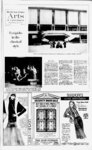
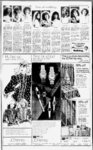
Show 4 E Tlc Suit Lake Tribune, Sunday, August 8, 1982 Guests at conference Scandinavian journey awaits Utahs CDT and entourage Hiese arent all upper class kids. We wanted thubO . going to be the best dancers and the most deserving. TV who didnt have the money have written letters asking for donations, have done babysitting, gardening, sewing and baking. Some families have given up their vacations, says Mrs. Lee. She adds that those children not chosen for the trip have been most generous. Theyve helped with fundraisers and have been anxious to help their friends. Of course, some were hurt, but it didnt come out in a negative way. There has been no backbiting. Hard Work the conference has meant dedica-tio- n for Preparation and hard work from everyone involved. There have been hours of rehearsals of a repertory which ; will include Together by Kay Clark, Mrs. Lee, Tina Misaka and Linda C. Smith; Ephemera by Thom , -Scalise; Spring in My Ear by Mrs. Lee and Christine Vitti; Rainbow Goblins by Jacque Lynn ' , Bell, William Conrow, Darcy Dixon, Stephen Ko-plowitz, Mrs. Lee, Ms. Misaka, Anne Sweat and Ms. -Vitti; Pierrot by Ms. Bell and Nightingale by Mrs. Lee. And then of course, planning the logistics for such an undertaking has been no easy task. The dancers will be housed in a large dormitory near the ballet school where the conference is being staged. All have ! I been paired into big and little sisters, with the , " older taking responsibility for the younger. Shell make sure the younger one gets to bed, brushes her teeth, gets to performance on time, has , ; hair and make-u- p done and is quiet backstage, say ' Mrs. Lee. For independent activities everyone has four children and one been divided into families adult. I know this may not be the most delighful way to do it, but its the best way. Ive got to know theyre always OK. When it comes to packing, Mrs. Lee says were t trying not to take too much. But that still includes three costume changes for each dancer, leotards for two both rehearsals and pairs of good walking shoes, one nice outfit to wear each, and an assortment of props. The young dancers, according to their director, are excited. Children dont ever seem to get nervous about performing like adults do. Their Adrenalin is high and they just go for it. Their excitement heightens the performance. By Helen Forsberg Tribune Staff Writer Come Thursday morning 44 members of Children's Dance Theatre (CDT), ranging in age from six to 18, will board a jet at the Salt Lake International Airport. Their destination: Stockholm, Sweden. The troupe will be accompanied on their journey by artistic director Mary Ann Lee, eight additional faculty members and 22 parents, who will see the young dancers perform at the Dance and the Child in the International Conference, scheduled Aug. Scandinavian country. According to Mrs. Lee, the group has a full s, schedule ahead of it with rehearsals, performances and sightseeing packed into the five-da- y residency. A performance at the U.S. Embassy is also planned, and after leaving Stockholm the group will travel to Copenhagen for concerts there. A boat trip through the fjord country of Norway will conclude the k trip. In 1978 CDT, then under the direction of its founder, the late Virginia Tanner, was the only childrens dance company invited to participate at the first Dance and the Child International Conference in Canada. From that conference came an Invitation to perform again in 1982, along with seven other dance companies from around the world. Mature Kids The 44 dancers who will represent the troupe were not selected by formal audition, according to Mrs. Lee. Last spring the faculty began watching the students to see how they were progressing technically, how they were performing and how they were interacting as human beings. For a trip like this it takes mature kids who can share and follow directions. Later, after the number had been narrowed to about 60, an audition was held to select the dancers as to size, age and quality of movement. This isnt like a ballet company where everyone is the same size, says Mrs. Lee. We need a wide representation. Through performances and an antique and rummage sale, CDT raised enough money to cover one-ha- lf of each childs expenses. Hie responsibilty for covering the other half was left up to the parents and children. No one selected is missing the opporunity because of financial need. 16-2- 0 lecture-demonstration- -- two-wee- Tribune Staff Photos by Paul Fraughton and Holly Turner dance in Thom Scalises Ephemera, which the From left, members of CDT Mary Beth Jarvis, Jennifer G william group will perform at Dance and Child International Conference. er New directions for two dance fests By Anna Kisselgoff New York Times Writer NEW YORK In 1978, the American Dance Festival moved to the Duke University campus in Durham, N.C., from Connecticut College in New London. In 1980, the Jacobs Pillow Dance Festival in Becket, Mass., acquired a new head, Liz Thompson, its first director with no prior connection to the Pillow. For both festivals, these changes signaled the end of an era. New directions were obviously in the offing. The switch of long-tim- e locale in one case and of leadership in another coincided with what could have been the equivalent of a mid-lif- e crisis. Both festivals had their roots in the 1930s and both made these moves as they approached the mark. It might be useful, then, to see how they have weathered this transition. It is even more useful to consider why they exist at all. The American Dance Festival and Jacobs Pillow are our oldest dance festivals. Perhaps one should just say our only two proven dance festivals. It is true there are now other institutions that dance provide a mix of summer-schostudies and dance performances. These are and, with es&ntially schools and camps the. possible exception of the summer school in Colorado, they are of more recent vintage. Serious Activities Dance festivals, it might be stressed, are very different from music festivals. While the latter come in for some grouching from critical quarters as a vacation-lan- d philistine! activity, the American Dance Festival anid Jacobs Pillow should be considered as crneial contributors to the growth of American dance. These are festivals to be taken seriously and those who have taken them most seriously have been the expodancers and nents of the art itself choreographers. a Two words explain all: exposure and creativity. The chief difference between the 'American Dance Festival and music fe(tivals is, in fact, the impetus given to the creation of new dance works. This has been dohe chiefly through the kinds of commissions and residencies that festivals in other fields do not sponsor on a consistent long-terbasis. As for exposure, the adventurous programming that has studded the Pillows history has allowed Americans to be introduced to new companies from here and abroad. The most famous case included the Royal Danish Ballet, which made its 1956 United States debut directly as a result of Ted Shawns presentation of a group of Danish soloists in 1953 at the Pillow. today the two festivals are closer than before. Mrs. Thompson has started to commission new works on a small scale aifd speaks about developing new choreographers through the Pillow. The American D$nce Festival has been doing this for Mr Salt akf grtbuiu decades and under Charles Reinhart, who became director in 1969, it has made this a major part of its activity. On the other hand, a rapprochement with the Pillows n its performance aspect series was effected under Reinhart when the American Dance Festival opened up its performances beyond modern dance, and initiated the variety of programming (including ballet and ethnic dance) that has been the hallmark of the Pillow. Two Conceptions The fact that these festivals now occasionally overlap is not too surprising. What they share is the celebration of the art form. This is the festive part of the festival. The celebration, however, is rooted in two distinct conceptions. And each festival today remains marked by its initial impetus. The American Dance Festival dates back to 1934, when Martha Hill and Mary Josephine Shelly founded what came known as the Bennington School of Dance and Bennington Dance Festival at Bennington College in Vermont. After a wartime hiatus, Miss Hill, with Ruth Bloomer, took up the same idea in 1948 at Connecticut College and that festival is now the American Dance Festival in Durham. The Jacobs Pillow Dance Festival dates from his 1933, when Mr. Shawn presented company of Men Dancers on the farm site he owned in Becket. But the dance school and the presentation of other companies date from the 1940s. Bennington was at once more hermetic and influential. Without the works created there by Martha Graham, Doris Humphrey, Charles Weidman and Hanya Holm, it is unlikely that American dance would be what it is today. It was, then, a festival that catered to the dance profession particularly to its creative and training needs. Looked Outward At the Pillow, Shawn needed a performance framework for his own company and later an outlet for his ideas on the universality of the dance. The Pillow looked outward. It offered courses in idioms other than modern dance and its festival performances were meant to draw the public that vacationed in the Berk-shire-s. best-know- 50-ye- ol Perry-Mdnsfie- ld m rj: Dance It is this heritage Mrs. Thompson says she has had to wear as a coat. Shawn, it should not be forgotten, was a great showman and he saw the Pillow, Mrs. as an entertainment Thompson adds, center and he tried to reach as many people as possible. Having proved herself these first three years as a highly capable administrator with shrewd artistic choices, she is now ready to seek new directions. A key issue is whether the Pillow should new dance, offer more avant-gard- e about which the general public is less than enthusiastic. Much of what Shawn did in his own time was new and Mrs. Thompson suggests that as new dance turns into traditional dance very soon, the festival today cannot afford to boycott one specific esthetic. Three Workshops Experimental dance is an area in which she personally feels at home, but that does not mean she would see others slighted. In 1983, Mrs. Thompson would like to start one for ballet, one to three workshops create a modern dance touring troupe in Massachusetts and one as a jazz or music workshop. The physical plant also has to be reconsidered. The foundations of one studio and the Ted Shawn Theater are not what they once were. There are plans to build new studios. Already this year a bright yellow and white cafe tent gave the Pillow a spruced-u- p look. Unlike the Pillows wooded charm, which Mrs. Thompson asserts will be preserved, the American Dance Festivals setting has always been a college campus. Drawing an audience was not historically the prime concern. The Festivals commitment was to serve the needs of the artists. Developing Artists In these days of decreased government funding, however, no one lives in cloud ruckoo-lan1983 is going to make 1982 look like the good old days, Reinhart says of funding prospects. Nonetheless, he remains firm about his festivals commitment to developing young artists through commissions and residencies. Reinhart invited four Japanese troupes to the festival this summer and plans to take a nucleus of teachers from the festival to Japan in 1983. Festival will In 1983, an salute one of our roots Reinhart says. Already involved in producing television dance programs, the festival has also expanded its service programs. A new one a brief refresher is Dance Update, course for dance teachers. Both festivals stress their sense of community and it is this sense that makes them important today. Amid the pressures of the dance scene, an American Dance Festival commission and residency provide a young choreographer time and haven. For a star like Cynthia Gregory, the Pillow is a place to experiment in a different way: to dance in two Ruth St. Denis revivals this summer, outside her usual repertory. In many ways, the dance festival is still the atom at the core of the dance explosion. fund-raisin- . , s, g, d, CDT in member Dayna Rainbow Treharne dances Goblins, included in the I companys repertory for its upcoming performances in Scandinavian countries. Afro-Americ- PACIFIC DECK CHAIR Dance calendar Collaboration Celebration, Dance Company and Move It! 82 workshop participants in concert, Friday, 8 p.m. Dance Bnflding Theatre, University of Utah campus. General admission, $3, students 82. ."Marvels of the OrientMideastenifair presented Dance Company, Saturday, 1 by Aziz and Nata-Nar- a to-1p.m.. Liberty Park, 9th South and 7th East. Featuring belly dancers, musicians, vendors, snake charmers, sword swallowers, fortune tellers and Ririe-Woodbu- 0 merchants. Want Ads are for buying a PIANO! A. Antique Satin Custom Draperies 114.00 Casement or Thermal (Insulated) Custom Draperies 1159 'S" B. INTRODUCING JUST KIDDIN' Prices include fabric, labor, regular rod, hardware and installation. Prices are based on material to cover 72 patio doors. If you cover a window that is larger or smaller the price will vary slightly, according to your exact specifications Entertainers Under the Direction of D. KIM CLAYTON Producer & Director of A NEW DAY" "'For Kids ages Professional Instruction In: 4-- 6, 7-- 10-1- 13-1- 5 STYLISTIC VOCAL TRAINING VOCAL BLEND CHOREOGRAPHY ENTERTAINMENT PRODUCTION ALL FACETS OF VARIETY SHOW ENTERTAINMENT in SLC. THE CLASSIC DECK CHAIR Sometimes, the beat ideas are ok) ideas. From the steamship decks and the Italan beaches, comes the perfect answer tor your piece of the Sait Lake coast The 3 position oiled Aiderwood and Canvas chair tolds to just 1 Vt". Covers eesy removable tor cleaning. Opportunities: ANNUAL MAJOR PRODUCTION PERFORMANCES FOR FESTIVALS, CHURCH FUNCTIONS, ETC RECORDING OPPORTUNITIES (ADVERTISEMENTS, RECORDSI 967-08- . Compared with material of comparable quality from stock. 430 B. East So. Temple Salt Lake City, Utah 84111 5 1 Moa-S- at 10-- 6 z 1. SLC's lowest prices. 2. SLC's largest inventory of fabrics plus Levolor & Flexalum 1" Vertical blinds. Woven Woods, threads, trims, roller shades, shutters, wallpaper to match fabrics and more. 3. Instruction. 4. Free Classes with t5 00 purchase (Call for a schedule of classes) mini-blind- B. Free Decorator Service We would like to show you more, in the convenience of your own home One of our professionally qualified consultants will bring hundreds of samples and suggestions for creative applications to your home, by appointment. Call 48S-710- 1 EayWay MALLS, vEOR APPOINTMENT AND ADDITIONAL 'INFORMATION CALJ, Because Bayway Drapery Center buys directly from the mills, in volume, we will beat any advertised drapery prices Look to Bayway as your com pi eta window treatment cantor. DRAPERY CENTER 1356 Best 3300 South Sett Lake City, Utah 84106 Telephone (801) 486-710-1 4 wA 1 "im4 1 ; |