| OCR Text |
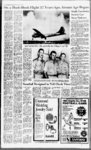
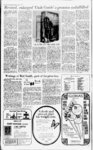
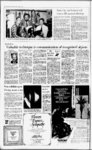
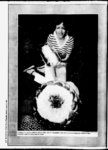
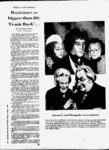
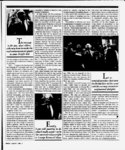
Show Horowitz: The complete individualist By Harold C. Sehonberg New York Times Writer NEW YORK Our age distrusts flamboyant virtuosity or highly emoof any kind. Yet no tive artist can have too much technique, and that goes for writers, painters and mathematicians as well as musicians. Mortiz Rosenthal was once asked if he was not ashamed of showing off his technique. Is Rockefeller ashamed of his millions? he answered. For what good are the noblest ideas if the fingers or vocal cords cannot put them into effect? It is a truism that technique must be placed at the feet of the goddess of the art, but without the technique to begin with, the artist cannot go very far. Yet in our present climate it seems to be regarded as next to original sin if a musician lets loose and shows that he is not ashamed of demonstrating those superior fingers, vocal cords or baton technique. Typical Program These thoughts are prompted by the recent Vladimir Horowitz telecast from London. Those millions who tuned in caught the pianist in a typical program, typically played. all rolled Scarlatti, Liszt, Chopin from his fingers in the style so peculiarly his own, so different from the style of every living pianist. The concert made one realize again, as if any reinforcement were necessary, that Horowitz is unique. He is not only the last of his kind. In the history of piano playing he could very well be the only one of his kind, and when he goes, there will be nobody to succeed him. That may sound like a sweeping statement, but lets take a look at the facts and ask a few questions. There will be nobody to succeed Vladimir Horowitz because where most pianists today play much the same repertory much the same way, Horowitz is a complete individualist whose style is a throwbac k to the Anton Rubinstein tradition. Nobody, because no other living pianists tone and sonority remotely resembles that of the volcanic Horowitz. Nobody, because today's training is alien to the kind of freedom and divine right of the performer that Horowit2 represents. Nobody, because the famous Horowitz technique, even with a few slips these days, is in a class by itself. And, above all, nobody, because no pianist these days brings the sheer excitement to a recital that Horowitz does. As a result he is in a position to charge fabulous fees the highest in musical history and play relatively few concerts a year. Younger Pianists Some of the younger pianists today have techniques on a Horowitz order. Think of Alexis Weissenberg, Horacio Gutierrez, Maurizio Pollini, Vladimir Ashkenazy, Martha Argerich, to name but five. They are brilliant pianists who have made fine careers. But none of them brings to their playing the quality of freedom, excitement, daring, abandon and color of Horowitz at his best. Nor, with all of their gifts, do they have the ultimate technique of Horowitz in his great days. There are those who regard Horowitz primarily as a technician, a circus performer interested only in bending music to make an audience gasp. That is not true, but Horowitz in recent years has suffered from a bad press from those who think virtuosity is a dirty word. It is, of course, what one does with the virtuosity that counts, and through the years Horowitz for the most part has managed to use his virtuosity for legitimate muscal purposes, reserving his stunts, such as The Stars and Stripes Forever and the Carmen Fantasy for encores (and he does not even play those any more). His playing has its share of neuroticism, he does not pieces in the kind manner that severe school critics demands (to them, pianists like Alfred Brendel are the ideal), and he can pull phrases into peculiar shapes. But this is an old story, one that has constantly been with us. In the last century, for instance, those who upheld Clara Schumann as the ideal could not stand the playing of Franz Liszt. And it worked the opposite way, too. If you want to hear how Schumann should not be played, Liszt once said, listen to Clara. The subjectivists and objectiv-istyin and yang, are always with us. organize of of clear-cu- large-scal- e t s, Old School Horowitz today is a much more man- nered artist than he was before the war. His style has changed through the years. Today he is very conscious of being Vladimir Horowitz, the sole survivor of an old school. But when he broke on the scene in the 1920s he was only a major talent among a group of immortals that included such giants as Sergei Rachmaninoff, Josef Lhevinne, Josef Hofmann, Ignaz Friedman, Moritz Rosenthal, Leopold Godowsky and Benno Moiseiwitsch. All of those were Slavic pianists, and Horowitz was of that tradition. He was instantly pegged as the brilliant newcomer he a pianist with steel fingers, an was immense sonority, formidable rhythmic drive and a straightforward musical approach. A great pianist had appeared, and Hofmann once told this writer that of all the young pianists Vladimir Horowitz was the one who was going to carry on his and Rachmaninoffs tradition. In a few years Horowitz became a superstar and has remained one ever since. Almost always, superstars are superstars because they give the public something that no other performer can. ct Bass Rick Pickett will sing the title role and soprano Marion Miller will sing the role of Judith, his wife. William Maiben and Clay Christiansen will provide accompaniment on piano and organ, respectively. Gene Pack will narrate the prologue. quantum doses, did nothing but come out and play, never smiling, always reserved. But something colossal reached out and smothered an audience. Horowitz has much the same aura, and it excites the public in the direct ratio that it drives some critics crazy. To them, Horowitz is anathema: a musician who represents vulgarity, who has prostituted his remarkable gifts. Direct Approach In his early days Horowitz had a very direct approach to music, and that may come as a surprise to those who have taken note of his current mannerisms. A comparison of his three recordings of the Rachmaninoff Piano Concerto No. 3 is instructive. His version with Alfred Coates made in the late 1920s, is stunning. Tt has very little mannerism, the lines are sculpted, all technical problems are gorgeously solved, the playing is big without the least hint of overstress. It is an approach favored by most young pianists today, except that none of them has the authority and sheer command that Horowitz then had. In his 1950s recording with Fritz Reiner, hints of todays Horowitz appear. Some lines are dawdled over, there is much more rubato and a different kind of color. Then, a few years ago, Horowitz recorded the Rachmaninoff with Zubin Mehta, and inthis is a curious, terpretation with distended lines, heavy expression and a flaming example of the cult of personality. It packs a tremendous wallop, but the exaggerations can make one uncomfortable. Current exaggerations and all, Horowitz remains a legend to pianists. Where he goes, they follow. When he revived the Schumann Kreisleriana it was taken up by young pianists everywhere. Several years ago he programmed Schumanns seldom-playe- d and suddenly Humoreske, that piece is in fashion. Romanticism is Liszt back again; even the paraphrases and song transcriptions are being taken seriously and enthusiastically adopted by young pianists. They look on Horowitz as their model. He represents Romanticism, and they too want to be Romantics. In a musical period when all performers have been trained to play literally, to stand in awe of the printed note, to observe religiously every instruction, Horowitz is one of the very few who looks back to the days when the pianist, violinist and singer stood almost co The opera is one of the y masters early works. It premiered in Budapest in 1918. It is a relatively short piece and plays for less than an hour. The composer suggested that the opera, together with his two ballets, The Wooden Prince and The Miraculous Mandarin, should together form one theatrical evening. once-derid- 20th-centur- equal with the composer. Today musicians almost unanimously say that they are the servants of the music. Horowitz can say, as Liszt did, that he is the servant of the public, and he makes no apclogy for it. In conversation he constantly talks about the public." He even has enough respect for the public to dress for it. At his concerts he wears a morning coat and striped pants. Younger musicians today often come on stage in a shambling walk, seemingly in contempt for the public that has paid to hear them, looking as though they need a shave and haircut, wearing a sloppy business suit for evening concerts (not even black tie, much less tails). Public Interest Horowitz respects his public. He creates programs that he thinks will interest the public. He looks with scorn on programs that contain only three Schubert or Beethoven sonatas. He is more entertainer than educator, though goodness knows he is serious enough about his repertory. Unlike most glamour pianists, he is careful to include, on all of his programs, a work he has never previously played in public or has not played for many years. He is a monomanian who spends hours and hours a day refining his art, reading through music, working on repertory, endlessly trying out different chord weights or dynamics, and searching for his kind of pianistic and musical ideal. If not all musicians regard him as a tremendous intellect, all pay homage to his supreme craft and the ideas he is always bringing to his kind of music. 63ES3E)OQib3Li0 Now 'Cfrnfiiffov UTAH SYMPHONY Subscription Concerts (Sub)tcl October 2 ROBERTSON American Scrcnadt SAINT-SAENPiano Concerto No. 4 DVORAK Symphony No, 7 in D minor October November November esB(n?SD3& WITH SEASONTI Til M Dave Brubeck, jazz pianist, Saturday, Hotel Utah Grand Ballroom. Swan; 8 p.m., Duke Bluebeard's Castle, Bartok opera in concert form, Saturday, 8 p.m., St. Marks Cathedral, 231 E. 1st South. Marion Miller, soprano; Rick Pickett, bass; William Maiben, pianist; Clay Christiansen, organist; Gene Pack, prologue narrator. Benefit for a coalition of groups opposed to nuclear armaments. Milton Jensen, Todd Woodbury, duo guitarists, Saturday, 8 p.m., Wasatch Mountain State Park Vsitor Center, Midway, Wasatch County. Music for classical guitar. 1 VARUJAN KOJIAN, conducting JANOS STARKER, alio COUPERIN Piaes on Concert for Cello and Strings T CHAIKOVSKY Variations on a Rococo 1 home SIBELIUS Symphony Nn. 1 0 December VARU1AN KOIAN, conducting UTAH CHORALE Soloists to be announced 4 MOZART Symphony No. 40, K 550 VAUGHAN WILLIAMS Dona Nohis Pacem RAVEL Daphnis and Chloe, Suite No 2 5 MAXIM SHOSTAKOVICH, TCHAIKOVSKY Francesca da Rimini SCHUBERT Symphony No 8 SHOSTAKOVICH Symphony No. 10 January 28-2- 9 UTAH SYMPHONY DONALD JOHANOS, guest conductor CHRISTIAN ALTENBURGER, violin February MOZART Symphony No. 29 PROKOFIEV Violin Concerto No. COPLAND Symphony No, 3 March CELLOPHANE THE DRAMATIC NEW CONDITIONING HAIRCOLOR GIVE YOUR HAIR BODY, SHINE. LUSTER & COLOR INTRODUCTORY 5 VARUJAN KOJIAN Music Director 1 Overture to "Euryanthe" Enigma Variations BRAHMS Violin Concerto (asSDQZEiSsBiiimiixie March ApriM-- 2 CARRIAGE SQUARE 4100 S. Redwood Rd. 968-356- 3 COLONIAL SQUARE 537 W. 2600 So. BOUNTIFUL, UT. I VARUIAN KORAN, conducting ALICIA HeLARROCHA, piano oclesbuinJcn' COR I ES Meditation on "C hrisl lag in MOZART Piano Concerto No 27. K 595 TCHAIKOVSKY Symphony No o, ''Palhetuiuc' April 9 April 29-3- 0 OAKWOOD VILLAGE 5460 So. 900 E. 3 VARUJAN KORAN, combating KEN NODA, piano 18-1- 9 BEETHOVEN Piano Concerto No. K. SIKAUSS Fin Hehlenlehen 261-429- VARUJAN KOIIAN, conducting ITZHAK PERLMAN, violin WEBER ELGAR Command Performance 467-701- laValsi 2 PRICE BRICKYARD PLAZA 1300 E. 3200 So. 1 SIXTEN EHRLINC, guest conductor GLINKA Overture to "Russian and Ludmilla' PROKOFIEV Symphony No 7 KODAL1 Pea, o.lc Variations RAVEL March Good thru Aug. 7th guest conductor ROBERT HENDERSON, guest conductor SCHUMANN Genoveva Overture HAYDN Symphony No. 31 HINDEMITH Mathis der Malpr January I Brett Zumsteg, harpsichord; Julie Zumsteg, cello; Friday and Saturday, 7:30 p.m. both nights, upper theater, North Visitors Center, Temple Square. Free. No children under eight admitted. VARUJAN KOJIAN, conducting ANI KAVAFIAN, violin Maior SARAH BULIEN harp 6 HANDEL Harp Concerto in BRUCH Violin Concerto No. BRAHMS Symphony No. 2 JWoe 68. ROBERT HENDERSON, guest conductor 15-1- 6 Symphony No, 5 DVORAK: Czech Suite STRAVINSKY: Petrouchka 9 Op. 33; Saint-Saen- s TatanteDa, Popper Hungarian Rhapsody, Op. VARUJAN KOJIAN, condmtmg GRANT JOHANNESEN, piano BOYCE: 'Joan Bauman, soprano and flutist, Thursday, 7 :30 p.m., Lecture Hall, Salt Lake City Public Library, 205 E. i 5th South. Free. William Maiben, pianist. Program: Music of Schumann, Poulenc, Debussy, Eric Amalt, William Maiben. Popper Dances; Rachmaninoff "Vocalise; "The toChangr) 8 VARUJAN KOJIAN, conducting September WAGNER Ilihidr to Dii Mnslcrsinger" BRAHMS Variations on a Theme by Haydn BEETHOVEN Symphony No. 3. "Eroica" k, Bandy, country western singer, Friday, 7 and p.m. (two shows), Pioneer Village, Lagoon, Farmington. l)tah Symphony with Lionel Hampton, Friday, 8 p.m., Symphony Hall; Saturday, 5 p,m.. Snowbird. Robert Henderson, conductor. Program: King David Suite; Air Mail Special; Flyin Home; Hamps Boogie Woogie; Cherokee; Riegger Dance Rhythms; Bernstein Fttncy Free. Gayle Smith, cellist, Mark Hansen, pianist; Friday, 7 p.m.. Snowbird Pavilion. Benefit concert for the Snowbird Institute. Program: Favorite Cello Song Without Music including Mendelssohn Words, Op. 109; Locatelli Allegro in D; Pergolesi Nifia; Van Goens Scherzo; Boccherini Adagio from Concerto in B; Popper Finale from Russian Fantasy," Op. 43; Bartok Four Roumanian lese-majest- 1982-8- 3 CONCERTS.IN Want Ads a l lor buying LIVESTOCK! 19th-centu- super-conscio- Rick Pickett, Marion Miller will perform in Bartoks one-aopera, Duke Bluebeards Castle, Saturday at St. Marks Cathedral. Music calendar cription, hardly any Haydn or Mozart (though he has a passion about Scarlatti and dementi), only the name sonatas of Beethoven, very little Schubert. But he plays most music from Chopin through Rachmaninoff and Scriabin, with occasional ventures into Prokofiev (he introduced the Seventh Sonata to America) and the more conservative modems (he gave the world premiere of the Barber Sonata). As a Romantic, Horowitz has no hesitation touching up some of the music he plays. Pianists of the previous century did so, constantly. Nobody but Horowitz does today. Even the few such as Shura remaining Romantics Cherkassky, Jorge Bolet or Claudio do not tamper with the actual Arrau notes. The younger pianists could not even if they wanted to. Their training forbids it; tampering with the notes would be equivalent to murder. They would die before committing such There seems to be a belief that pianists today on the whole are better trained and have stronger techniques than the great pianists of the past Nonsense. There are no young pianists currently in action who could match fingers with Lhevinne, Hofmann, Rachmaninoff and a dozen others one could mention. This is not guesswork. Listen to the recordings of the giants of the past and match them against todays crop in the same repertory. The old virtuosos had techniques that made everything sound easy; and, with that, techniques that were expressed in velvet tone. Beautiful sound was a Romantic ideal, and Horowitz always of sound as an His kind of music is Romantic. He has been plays very little Bach except in trans esthetic in itself. ct The Carousel Waltz; Kern Scandinavian Polka; and the Horse and Buggy Leroy Anderson following marches, Sousa Hands Across the Sea and Stars and Stripes Forever; Bagley The National Emblem; Farrar Bombasto; Miklos Rozsa The Parade of the Charioteer. Capitol English Brass Band, Sunday, 6:30 p.m., Fort Douglas Band Pavilion, Parade Grounds. Free. John T. Wynn, conductor. Pat Metheny Group, jazz-rocMonday, 8 p.m., Snowbird Pavilion. Mormon Youth Symphony and Chorus, Wednesday,' 7:30 p.m., Salt Lake Tabernacle. Free. No children under eight admitted. Robert C. Bowden, conductor. Program: Rossini Overture to La Gazza Ladra; mefdley from West Side Story; other wofks. Asleep at the Wheel, Texas swing, Wednesday, 7 and 10 p.m. (two shows), Cowboy Bar, Park City. E 3 Horowitz was, and has remained, an electric pianist. It was not only his amazing technique that drew full houses all over the world. Horowitz in addition had that Ingredient X, and anybody who can work out the formula and bottle it is going to be a very rich man. Whatever the mysterious ingredient is, it imbues an artist with a quality that comes right over the footlights and enters into the ears and actual breathing of every listener. Horowitz transmits an extraordinary amount of personality, and without that no superstar career can be made, no matter bow musical, how thoughtful, how sincere an artist. It is not even nt A concert version of Bartoks one-aopera, Duke Bluebeards Castle, will be presented Saturday at 8 p.m. at St. Marks Cathedral, 231 E. 1st South. Salt Lake City Municipal Band, Sunday, 7 p.m., Liberty Park. Free. Harold M. Gottfredson, conductor. Program: Jenkins An American Overture; Jamaican Rumba"; Rodgers Arthur Benjamin 1, 1982 showmanship. Certainly Jascha It is true that a case can be made that Heifetz, who had Ingredient X in 4Duke Bluebeard at St. Marks Saturdays performance will be a benefit for a number of peace organizations including Utah Clergy and Laity Concerned, the MX Information Center, Women's International League for Peace and Freedom, Womens Action for Nuclear Disarmament and .Utahns for a Nuclear Weapons Freeze. Suggested donation is $4 for adults and $2 for students and senior citizens. The Salt Lake Tribune, Sunday, August SEgEEP 223SQ3uCHSGS& CEaGb VARUJAN KORAN, conducting CINA BACHAUER riANO COMPETITION WINNER Concerto to he announced HEETHOVEN Symphony No. 5 VARUJAN KOJIAN, conducting UTAH CHORALE Snlni-l- s to be announced MAHLER Symphony No 2. ''Resurrection" IL. r-- |