| OCR Text |
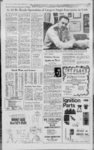
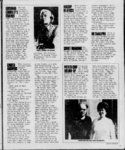
Show i3nf'" . 7 it . I . , & U The Salt Lpke Tribune, Gortfh l'1ll-1',..l,l,,.v- Sn!ay, September IS. &&" t- & n , - ' 1976 f'V' '; - sw W'H Welcome back, Higgins its bullets - letters time pi Simonon v, Maigret and the mysteries There were two in recent years in which the murderer, with small regard for the requirements of the form, insisted on attracting Maigrets attention to himself, out of some obscure prompt mgs of conscience, or the desire to be rid of the intolerable tension of uncertainty There were also one or two brxiks whose plots hinged on coincidence, winch should be entirely absent from any crime novelists work Maigret and the Appaiittui;," by Georges Slmenon. Translated from the French by Eileen Elienbogen; Har-couBrace & Jovanovkh. 159pp., rt $6.95. The Hatter's Phantoms," by Goerges Slmenon. Translated from the French by Willard R. Trask. Harrcurt Brace & Jovanovkh. 172pp., $6.95. On the dust jacket of Maigret and the Apparition, we arc-- told that there are still many more Maigret mysteries awaiting translation and it occurred to me to wonder what determined the order in which they were brought out m English. Order of Merit? Since the French publication dates show that chronology has nothing to do with it, the thought suggests itself that they are being translated m the order of their mi rit. It Is an ironic and disturbing notion that, after a writer retires from the genre that made him famous, his work should be made available m this fashion The hypothesis will probably not hold up, however, for I cannot imagine anyone qualified to judge all of novels on such a sliding scale Among other things, they have much m common. Also, I believe 1 have already read what must have been among liis wurst cffurts. George-Smienon- The Judgment of Deke Hunter, Cccrs Brown. if j g Ptt Convention to Overpoise It has become a convention to overpraise Simenons work, and the reasons are interesting His novels are said to lean heavily on human nature, which does not usually get its full share of the action in suspense fiction. They are written in a style so understated as to be almost featureless, prose of in contrast to the hjped-u- p American many practitioners who be lieve in fusing the word to the action. And then there is the Gallic shiug ar Maigret apprehends the criminals, the implicit suggestions, so dear to contemporary feeling, that there but fur the grace of Gixl go you or 1 Paris Rain There is no ram like Paris rain to tempt us to consider the human condi-tm- , and it almost always raming when Chief Superintendent Maigret begins a i ase One might say that this ram Is the barometer of social disorder It never rams but :t pours; we are all streaming with illicit or violent impulses. In Maigret and the Apparition," crime follows crime as inevitably as one heart beat follows another. The good chief has only just finished grilling a jewel thief who operates on a motorcycle when he learns that one of his fellow inspectors in another part of Paris has been critically wounded as he was on the track of something big. Petty Crime While the something big" turns out to lie a relatively petty crime until the inspector is shot, it does provide some novel exercise for Maigret. He has a romantic lunch with Madam Maigret, for example, in a restaurant, no less. Whats more, Madam comes out of the closet, so to speak, and makes a positive contribution to the case. It is a good thing she does, for her husband is on unfamiliar ground . Art Critic He is obliged to become an art critic and an interpreter of graffiti to rival Norman Mailer. He is confronted with the paradoxical information that a homely and inspector his own age has been spending nights with a beautiful young girl. He is also obliged to make a discreet arrest in the bar of the Ritz. s Paperback Ascent: Suberb buy By Peggy Constantine Writer Chicago A college graduate, recently leafing through the late Jacob Bronow skis last The Ascent of Man (Little, book, Brown, $7 95), said he did not read science books because they scared him. T en he saw a color photograph explaining Isaac Newtons theory of light refraction. And he read this sentence. "Galileo was a short, square, active man with red hair and rather more children than a bachelor should The graduate borrowed the have. Sun-Tim- boon. In The Ascent of Man, Bronowski weaves scientific theories and Inventions with the arts of the last 12,000 years. He writes chronologically about agriculture, cities, the sea, the sun and the stars. But most of all he writes about men like Galileo, Copernicus and Einstein, men who found answers to questions about shapes, light and motion in the universe. Without Maigret is a The Hatters Phantoms mystery without Maigret and we see how indispensable he is. His thesis is that mans uniqueness immediately 1 1 is his rage for knowledge and ability to Because once saw him play the part, and as looking Maigret picture always not merely adapt to, shape and change, universal phenomena. Bronowski pulls acting exactly like Jean Gabin, and this the 12,000 years of what he calls our is no small advantage. Without Maigcultural evolution into a wholly read- ret, The Hatter's Phantoms has little to offer but a silly, e book. able and understandable man who murders his wife because she Those who know the television nags him. Hows that for originality? series, The Ascent of Man, of the $15 And then, we are asked to believe, he g book that grew out of that must murder all of her friends to series need only know that Little, prevent them from visiting her on her Brown has produced an exquisite birthday. It must have been a very dry day when Simenon thought that one up. paperback from the hardcover. Muddled Up Bronowski was a mathematician, is somehow muddled up This theme 10 of author earlier poet, playwright, books and a teacher The "Ascent of with the idea of sexual disgust, which is Man consists of 13 essays he wrote not a very fresh turn either. Watching the mad hatter in the grip of his while working on the television senes. compulsion is rather like seeing one of Reducing the complex to the simple those movies in which the camera m graceful and w itty language, he w as repeatedly pans to a clock, whose minute hand obliges by moving convulperpetually optimistic about mankind for sively Simenon is said by his American "We are all afraid, he wrote, our confidence, for the future, for the publisher to be the worlds most In that case, he could world That is the nature of human prolific writer imagination Yet every man. every have thrown away "The Hatters Phancivilization has gone forward because toms" and not have been much pi Hirer of its engagement with what it has set for it I wish he had Anatole Broyard, New York Times. itself to do 438-pag- best-sellin- pi & yr S it i?. Successful, that is, both financially and critically; all three got onto the best-selllists, and all three were enthusiastically received not merely as suspense novels but also as novels of manners the manners of small-tim- e criminal society as keenly observed and recorded by Higgms m his capacity as, first, a staff attorney m the Massachusetts Attorney Generals office a id, later, assistant U S. attorney for the Distivt of Massachusetts. The trouble was that too many of the reviewers (and Im quick to plead guilty as charged) started giving Higgins gratuitous lectures about expanding his horizons" and so forth. , Pay No Attention Higgins apparently was listening, and the result was still further evidence that authors should pay no attention to reviewers' a novel called A City on a Hill, published last year. It is not bad, Higgins is too intelligent to write anything merely bad, and the novel contains enough glimpses of his heightened perceptivity to provide occasional satisfactions. The problem, rather, is simply that Higgms moved out of his element w hen he moved his fiction from Boston to Washington. As a result, that novel is labored and contrived. The device of telling a story almost exclusively in dialogue a device used to stunning effect in the first three novels failed in this case because Higgins could not quite catch the nuances of political talk as he had caught those of criminal talk. The nov el was a bold undertaking, a declaration by Higgms that he is no formula writer but one willing to attempt sharp departures, but it failed because Higgins clearly was ill at ease with his 4 9 9 t h : & - ' n : 4 r s t ; , T -- I' w W T rbiMJiiifttnhairnrifiiffirir Tiny Tim singing love songs to his yoong bride, Miss Vickie, Life no bed of r on television in July of 1970. The couple is separated now. tulih Tiny Tim broke, angry An Unauthorized Biogby Harry Stein; Playboy liny Tim: raphy, also was a soft touch" who would sign anything. Thanks to that profligate spending and countless contracts, Tiny ended up broke. Though not of an amorous bent, Tiny, who sees everything in black and white, good and evil, does not lack passion, says Stein Indeed it verges on the obsessive and is expressed in his music, religion, love for the Dodgers and the ecstasy he finds in anything beautiful. These are feelings and emotions he must share and today, finding himself rejected, Tiny is understandably and Press, $8.95. Tiny Tun, nee Herbert Khaury, the 60s entertainer who espoused the personal use of makeup, hirds-nes- t y hair and clothes, may best be remembered for his twittering rendition of "Tiptoe Through the Tulips and his wedding to Miss Vickie Budinger which was broadcast on the Tomght late rag-tagg- Show on Dec. 17, 1969. A Fad . . . Many considered him, like the Hula Hoop, a fad rather than a genuine talent, someone to be cast aside when the novelty wore off. This point of view seemed justified by the rapid demise of his career m 1971. Though author Harry Stein speaks of letting a fad answer back, this neatly constructed, unauthorized biography instead offers a humorless study of the Horatio Alger story gone sadly amiss. Revealed in Steins journalistic search for veracity are multifaceted psychological motivations and perspectives, as when in exhaustive, style, he pits Tiny against those who were close to him. Discussed are Tinys lonely childhood, his obsession with music and beautiful women, his need for approval and his battle for success. Profligate Spender His rampant financial prodigality comes under close scrutiny. Not only did Tiny spend a fortune on cosmetics and room service but one former manager, Ron DeRlasio. recalls that he 4 M 13L1 long-winde- BKST d but, I think, necessary way of getting around to "The Judgment of Deke Hunter. It finds Higgins once again on familiar ground and vastly more comfortable there, yet it by no means is a retreat to safe" territory. To be sure, Higgins admirers will find themselves back in the world of crime, violent and cowardly men and bored women, but they will also find a couple of important differences. For one, the protagonist (you can almost, but not quite, call him the hero), Deke Hunter, is a Massachusetts State Police plainclothes-man- ; Higgins has moved from the wrong side of the law to the "right. For another, though dialogue remains the principal means of exposition, Higgms has grown more confident of his descriptive powers, uses them more often, and rightly so: SKIA.KHS N ev York. Timet Service Beet teller lift based on reoorts from more ?50 than bookttores In 1 0 communitiet throughout the United States Weeks are not necessarily consecutive On the easterly side of the courtroom, there was an old brown metal water cooler, between the side rail of the jury box and the schoolmasterly desk provided for the bailiff. Its contents afforded some relief to nervous witnesses, who accepted the paper the kind favored by dentists cups (Copyright) 1,2 THREE WORLD PREMIERES A CELEBIWION OF THE AMERICAN EXPERIENCE cUrto Every" Natioii IN Tut lHAinnuN ur Tnt LGnG 99 . If r N . v,Z,'VOx hv hOau anD ' .7V ,'A WE PROUDLY PRESENT HEAR YE HIM i-- MISSIONARY STORIES FROM TODAY AND YESTERDAY SPRINKLED WITH INSPIRATION AND HUMOR. It; A t a4mxtAu V11' .. Presented by u ifci's vh - V 'JfiA MR j .it - y' -- A ' v Avs-w- ' -- 2-f- Z, t VLjgur- THE 0rlP t VALLEY MAIL ORDER DEADLINE Oct ,' i - - L P'.V - ' .. v - st&y PROMISED 'T OsnVs XApt - -- y 1 VI PLAYHOUSE ' J i ' i BaHsiWest Sells Out Older Good Soots Today At the SALT PALACE LITTLE THEATRE September 28 through October 1, 1976 at Tickets KINGSBURY HALL 8 00 p m Two additional performances at 4 30 p m. and 9 30 p m. tr ? 1976 so lhai you can attend conference sessions Saturday Tickets available at the PROMISED VALLEY PLAYHOUSE 132 South State Street Salt Lake City. Utah 12 30 p m. until 5 00 p m. Monday through Saturday telephone Mu P 364-56- 6 Wr L. a a r At- Al 1S. f DALLE7 WEST T'CKFT .Sif ighi O V Cv 1 U 0 OFFICE VJ MM7 i XI which are made up of many folds, and become soggy unless the water is with shaking consumed promptly hands More often, the water cooler was a place for a trial lawyer to go when he got an unexpected answer, or forgot his next question, and wanted to think about the whole matter. Cop and Crook It would be unfair, both to the reader and to Higgins, to tell what happens m the novel, but it can be noted that it is about a man, Deke Hunter, caught in a job he neither loves nor hates bu works hard at with no special sense of s. It is about the peculiar kind of prog-esdevotion and doggedness that cops give to their work, and it is about the thin Lne that sometimes can be discerned between he cop and the crook. All in all, the novel is not quite as well organized as Higgins at his best, and a long recapitulation by Hunter of a conversation involving several parties assumes that the cop has a superhuman memory, but those are small faults in a vivid and thoroughly engrossing piece of work. Jonathan Yardley, Knight News Serv ice Septet nber 24, 25, 29, 30 & October fjit .. fc George V. Higgins Master of Dialogue Familiar Around All of which is an admittedly forgivably angry. It is anger wrung from an amiable yet pathetic man, Stem says, who seems incapable of coping with reality. An Idealistic Romantic As depicted in this book, his defense, one practiced since childhood, is that of an idealistic romantic decked in fantastic eccentricities, working desperately to mend the shreds of his tattered dreams. Salli Stev enson, Los Angeles Times .! A material. October 8,9 & 13 16 : i I ill fi t small-to-middli- 29-ye- i Cogans Trade." 4 'V, i: 8 276 pp., $8.85. George V. Higgms, having wandered with notable lack of artistic success through the thickets of political Washington, returns here to the terrain he knows best' the thickets of low-lif- e criminal New England Its good to have him back where he belongs. Crime Novel Higgins, it will be recalled, is the author of three singularly successful books that, for want of a more accurate crime pigeonhole, can be called novels": "The Friends of Eddie The Diggers Game and Coyle, ET'lt . by V. at- 581-710- 0 |