| OCR Text |
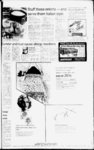
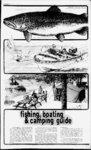
Show 14 F DESERET NEWS, THURSDAY, MAY 13, 1976 The Salt Lake Tribune, Friday, May y 14, 1976 The art of stream fishing Successful stream fishing is an art that requires patience, practice and skill. Oh. the casual or beginning stream fisherman will catch fish mostly planters and small browns or native he caught off guard. But the experienced and knowledgeable stream fisherman will catch fish big fish. consistently comes from knowing a few basics about how It all to read a stream, how to know where the fish hang out, where they feed, what kind of gear to use and how to present the lure. Whether its a river 30 yards across and five feet dH'p, or a stream three feet across and eight inches deep, the basic techniques remain the same. Learning where trout are found in a stream is the first step to catching fish you cant see actively feeding. Every stream has certain areas where trout hold andor feed, and the successful trout fisherman learns these spots and knows when each should be productive. Trout stay in waters where they have safety from predators, where currents are comfortable, and where food is plentiful. They spend most of their time in shady or sheltered lairs, but may move out to waters which have more food when conditions are favorable for feeding. Even the casual stream fisherman knows pools of deep water are a good bet for fish. Depth alone may provide cover and trout will lie on the bottom where currents are less forceful and food is likely to filter down. Some pools have swift running surfaces, with choppy water, which diffuses light. This is additional cover for trout. Fish also like tire edges of pools where floating debris, caught between the main current and the back current, provides cover. Food is also plentiful here. Direct shade from debris such as logs, surface logjams, overhanging banks, bushes or trees will attract trout. Any change in the bottom structure such as rocks or boulders, or a ledge or a dropoff, may hold trout. Along shallower portions of a stream, such or instream or shoreline cover creates mini-poopockets. During spring and early summer such pocket water may provide better fishing than the deep pools. Knowing when to fish these different areas of a stream is also important to a successful fisherman. In cold winter-lik- e weather fish will congregate in the deep lower ends of pools. In early spring with warmer temperatures fish will lie more aciive but will still be found in and around the deeper and 77 V mm r7 4 an buv N utrom! OTDG a?0GOQQD0O8 T ML Wo) Poll, ls gentler .Y1- if;: flows. With the arrival of high and muddy runoff writer trout will spread around a stream, staying princi- pally in pools but also moving to deep pocket water and slow moving areas along the stream edge. As the water lowers and clears many trout will move to shallower pockets for the summer months. Pocket water provides cover, highly oxygenated water and an abundance for food for the fishs most active months. In the late autumn months, October and November, fish will move back into the deeper pools. Trout generally congregate in the favorable locations on a stream. Where you catch one fish you will likely catch another. As a rule of thumb, when you catch a fish make your next cast into exactly the same s(Xt. and keeping hidden is also stream fishing. Experienced fisherimportant men know their best chance for approaching feeding trout is by wading upstream. Trout spend Eiost of their time facing upstream, swimming lazily iu the current and watching for food to swim or drift down to them. They are in position to clearly see danger coming from ahead or above. By wading upstream the fisherman approaches from the trouts blind side, and the rushing current covers his approach. This method a No prevents the fisherman from giving the trout an early warning hy sending down dislodged silt and debris. Upstream fishing also helps book fish. When downstream fishing a fisherman will actually jerk the hook away from the fishs mouth after a strike. On tile other hand, when upstream fishing a strike will cause the fisherman to jerk the hook back into the fishs mouth. How to fish a stream is the next important step. Trout are, for the most part, bottom feeders. This is especially true of larger fish. Experts estimate nearly 90 jiercent of a trouts food is taken under water. The best place to fish, then, is where the fish A approach quitwhen feed. normally Natural bait is best nymphs. grasshopjxTs, worms, etc. Imitations are also excellent under water again nymphs, freshwater shrimp, wet flies, etc. Lures and spoons such as Mepps spinners, daredevles. Little Cleo and the Rapala are also productive. Whatever you choose to fish with, the main idea is to get it to the bottom. Fish deep. This is especially true in the spring and early summer months when the water is high and muddy. The exception to underwater fishing is when there is a fly hatch on. or any time in the late summer months when the water is low and clear and fish are active in the early morning and late evening. Then you want to lie on top with a dry fly. Perhaps tile most important thing to remember is that conditions dictate methods. Study the stream, watch the weather, learn how fish feed. Trout will not rise for a dry fly in high and muddy waler. Nor w ill they rise for a fly when bright sunshine is on the water. You can dry fly fish all day on a sun lit stream with nary a strike because fish cannot see through the Jure on the water's surface. When working a stream, remember this: it's the thinking fisherman that catches the fish! ' FREE CAMP GEAR' When you buy e, Stewarts Folding Trailer during our S V' Successful stream fishing takes some special skill, but is often well worth the extra time and effort. For info on area FIRESTONE RETREAD LIMITED WARRANTY Rsdwin .V "i.: f'fs: - fishing x o j, n Here is a list of Area state fish and game departments, just in case you might w ant to fish while you .'"'3 fix cavs Afl .(). he wdl rr vt Mt c'1 s (t riri f fv, k1 Sanie aggressive tread design as our Radial Deluxe Champion. tftwtf pn he v PV Jl.l fri frt'.ul r ..wwj 6 Of rtH V to Wide tread with "wrap-around- " for good traction. srmvr't is(V W.v ( try t design Inter-mountai- travel this summer. 1 ; P.O. Box 9095, Arizona Phoenix. Ariz. 85020. Col-- , 0060 N. Broadorado way, Denver, Colo. 80216. 6iO S. Walnut Idaho St., Boise. Id. 83707. Montana Fish and Game For Dept., Helena. Mont. P.O. 59i01. Nevada Box lot 78, Reno. Nov. S',5 10. New Mexico 9 to 14 B 95 sizes & 14 Add $2 13 TRUCK RETREADS FOR PICKUP, VAN, & CAMPER OWNERS! D MENS SHOES State Capitol, Santa Fe, Fashion Place N.M. 87501. Wyoming P.O. Box 158ft. Cheyenne, vo. S2U02. 168 So. Main 2235 Washington Salt Lake Ogden ; v WHY THE WORLD IS COiWTOQlVIQ: REST MILEAGE OF ANYBODY EPA HWY, 32 42 MPG firestone MPG CITY WORLD'S REG, LOW LEAD, NO LEAD GAS LOWEST PRICED CAR ON U.S. MARKET FRONT WHEEL DRIVE SUSPENSION 4 WHEEL IND. LARGEST RETREADER REOUNINO FRONT BUCKET SEATS Ptui THE KEN GARFF HONDA CIVIC (WERE DEALING) .I -- K q r.avi FRONT-EN- ft! It 57c tc SI .27. Atom Our set tinSM 1 Hkilltxl mechanics taster, eartiiier and' in s. to original Rriem art rim Caunt Cant m Ctun. Hwww tw Turn. Well txetuot far leeaeeafcla Rand McNally D ALIGNMENT Stewart- - t.imoJn posted, prices pin-in iKve-up to ries KKKE nt Stewart- - toiiciinp Trailer- - port ti. .sell Ocfori May limit Offer Imnltd to ir.iiVr- - in -- n.-k ! f'liv Hum' tor ten KN'DS M Y l - ,: .4 B - BICENTENNIAL 0; Any American car. Parts extra, if needed. t ROAD ATLAS 148 poges include: detailed maps at all U.S., Canada and Wexico: a color mop ot Ike "Era of the American Revolution"; highlights of the 1976 Olympic Gomes; and a 1 6 page camping guide. K t Limit one 2 Additional, SO. OGDEN 3985 Wall Ave. Ph. 0 621-363- Folding Trailers 262-627- 7 NtW LOCATION OGDEN 1757 Wash. Blvd the co mptt'i - Ken Garff Oldsmobile INDOOR SHOWROOM 601 South State otatt- a fitn South SLC, Utah A Y 1 d 1 1 Open 8am I to 6pm K |