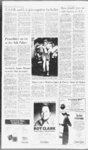
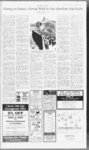
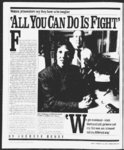
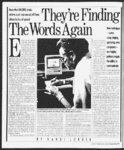
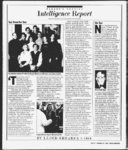
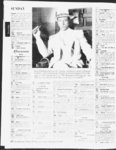
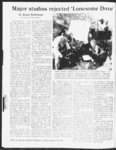
| Show More than 100000 stroke ev re d victims each year are cutoff from i others by loss of speech 1 ‘ T - '' ' ' 4 ( 1 di 1(11) 1N 400000 Americans ' 41 I t ''' i''"4”: 0 have strokes—often brought on by high or r-0- 2 '''''' - - 1i lir NV i - -- —tre cr ‘ - - i - t ‘ - - - 4 dibil ple ''' 14 o ') tr - ''' ' 1 ''''' —I 't: ' ' ''1 i 7 ' - - 1 - ill i v ' - t 4e-- - 4 x Ilk - d : (1 1 - 1 ! k1- - ' dt' - 1 '- - - oustill ' ' 'l "' - - 4 1 - r:' ' Ji p 7 tnd : - I k 0 ' r t IA c' ''! "0"- A' - ' - 4 N'' i ''''-- c t - ' iN i ) J r 4 eirj014 : 4 '0 z: 4 - :) v- - i 1 Jack Skillings had a stroke four years ago which left him unable to speak Now although he still cannot say words he is able to "talk" with the help of a computer Thompson 58 of Brant Rock Mass Thompson had a severe stroke 16 years ago Left partly paralyzed on his right side and without speech he could utter only two swear words (a common phenomenon among some aphasic patients) An avid sports fan Thompson often watched football games on TV One day as the band struck up "The Banner" before a game Thompson's wife Maureen heard him belting out the words "It was a shock" she recalls Soon after Thompson started on a treat- - BY R using singing puter with its tiny picture symbols gesTurinpven computers— The computer 40 - - —some groups similar icons - - New techniques called "icons" to help patients communicate 4 "'I blood pressure one-four- th : m 1 :-- A VERY YEAR ABOUT clogged arteries or a weak spot in the brain If a blood vessel in the brain gets blocked 44 or bursts it can damage brain cells When this occurs in the ' left side of the brain the ability to speak and understand words can be impaired In of those cases the damage is so severe that the person suffers aphasia or speechlessness ' Until recently there was little hope for stroke victims who were left mute - But now doctors and speech therapists have developed new ways of helping aphasic patients learn to communicate again "We can now give voice to the voiceless" says Dr Martin Albert clinical director of the Aphasia Research Center at the Boston Veterans Administration Medical Center Scientists have discovered how to better help aphasic patients by examining CAT scans—special of the brain that show damaged areas A pioneer in this research is Margaret Naeser PhD of the Aphasia Research Center By looking at the location of damage on the CAT scan she can tell whether aphasic ' patients are likely to speak again or if they will communicate primarily by gestures or drawings Speech therapists first test aphasics to find out which language skills remain Then they recommend the most appropriate treatment Here are some of the t techniques now being used: Melodic intonation Nancy HelmEstabrooks PhD developed this "singing therapy" at the Aphasia Research Center She found that even strokes which damage the language centers in the left brain often leave the right brain—mostly responsible for musical and artistic skill —intact As the therapist sings everyday phrases and taps a beat with the patient's hand the right brain is stimulated to "take over" the ability to speak believe The singing therapy helped Harold 10 - ANDI I o A 1 ii e t e 0 0 l 59 ment program using melodic intonation at the Aphasia Research Center His wife says he can now spak again His co versation probably will never flow as easily as it once did but he has been freed from a speechless prison i - Visual communication with computers A computer expert and a brain specialist teamed up to design a computer program to help the aphasic Dr Michael Weinrich of Stanford University and Richard Steele PhD of the Palo Alto VA Medical Center use a Macintosh corn- - are helping actions objects—together If the patient's right patients regal) brain is undamaged he can rec- the ability to ognize the pictures and use the computer's "mouse" to communicate point to a spot on the screen Then he can select a series of iicons representing thoughts he wants to express Subtitles at the bottom of the screen print out the sentence After Jack Skillings 61 a California truck driver suffered a stroke four years ago all he could do was make grunting sounds Six months later doctors trained him on the computer "He still cannot say words" says his son Bret "but at least he is not completely shut off" "What we would like to see in the future" says Dr Weinrich "is a computer small enough for a patient to take to a bank or restaurant for example" Visual-actio- n therapy Some patients learn to supplement their speech with gestures In this type of treatment therapists practice pantomime with their patients They point to an object on the table—a pair of scissors for instance— and show the patient how to make a cutting motion with his fingers The therapist makes the task harder by placing two objects such as a hammer and a screwdriver in front of the patient The therapist then hides one object under a box and points to the hidden object The patient has to remember the hidden object and the gesture Treatment of perseveration I 1 At the Aphasia Research Center Dr Albert discovered that nearly every patient with speech dysfunction perseverates—that is repeats a word at the wrong time and place in a sentence "Patients are ly not aware they do it" he says "We try to make them aware so they will stop" usual-scientis- ts LONDER t PAGE 8 FEBRUARY 26 1989 PARADE MAGAZINE -- : - |