| OCR Text |
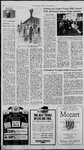
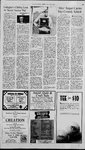
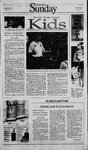
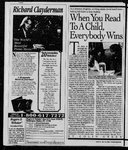
Show ES SRE tually, we want each child to have an adult reading partner. Ourchildren need people to reachout to them.” Arthur Tannenbaum grew up in New York City and attended its public schools. For most of his work- ing life, he was a businessmanin a textile company. During the 1980s, Tannenbaumrecalls, he read report after report in the press about howournation’s schools werefailing. At the sametime,he also read about how mucha closerelationship with a caring adult could help children to learn. “With big classes, that’s not alwaysso easy,”he says. “Wecan’t afford to wait until there is enough moneyto haveindividualized instruction in the classroom. I looked around for what I could do to makethings better, and started from where I was in my corporate office near a public school.” For manyyears, studies have shownthatchildren make more rapid progressin reading and language skills when they’re read to by adults—especially iheir parents—atany early age. Aninternational team of researchers, which analyzed manyofthe earlier studies, recently confirmed that conclusion in the Review of Educational Research. In 1991, Tannenbaum retired and devoted himself to building Everybody Wins. Today, the program has about 1000 volunteers. “Recruiting volunteers is the easiest part of operating the program,”he says, “Raising the moneyis the hard part. The corporations generally support their volunteers, but that doesn’t coverali of our costs.” Buthe adds, “The costs are really minimal when youthink of what's coming outofthis. mightfind their relationship with the police changing as they dothe job of coordinating the program atthe local school.” Detective Richard Baudin at New York City Police Headquarters agrees. “I can do a better job if I can connectto these youngsters early on,” he says.“I'd muchrather read to them than arrest them.” The Everybody Winsvolunteers don’t try to teach youngsters how to read. They share in the reading, though Tannenbaum saysthe greatest benefits are realized whenadults read to the children. “The whole point,”heinsists, “is to get kids interested in reading. All the bookstell you that, but we don’t doit enough. Oncethe interest is there, wonderful things begin to happen.” Wonderful things seem to happen both to the child andtheadult readers. “I grew upin the South Bronx,” says Millie Guzman, who is 30 and works in the mortgage capital departmentat Bear Stearns in New York. She volunteersat P.S. 116 in the city. “I had a tole model whoreally madea difference in mylife, and I want to do the same for my reading partner, Crystal. I don’t like to hear people complain about schools not working. I wantto getin there andtry to help.” Millie is excited about her relationship with Crystal, 9. “In the summer, she wrote me a beautiful letter telling me how much she missed me and, believe it or not, how much she missed school. Even her mothercalledto thank mefor becoming so special in Crystal’slife.” “This isn't my typical lunch,” says Marco Goiding—27,tall and well-dressed—who worksat Colgate-Palmolive in New York and volunteersat a public school nearby,“I didn’t realize that my world there could be connected to the world here. I think that educating our childrenis a real responsibility for all of us. People in the corporate community can doa lot if they only step out from behind their desks.” “So many of mystudents are developinga positive respectfor reading books and for themselves,” says Riba Signorile, a sixth-grade teacherat P.S. 116. About 75 of her students have participated in the program in thelastfive years. “When people reach out to one another, somethingis there that wasn’t there before,” says Tannenbaum.“Then,if you can use that something to help provide needed encouragement for learning, you're doing quite ia a lot. We're makinga lot happen withouta lot of bureaucracy and expense. This idea is turning people on, getting kidsinterested in reading and renewing people’s trust in each other.” In the next year, Tannenbaum expects tostart Everybody Wins programs in IIlinois, Vermont, Minnesota, New Jersey and Hawaii. “I'd like to see the program be as familiar in communities as burger joints and conveniencestores,” hesays. “The designis so simple that anyonecan doit.” Hepitcheshis idea to companies like a combinationvisionary and accountant: The productis sound, the cost is reasonable, and the results are terrific. And executives have been quick tosee the program’s value, Some companies in the New Yorkarea are talking about encouraging peoplein their offices in oth- INTRODUCING () About $250 a year covers the costof the coordinator, mailing and telephone. We ask companies to cover $250 for each participating employee, but we raise some money from foundations and individuals to cov- erthe costs of ourpartnerships with city agencies and nonprofits.” Volunteers come from more than 40 companies, including Bear Stearns, ColgatePalmolive, DuPont, MasterCard, as well as hospitals and the New YorkCity police. The police department joined last year. “In many schools, children come from neighborhoods where the police and the community have quite antagonistic relationships,” says Tannenbaum.“I began to think: What if police Officers take one lunch hour a week and read to a child? If webegin to build strong relationships at a very early age, wouldn't the result be important for the police and the community? Even parents Be TheFirst Kid On Your Block To Have One. er states to Sign up, Hey, now youcan eat mete love, and still be good. Because Oscar Mayer FREEhot dogs, bologna, turkey breast and chicken have nofat, and the taste that's positively Oscar Mayer. a (©1908 Once nye Foc Corporation “We don’t ask a lot,” says Arthur Tannenbaum. “We ask what can be given without too muchtrouble, But we ask what is important. That's what makesit work.” For more information, write: Everybody Wins, Dept. P. 165 E. 56th St., New York, N.Y. 10022. |