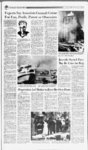
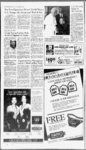
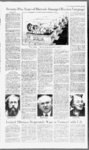
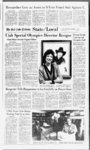
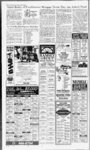
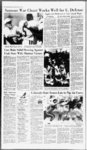
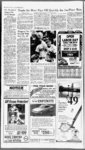
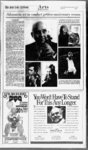
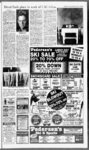
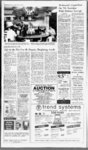
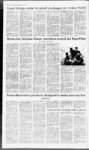
| Show ( '40 SUNDAY SELECTION The Salt Lake Tribune Sunday September NAnss:::::::: Experts Say Arsonists Commit Crime For Fun Profit Power or Obsession Editor's Note: Billions 0( dollan worth of propedy go up in flames each each year and hundreds of people die the victims of arsonists who set tires tot masons ranging from sexual 1 1 year career "There is no such thing as the generic arsonist" says David J Icove the FBI's top arson investigator who along with the Bureau of Alcohol Firearms and Tobacco is creating profiles on a computer that perhaps will help local law enforcement agencies find arsonists Arson kills 1000 people a year in this country injures an additional 10000 and costs the American public $10 billion to $20 billion a year Examples: — The Happy Land Social Club in the Bronx went up in flames in March 1990 leaving 87 people dead killed by $1 worth of gasoline The motive? Revenge a classic — In April a ferry from Norway to Denmark the Scandinavian Star caught fire and 158 lost their lives Police called it arson but made no arrests — In Puerto Rico the Dupont Plaza hotel burned on New Year's Eve and 97 were killed at the dawn of the year 1987 Three disgruntled kitch- en workers were convicted of the crime The crime of arson has fascinated psychiatrists and criminologists for years Even Sigmund Freud wrote a paper on the arsonist in the early '30s One of the reasons is there are different types of arsonists and while some overlap the motive for the arson somewhat determines the profile Why does the person set the fire? Is it a rational act or is it a compulsion? Is it a business operation with cold cash on the line or is it revenge? Is there immediate or delayed sexual gratification as the flames leap? Is there a feeling of anger or just power as the individual stands in a crowd watching the destruction that he has wrought? Fire officials have created six or seven categories of arsonists with the two extremes being the true pyromaniac and the hired "torch" While accounting for a small percentage of arson psychologically these two are the farthest apart Half of the reported cases of arson in the country are the work of juveniles ranging from children playing s with matches to looking for thrills In reality they probably account for many more Parents frequently put out the fires before they get out of hand and don't call the authorities For very young children it is often a cry for help or it may have been accidental Older juveniles often set fires for excitement The hard question is whether they will outgrow it Dr Robert Cole of the University of Rochester and a private consultant has studied the problem extensively He feels that the label "arsonist" should not be used too freely with some of these youngsters He stresses that most juveniles who set fires have no serious or emotional handicaps "The problem is that we should not start going around labeling any child who had made a fire as a potential sociopath or even a potential criminal" Cole says "A lot of it is g and some of it is curiosity vandalism but I plain don't think this is a different kid than the kid who breaks windows or soaps windows or knocks down stop signs d of them may "Maybe have serious problems" According to one study 85 percent of the victims of fires set by children are the children themselves Easy access to matches cigarette lighters candles and stoves killed 69 children in the last three years in Jew York Nationwide burns are stcond only to transportation accidents as the cause of death during chitdhood While Icove points out there is no arsonist there are certain genetic chara-0e- i istics that keep cropping up It is generally accepted that arson is predominantly a male crime The arsonist is usually not One study showed an average ninth-grad- e education He is often mentale ly deficient or possessing an comes from He intelligence unstable home where he may have been abused He's usually short and slight He is usually divorced or has never been married has poor relations with others particularly with teen-ager- fire-settin- one-thir- well-educat- below-averag- 1 t?14111dilk'l i excitement to monetary profit Ws a largely misunderstood crime that has fascinated psychiatrists and criminologists for years Now the experts are putting together a new study profiles of pyromaniacs and other arsonists By Kay Bartlett AP Newsfeatures Writer Arson It's called the coward's crime the most undereported crime in the country next to rape and the least understood Its practitioners range from mentally unstable pyromaniacs to little children to hired professional "torches" The tools are everywhere — cigarette lighters matches newspapers many household products Planning is not a necessity The power of fire is also the most power some of these people will ever possess But who is he this arsonist? "He's the kind of guy who likes to walk in the misty rain" says John chief investigator for Barracato Aetna Life & Casualty man who has interviewed 900 arsonists in a 32- - low-lev- well-educat- er PI I A '4 14 ) - t 1 ' 1 SOL or ' women and probably has a menial job He may be known already to the local police and has little or no He is in a word a loser The professional "torch" is the smartest of the arsonists and tends to come from a higher background He makes relatively big bucks burning buildings to collect the insurance His counterpart the "thug torch" is not nearly as good but far cheaper "They hire a stiff from the local bar and give him $150 to $500 1 know of one guy who got $1000" says Barracato a New York City deputy fire marshal before he joined Aetna socio-econom- "He wants to see the paper that shows the face value of the property" Barracato says "He'll take 10 percent half up front and guarantee the job will be done in three weeks By the time the fire department gets there he's at the airport We don't get many of them They fly in and out of town and don't leave tracks" The real pro tends to be older in his late 20s to early 50s He often is a heavy drinker but unlike some arsonists who need alcohol to give them courage to start the fire the pro is likely to be stone sober when he enters a building to take it down He is probably a fairly nocturnal individual possibly nomadic likely to be single or divorced Another type well known to the g world is the "vanity" or "hero" fire maker He might be the security guard whose job is threatened So he starts a fire one night calls the fire department but manages to subdue it himself before the firemen arrive What happens? His job is safe He might even get a promotion or a raise He also will go right up to No 1 on the fire marshal's suspect list He may also be a superintendent of a building who has put out one too many fires for the investigators' antennae While they may appear a I " 1 v- ' :"! ' t t '' ' " - I ' ' i a4Nft WA z '-' : LI ' — :06 litinteil : i ' ''''' 1 4 '' - ' 7 f - 't it1:7 '' 4 c't 14e0 :k3 0: 41' ' ' ' ' i : '? - :A :' ' 1 1 "4 7 st 'A'w" girk tS -- 77-r Lies ' ' - t41 ' i ''''''' 1" 1 ' - 'f7L' ' IP1464 4 ' 1 i 1 ' ' ' P ''''rrgrE't (':i ''i:t et6 -Z '1 —'ii i t' t '''M 04' 1 2 :::: '' ''''' ' ii: - I : ' ii '' : 1- 1 - ' kt-:' i 1 t r'717 t' i 161444 -- I TTtsrl:' 1 12 — ' e 1 It: p'' rre - - I ' t”' twa' t - -4- : r f -- t I 'Titfti4 i'' it i -- ?711711-"'rr'- thrill-seeker- fire-fightin- - rt- - I - w i I t 0 n '''''"11""O'''-'- gt 1 t k 1 r o4ti ! tw‘4-- 1 ra'71!!!:1 1 '''' ' J 144--t- - Zi! j001 ‘14 totow''''?4 "''''''''':owvr o4 '''' 114AzA w5 - Ps'-'- hero Fire Marshal James McSwigin says these individuals sometimes try to become too big a hero and end up killing themselves and others The federal study will be released in about 18 months Icove says It interviews will be based on with 100 serial arsonists convicted of setting three or more fires and are in prison It is notoriously easy to get away with arson — only 16 arrests per every 100 confirmed incendiary fires compared with 75 arrests per 100 homicides Insurance officials say half of all residential fires are arson but charges are brought in only 19 percent to 26 percent of the cases They can't prove it The FBI study found that women turn up in significant numbers 28 percent only in the revenge-motivate- d category a category that makes up 14 percent of all arsons Another finding was that juvenile s tended to vandals and act in groups not as loners Juveniles also said they did not use alcohol or drugs before setting fires Many adults said they did New York City Chief Fire Marshal John Stir levers has prepared a paper on the true pyromaniac He says the disorder is an extreme form of obsessive-compulsiv- e behavior Stickevers says pyromaniacs usually follow rather rigid patterns starting fires when and where no one is likely tn be around The fires also tend to occur in geographic clusters "The guy you hire at the bar is criminal type probably a maybe with a drug or alcohol problem not and probably already familiar to the police" His counterpart the pro is smart- ' 0 L tif'')1 i A3 2 1990 -- - "AI' Aiit 21°161:14tlagems -4 k s4 - t v ' - i4I q"$ :4 1 4-- wil Ili 'NV i dilliz tviott ilit 44114: '''''( i — It I 44 " IT 4 I Associated Pteu News Photo Three disgruntled kitchen workers were convicted of starting the Dupont Plaza Hotel fire in Puerto Rico that killed 97 Says NY Fire Marshal - ' ':' " ' ' Fires Juvenile-Starte- d '' - I — '''' t ' A 1 g it- p lc - :' 3&i' :: ' 1i b-- i i I' ' - - :t'-- ' I etzt -- :l :'''' t'2447 ::':A7' '''e" ' ' '' ' ': 0" ' : '''''A iA7r)7 1 ler''7111rPi!C: e :!1: ' i 1 '' — A - ' - '-- --I kr 1' ' r teen-ager- : i ''''"It nt IrNook ! 447-7- Si ':46 k ' 0 —lt - ItraAtaa?!A4401ge 1: - ffer°41r' r'''c A1 a AP Newsfeatures Writer Half of the reported cases of arson in the country are the work of juveniles ranging from children playing s with matches to looking for thrills In reality they probably account for many more Parents frequently put out the fires before they get out of hand and don't call the authorities New York City Fire Marshal James McSwigin who has been active in a juvenile prevention program says he has seen children as young as seven who have set four five or six fires before getting what they wanted: the attention of the authorities "Here is a youngster crying out for help but he is not getting it until he manages to set a fire which gets out of control" McSwigin says "There's a lot of denial on the part of the par 7 iij Lt: l' tit 1 IAN 1 t )—t 7 T- ' : 111" o 1I 4 71(w 4 toj 411 ' P 1Y 4A- -- 0- - AA - 1 '''' tr 01 ' 7" t i rt itt-- -I 1 '4' -- ' ' "t: 1'' :' iN't '7 7 ' ": 4' 'kt - a - ''c'''' ' 'tsr 34400'14w6' ssa q ': ' - iii : r 't44 '' '' v 14 f rr''''1!N-- - r--:- - ' - wvi i- — ‘ w' Jekti - - 4t'Sr-- ' -- - 41!!!'04rorro011 44 :- ' ' tt"4 1 '''14 Ili 4- t 0 - 1t14411 '' 1' 41414 0 '4:!!Nr:4 : 0 Low:2 " — Associated Firefighters battle fire aboard the ferry Scandinavian Star in April 1990 near the Bartlett By Kay " - 41 14 ' 4 viol :: e 0 ° ° rigti - ''' ' ' ' -- 0 " ' —v"' kA--A CL: ' May Be Cries for Help : - — Press News Photo town of Lysekil Sweden The blaze which killed 158 police think was arson-relate- d Desperation Led Mother to Burn Her Own Home By Kay Bartlett AP Newsfeatures Writer Martha B is an arsonist one who got away with it but the memory still haunts her The mother of three sons and an infant daughter Martha was abandoned by her husband and on the brink of desperation She could not keep up the mortgage payments on her home in the Northeast A woman without marketable skills she couldn't support her youngsters So she decided to burn the house collect the insurance money and move to the Carolinas where she was told homes were far less expensive She worried about getting caught and going to jail "I was like a detective only planning backward" says Martha speaking only on condition of anonymity Expert on Arson Claims 14-2Of Fire Bugs Sick 0) lorl - Irwit Jirmitm tfrog "r -- 4 4 rom44 rip - - —i' 4 iArprgrr" ti 1 I ' - ' QUINCY Mass (AP) — John Hall 41 0 )i k - ' "41''''' A1""w ' te 'I - '' 4 (tikt' i s' '1 ' - i iI - - A ' N ik :'4 ' 'V - : 1 ' '- : -' ' - - ' It 1 tr -- Ihie--4- 1 14- : t k 000411° I y fI : il - "'' 114 1 ' ''' A ' - ' ' 41771r ': ' t NA 1 1 1 - 44 duaige ' -- ' i : i ' : 4:1L ' t - 1 t '‘ 'St tA Iti t 4 fi i 4 : —— 4'7 - 0'''' w' - t VP Poi -t--- - r i 4 : ank- -' - '''''"''La""''''''''''''''''''''''''''''''' 1""111ONINfolibliaL S'71111111116' ' dISAMOMOdit — Bodies are removed from Happy Land Social Club in the Bronx NY on March 25 f :'7411' 4410-0- 0- s t141:441Ir - ::k 1f4- ' Dr Frederick J Mercilliott who and teaches fire safety programs at the University of New Haven in Connecticut points out that matches and lighters are everywhere readily available to children "Responsible people with gun permits keep them locked up certainly away from children " he says But 4 ft N 'w- t- g fire-maker- - 4 1 LAr""1111( 1 '''' "Something is directs — ' k 4 ! ' " ' 1 (: 16 ' I 4 !'4p'''' t - '' iiote NIO i ' 1 ! McSwigin says wrong She is turning the fire inward and at herself "Little boys take the fire outward They generally won't even set it in their room when they are crying out for help It might even be in the parents' room Different children are a little different but you can predict a lot of common denominators" Dr Robert Cole a professor at the University of Rochester and a consultant who has worked closely with the Rochester NY Fire Department's juvenile prevention program says one out of every two children has played with matches at least once He stresses that most juveniles who set fires have no serious or emotional handicaps "The problem is that we should not start going around labeling any child who had made a fire as a potential sociopath or even a potential criminal" Cole says "A lot of it is and some of it is curiosity vandalism but I plain don't think this is a different kid than the kid who breaks windows or soaps windows or knocks down stop signs According to one study 85 percent of the victims of fires set by children are the children themselves Easy access to matches cigarette lighters candles and stoves killed 69 children in the last three years in New York Nationwide burns are second only to transportation accidents as the cause of death during childhood s can take a lighter and roll it along a carpet to set a fire" McSwigin says "It used to be that children needed to be old enough to have mastered the motor skills necessary to strike a match as Now we have "Two-year-old- 1: ' I int - 7 4 1116"tf :i -- :- I ''‘ ' 1 ' v :r:r Iry ' 1 1 ' 1 'T-'- it 1:----- if !t :iiii m '''s 7 ' I 4 IV' Ar""'"'"I'm i '' 1 t''''' ott f5 v I 1 - I -- ' t1 9P Itt 4- g' !yr '' —: it ' 4 t' t 1 iI ti 0 4' 1 IA ''' 1 1 t 1 I i I '- i t ' : ii' L I ' ( - "I 11 ' ' - enough conviction The other factor in her favor was that the house was underinsured but still she felt she was a suspect for a few days "The next day I still wasn't allowed in and I walked around the house and I broke into real tears not fake tears" she recalls "I lost a lot but I felt I had no choice It was still hard losing photographs of the children wedding gifts and little things I treasured but I knew I couldn't take them out first" Martha is now remarried and has moved back to the Northeast but her conscience has never been the same "Every time something bad happens in my life I feel it is my punishment for starting that fire Still I think if I were in that same situation today I would do the same thing" fast-foo- self-estee- m director of fire analysis and research at the National Fire Protection Association says there is no hard data but he would guess that 14 to 20 percent of arsonists have severe psychological problems His organization headquartered in Quincy Mass has been keeping statistics on arson for nearly 100 years "There is a lot we don't know" Hall says "I would be very suspicious of anyone going around making a living giving a profile of an arsonist But I'd say about 14 to 20 percent have some real psychological difficulties" John Barracato chief investigator for Aetna Life & Casualty agrees "It is the most misunderstood of all crimes" he says "We understand very little of the pathology and nobody is keeping accurate records" he says "It's virtually impossible to guess motive for arson — some people just start a fire for kicks" Barracato said "Other people start fires for specific reasons but something psychological must be wrong with a high percentage of all arsonists" graphs of his teams He didn't want to lose them Martha compromised Each child she decided could choose one item "He is still resentful about losing those things" she says "I don't think things have ever been the same between us" The night of the fire Marthd took d restaurant the children to a where they were known and then took the boys bowling also providing a number of witnesses for their alibi The children were coached to cry and to act surprised when they returned home They proved to be good little actors When they first pulled up to the crowded fire scene after bowling a fireman told her it was the house next door not hers "Oh thank God" she said with She used combustible household materials ignited by a stove and helped along by a stack of newspapers from her son's paper route Martha also worried about the psychological effect the fire would have on the children She felt they were already victimized by the father's abandonment and wondered whether this would further enhance their She defeelings of low cided to make the older two — a big chance She explained that mommy would go to jail if they ever breathed a word about it She also delivered the grim news that they would lose their clothes their favonte toys their prized possessions The eldest son balked He was a good athlete and had Little League and other trophies framed photo r444 :Tr ents They are much too quick to write these fires off as curiosity playing with matches" Also parents often don't want th authorities looking at what's going on in the home "Frequently there is some kind of abuse sexual or otherwise" McSwigin says "Setting a fire is often a response to abuse at home It is a juvenile responding by saying lake this' That's their idea of revenge" Investigators often can figure out the motive by the type and the site of the fire Kids who are merely curious often will set the fire under a bed or in a closet where it as dark and the fire more dramatic "I'm very suspicious when I see a fire on top (if the bed or if it is a little girl and she has burned her doll" P"' Associated ' i - twantkeetvl Press News Photo 1990 The fire which left 87 people dead was New York's deadliest blaze in 79 years matches? They're everywhere They're on the coffee table they are in mom's purse they're near the stove "They are every bit as much a lethal weapon as the gun Yet we do nothing to keep them away from children Parents are inviting children to start a fire by keeping lighters and matches around the house where youngsters can have easy access to them" |