| OCR Text |
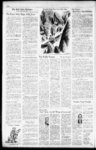
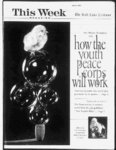
Show This Week i ' '"' "W AMERICAN SO-YEAR-O- LD DREAM: YOUTH FOR PEACE ,4- - i ; v. V V The idea of a Peace Corps goes back to illiam James. In 1910, he a proposed a "moral equivalent of tear plan for conscription of youth for peaceful tasks "to continue the manliness necessary to a permanently successful President Roosevelt adapted James' idea in the Civilian Conservation Corps, which put an army of young men to work saving our forest resources in the '30's. CCC veterans like Congressman John Blatnik of Minnesota recall: "There was plenty to do, but we were young. We liked the work, we liked the life, and especially we liked the opportunity to be a part of American life." There is evidence that today's youth misses that recognition. In a recent novel, Glendon Suarthout's "Where The Boys Are," a youthful character puts it this way: "W'e have been rooked out of every generation's birthright, which is cotijlict. . . The Twenties had a reputation to build, the Thirties an economic struggle, the Forties a world war. . . . We have pimples but no suffering, money but ng wealth . . . delinquency but no evil, television but no insight. . . IQs instead of intellects. Wre have everything but the one thing without which human beings cannot live something for which to die slightly." William James posed the same question, "Where is anything that one feels honored by belonging to?" Senator Humphrey's article the editors points to an ansuer. W peace-economy- ." v Ntk ' ?sirv ' i? ; 5 ' SffeSSCiH?--! 4as; . JV , v j. i y fers$j2r s Cr5?rH li - Jf- ?'-;- ' rf Z? . i t'o-- h 'v vXVT recog-nize- d s $ Copyrtgfet, I960, by GUhkJow SwortKoirt Raprifited by permtsttod of Random House, Inc A scene from movie of "Where The Boys Are" v-- 1 hL? Oliver Yesterday: In the UJ. during the Depression, young Americans flocked to join the CCC An army of young Americans will soon head abroad to fight disease, ignorance and poverty. Here, an early sponsor of the plan explains why it is importar WASHINGTON, D.C. now the United States is on the eve of i one of the most dramatic international programs since the end of World War II a Peace Corps of young Americans to serve their country and the cause of freedom overseas. A pilot program of 500 to 1,000 young men and women has already been launched by Executive Order. I am introducing legislation to establish the Peace Corps on a permanent and expanded basis. This exciting project provides a challenge for the youth of our nation. Their tasks w ill not be easy. They may be called on to work in the jungles of Latin America, the deserts of the Middle East and Africa, the dusty plains of Asia. They will fight enemies just as powerful as any army. Their battle for peace will pit them against the ancient conditions of war and totalitarianism hunger, poverty, illiteracy, disease, ignorance. In this battle against human misery, the Americans in the Corps will fight not with the weapons of war, but with the tools of peace. This Corps will not destroy; it will build. In a forgotten, backward village of Southeast Asia, Peace Corps volunteers could offer their skills and muscle to work with local citizens build- - Right ing a road. Thousands of villages languish in poverty, for want of a single road leading to market places. In a region of hunger in Africa, Peace Corps specialists could instruct local farmers in simple but modern agricultural techniques. Throughout the world, the quantity and quality of food production could be increased through utilization of new and inexpensive fanning methods. A baffle on many fronts In a crowded, neglected town of the Middle East, Peace Corps members could institute modem sanitation programs. Millions of human beings die throughout the world each year for lack of basic, modem methods of health protection. In an area of primitive conditions in Latin America, Americans in the Peace Corps could teach and English to local regional language skills citizens. Entire nations in all parts of the world are bound to backwardness and misery because of widespread illiteracy and ignorance. The battle against hunger, against poverty, against disease, against illiteracy must not weaken. America must throw its massive energies, resources and THIS WEEK Magazine Apfil 2, 1961 |