| OCR Text |
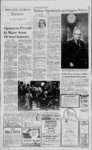
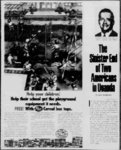
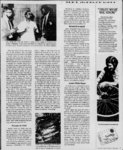
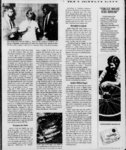
Show A ETZE8 According to Tibihika's testimony, the group, headed by Lieutenant Taban, drove to a deserted spot 10 Vi miles from Mbarara where they dug up the charred remains of two human bodies from a sandpit. They filled two sacks, returned to the barracks, poured oil and gasoline and set them afire. The ashes were scattered into a nearby river. Revealed in report Slain along with Stroh was Robert L. Siedle (I) who taught at Makerere University in Kampala. A year before his death, he chatted with Uganda dictator Idi Amin and an Egyptian diplomat at a reception held at the Soviet Embassy. I Now two earlier victims have come out of the shadows. They are both Americans, Nicholas Stroh, and Robert L. Siedle. Stroh, 33, was a free-lanjournalist who worked for several U.S. newspapers, including the Philadelphia Bulletin and the St. Louis A member of a wealthy Detroit brewery family, he was fascinated by Africa and went there to report, accompanied wife Cerda and by his German-bor- n two small children. Siedle, 46, was a sociologist who had been lecturing on a foundation grant at Kampala's Makerere University. Previously he had taught at the University of Florida at Gainesville. Siedle had three sons and was separated from his wife. His closest relative was a sister, Carol Siedle Fish-ki- n of East Longmeadow, Mass. Siedle was an acquaintance of Amin. On July 7, 1971, Stroh and Siedle drove together into Mbarara, Uganda. Stroh wanted to check reports of a massacre at the Uganda army's Simba barracks. Siedle was hoping to get facts for a book he was writing about missionaries. They spent two days in Mbarara. On the morning of July 9, Stroh left the city in his dented blue Volkswagen, a handwritten "PRESS" sign affixed to the windshield. Around his neck he wore a silver cross and the inscription: "I am a Catholic please call a priest." Siedle remained behind at the hotel. Two hours later a black Zephyr car with three Africans dressed in the shirts of Uganda's special force drove up to the hotel, asked Siedle to get into the back seat, and drove away with him. ce h. Jones, a judge of the High Court of Uganda. He worked on the case for seven months, cutting through all attempts to cover up the truth. He got little help from Amin's henchmen, and the dictator himself even called him to express displeasure at the commission's work. Nevertheless, Jones persisted. He got his first break in the case on April 12, 1972, when he found Stroh's burned-ou- t, crumpled car at the bottom of a ravine. Then, six days later, the commission obtained a grisly deposition from Silver Tibihika, a former lieutenant in the Simba Battalion, who had fled to a camp in nearby Tanzania. Tibihika swore he saw Stroh drive up to the Simba barracks on the morning he disappeared. Fifteen minutes later he was taken, his hands held high above his head, to the office of the camp's second in command, Major Juma. Tibihika never saw the American alive again, but he later heard officers in the mess say he was "kalasi" dead. Four days later, Tibihika deposed that he and the camp intelligence officer, LL Stephen Taban, were ordered to bum Stroh's Volkswagen by the camp commander, Lieutenant Colonel Ali a distant relative of Amin's. After doing so, Tibihika was ordered to accompany Taban and destroy "everything." Pressure on Amin Neither Stroh nor Siedle was ever heard from again. They vanished into the hot Ugandan sun. Their relatives and friends first raised questions, then brought pressure on the Ugandan government to find the two Americans. It took a lot of pressure before Idi Amin grudgingly appointed a commission of inquiry. It was headed by tough, tenacious, British-bor- n D. Jeffreys- - Stroh's blue Volkswagen was found in a crumpled heap at the bottom of a ravine by special commission of inquiry. Jones recounted these events in a blistering, 127-pag-e report which said that Major Juma had seen both the Americans and that he had quarreled with Stroh. According to the commission report, Juma knew the two Americans had been killed, but his role in the actual murders was not certain. "He Juma had no respect for the tribunal," noted Jones. "In all my experience as a judge, I have never seen a more arrogant, more insulting witness in a witness box. He was also a consummate liar. He made an appalling impression on everyone." Jones, who left Uganda before the report was released, pronounced that the two Americans "died an unnatural death. . . . They had not been involved in an accident . . . They had not been incarcerated in any prison They had not crossed into another country. . . . They were in fact murdered by personnel of the Simba Battalion of the Ugandan Armed Forces . . . From the evidence I have before me it was impossible to point an unerring finger at any particular person or persons who actively committed the offense." I Wf "TRUST WHAT. YOU KNOW Just learning about something isn' really enough. You have to trust yourself to use the know!- edge. Thats having confidence. How else could I do something as com- plicated as this? And if you havent used tampons yet, knowing more about Tampax tampons protection can give you anotJier kind of confidence. Thats why youll find instructions and answers to the questions young women ask most often in every package. Tampax tampons. The more you know about them, the more you trust them. j 1 1 I ( I t Amin's White Paper Idi Amin was so incensed by Jones' report that he issued a White Paper contending that Stroh and Siedle "met their deaths somewhere in Mbarara . . . at the hands of unidentified persons." Amin also hinted that his government might consider giving compensation to the victims' survivors. After prolonged negotiations with the families and their lawyers, a settlement was worked out, with Amin's government paying each to the survivors of Siedle and Stroh. Jones' report also gave the world a preview of the future, when the zany but vicious Amin would praise Hitler and cavort with hijacking terrorists. If Amin thought the payments would be taken as an indication of goodwill toward the United States, he might have saved himself some money. His gesture was far too trivial to outweigh his brutal record. In 1972 the U.S. cut off its foreign aid program to him, and in 1973 we closed our embassy in Kampala, although we did not break off diplomatic negotiations with the African state. In the meantime, Amin has continued his regime of death and terror, adding countless anonymous victims to the roll that contains the names of Nicholas Stroh, Robert Siedle and Dora Bloch. $78,-707.- 90 Th pro cMonnw woman tnm MAOC ONLY BY TAMPAX INCORPORATED PALMER, MASS 7 |