| OCR Text |
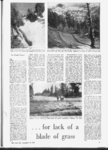
Show nrrr 1i Tprrrn ygm $?& X v - - - isy, .Y ft v JC , r'w, , ,- v 4 , aj & L f ft n hi ' v 5 ss - r P?3s:r. $ ' . '. 4 i i V f M & $ X v' fi k:, !yw itV p 4 ) i - 4 jawWf Frank Tinker city-dwelle- ? v-r- n iH5 V v f, v 5X0: ever, as a hurry- and that includes most of us have taken only a mild interest in the constant talk of over-grazin- g and reforestation which has ensued during the ptvrt year. After all, our home is not on the range. But and not so old at that, have not been so complacent They may remember 1923, 30, or 36 and the disasters such complacency brought roaring down from the mountains overhanging the Wasatch basin. FOR DECADES before it had been obvious that unwise use of the slopes which overlooked these main centers of Utahs population was slowly creating a hazard The timbers cut from the forests above Willard kept two sawmills busy and furnished the ties for a railroad. Grazing above Davis County had laid bare the steep, high pastures. Owners all along the front had frequently burned the brush from these mountainsides, hoping that forage would thus be improved. And, by this time, only one third of the original cover remained. Then on August 13, 1923, a heavy summer rain dropped on these denuded areas. The drops puddled, chipped at the loose soil fragments which had been exposed, could not sink into the soil, and moved rapidly down the gulleys, picking up loose sediment as they went With a roar audible miles below, the rolling mass incorporated boulders weighing as much as 200 tons and came grinding down the canyons. A teamster heading up from Farmington felt and heard the tremendous racket and, fortunately, climbed the nearby hillside to peer ahead. As he watched, the rolling mass of mud swept close below him, engulfed his team and wagon, and churned on. Some bits of the wagon were found days later far down the canyon and out on the flats. Similar floods occurred all along the Wasatch front. old-timer- s, EVEN THESE, however, failed to convince many that such inundations were not simply natural phenomena which probably had been occurring for ages. Nothing was done in many places to recover the slopes, and each year small flash floods gave their insistent warning of the growing threat Seven years later, to the day, another two inch rain struck the abused watersheds and the mud and rock again rolled out of the canyon mouths to destroy and kill. Six persons in Davis County had lost their lives from these strange cascades, and this was enough. Belatedly, a prograny of rehaundertaken wa bilitation there. As By 4 s 'y' a , A X. .rr S. ing urbanite, stop to consider your debt to a blade of grass? Many ' X i Did you y 17 x $ Only hillsides nailed down with network of grass roots can withstand fore of runoff from tremendous snowpacks on Wasatch ridges. bjr " 4 v I V1 t f $v fc . oMvW-Wti- et . U 4 v JWi iV.-V ir ' V s 5V I T 'X t v ? S 11 f' V f ' , -- X P& ' v ., ''. '" iiwr9 -' Sml. - 41. - iJ,' K .v a temporary protection, terraces and wide trenches were carved in watershed above Willard. the time they have' been wont smooth, vegetation will remain to protect mountain side. later and 30 miles same north, the gigantie waves of mud swept out of the canyon above Willard, crushing 40 homes, a power plant, and ft community installations, overflowed gardens and fields and covered the main highway to a depth of several feet, closing the road to travel through the village for weeks. Two women were crushed to death in their home, many others narrowly escaped death or injury from the tossing grinding mass which followed, wave upon wave, down the steep inclines. Unwary persons who ventured out on the soft flow, thinking that each slide was the last, were menaced by the following surge. THIS CONVINCED even tha most reluctant. Survey parties followed the deep gullies to their sources, and found that as in Davis County the flows had originated in critically denuded areas high in the watersheds, Some of these areas were surprisingly small, one which started a $120)00 mud flow through the Davis watershed being only 75 acres In extent. In all, these flood source areas averaged only 18 per cent of the total watershed, but they were sufficient to trigger the disastrous flows. Together, these floods did upwards of two million dollars in damage, an average of almost 400 dollars per acre of Six years s flood source land. The oonv p&rison in costs and penalties was obvious. The rehabilitation work undertaken in Davis County was expanded to most of the Wasatch slopes thus far affected. Critical areas were purchased and transferred from private to public control. With CCC help, a reseeding and reforestation project was begun. Bulldozers and crews working with horse and plow dug shallow trenches and terraces along contour lines which furrowed the face of many slopes, but held them fast. In alt 1,400 miles of such trenches were carved in danger areas, and thousands of acres reseeded. FURTHER STUDY of flood markings showed that these mud flows were indeed something entirely new, and that nothing like them had occurred in these canyons since the recession of Lake Bonneville, the much larger predecessor of the Great Salt Lake. Man, by his ignorant misuse of the land, had been solely responsible lor their arrival. TORRENTS OF more than six Inches of rainfall an have been recorded in abruptly-risin- v c , 5jsi V ; v ; 5 v ' jfvM,v & v r ' tfe.1 t i 'j. - v i 41'. Jl Water picked up mud and boulders from denuded hillside to bludgeon Willard in 1936, before reseeding program. Rampaging flood killed hvo persons, destroyed or damaged 40 homes. Salt Lake City, September 25, I960 for lack of a blade of grass . . g hour these mountains which intercept the moistureladen air masses sweeping off the Great Salt Lake. In the space of five minutes sufficient water can fall on trigger areas to dislodge the soil and start the mass downward. Dams of whatever size will not stop this tumbling cascade of rock and silt, but a blade of grass, a tiny root, or a lodgepole pine will. The grass need not be long, a grazing of its top is not harmful as long as sufficient length remains to sustain the rest of the plant. As long' as the underpinning of the vegetation remains, the soil beneath it will be held. Thu the safety of a city and the welfare of a valley hangs literally on an indifferent, sometimes ignored clump of broom clinging to a hillside. And this is why those spears of greenery are as much your concern as that of the person whose cattle or sheep graze their tops, or of the forest ranger whose job of protecting their roots would tax the ability of the most patient |