| OCR Text |
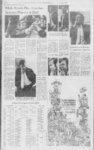
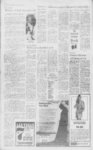
Show MAM Many people have experienced painful elimination. And many have come to accept this as if it were natural. But theres nothing natural about it. No matter what your you should have comfortable elimination. And Serutan makes this possible. Serutan is the effective laxative that forms a smooth gel in the lower digestive tract, where it combines with intestinal waste to give you com--- fortable relief. Theres no strain, and no cramps. Thats because Serutan, with its natural ingredients, adds the necessary moisture and bulk to work with your system for smooth, easy results. If you suffer from painful elimination, try Serutan. Youll be very comfortable with it. V 3 K ?r r"7 ?vK , "v v v A St li&v 10 YV ; f '?F, O tfAV 00 &'?''1 ,r, 3 r 4 V-- v ' 'v The Imperial Family: Empress Farah with her husband, the Shah of Iran, and their children (I to r). Princess Leila; Crown Prince Rez a, Princess Fahranaz and Prince Ah Reza. Photos of the royal couple are conspicuously Empress Farah has displayed in public places a over Iran, but unaffected her a to to natural, bring style country's court life. managed CONTINUED Thus at 29, Farah became her country's first crowned queen. It was a heady moment for a woman who, less than a decade earlier, had been an architecture student at the Sorbonne. In those days, Farah Diba whose maiden name means silk spent her evenings sipping coffee in outdoor cafes or taking in American jazz in Parisian cellar nightclubs now and then trying a few rock 'n' roll steps. Then, one day in the spring of 1959, hampered by her government's restrictions on the export of its currency, she went to Ardeshir Zahedi, director of Irans overseas student program in France, to request a special dispensation to get more money from home. Zahedi who has since beconr e ambassador to the United States was so impressed by her charm, intelligence and beauty, that he introduced her to his wife Princess Shanaz, daughter of the Shah. This meeting led to an introductory dinner with the Shah, and in a few months, a wedding ceremony in Iran that combined the elegance and sophistication of Parisian couture with the pomp and splendor of a Middle Eastern court. It's so strange, really, that all this happened to me," said the Empress. "When we were students in Paris we joked a lot about this, my friends and I. We read in the newspaper that our King wanted to marry again and my friends used to tease me, Why not you?' " Although not of noble birth. Empress Farah comes from one of Iran's elite "1000 families" and can trace her ancestry back to the time of the prophet Mohammed. Her father, an army officer, died when she was 9, and she and her mother then lived with her uncle, a wealthy architect. A former honor student and star athlete she excelled in swimming and basketball and still holds the Iranian schoolgirl records for the high and standing broad jumps Farah got her first glimpse of the Shah when, as a Girl Scout at the head of her unit, she dipped a flag in salute to him in a parade honoring his 34th birthday. "You know," she said, "in a sense, it wasn't easy to marry the King because I had always loved him as a citizen loves his king. Suddenly, I had to change and love him in a different way It was a time of learning for me, learning the responsibilities that go with being a wife and queen." ... A UN key-not- er One of her first major official acts involved opening a three-wee- k United Nations meeting in Tehran devoted to the advancement of women's rights. "The role of women in Iran has changed a lot," she noted. "We have ended polygamy, reformed the divorce laws so that women as well as men can ask for a divorce and today, I am proud to say, our women participate in every sphere of our national life. We have women working in executive jobs, in the government ministries, in parlia ril- - ment and the senate even as mayors of towns and villages." Farah has even succeeded in upgrading the position of Empress. For one rething, she is the first Iranian woman Shah's gent in over 1000 years. At the urging, the Iranian constituent assembly has designated her to rule the country if her husband should die before the Crown Prince's 20th birthday. "In general," she said, "I think women are just as qualified mentally and even emotionally to lead a country. Nowadays, it's difficult enough to find a man who is wise and strong and good enough for the job so it would be silly to rule out women." Alone to Peking Then there is her involvement in international affairs. Thanks in large measure to her efforts, Iran has either participated in or played host to spectacular events like Spokane's Expo 74 World's Fair and Tehran's Olympic-styl- e 1974 Asia Games. More important, though, she has skillfully represented her country on a number of diplomatic goodwill missions such as her headline-making trip to Peking two years ago which was also her first official visit abroad without her husband. But is she happy? "Happiness is a big word. You can't expect to be happy all the time. You have to accept the fact that life has its ups and downs. The moment you accept that its much easier I try to make my happiness with a lot of little joys and there are a lot of litte joys in the world. . . . And it's very important to find happiness in the happiness of others your friends, your family. . . " Someday Empress Farah would like to write her memoirs. "It's important for my personal and spiritual development," she says. Meanwhile, her hobbies include art history, playing piano and listening to music everything from Mozart and Beethoven to contemporary pop stars like Bob Dylan, Cat Stevens and Jimi Hendrix. No choice "Iran has finally found its place on the map of the world," she said. "I think the present image of Iran is that of an ancient, traditional country that is also rich, progressive and dynamic. And I hope that image will not change because of the oil problem that if people in Europe or America are paying more for gasoline, shoes, groceries that they don't feel it's our fault. People should understand that we are an old country that suffered for years because we lacked material facilities. Now we are using our wealth to solve our problems. How else could we do it? "Basically, I hope that our country will progress and that our people will have a decent standard of living but without losing the human, spiritual side of life. That is really the big challenge facing Iran." 8e-- trKl' to? fa |