| OCR Text |
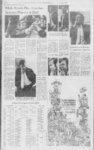
Show w.-- -.; 4 - .rvsM.r,.,S(,) s r , fc. pr.v vt- 'rropi;-'Kvwm- 4 .- favFyrfYV.7m,mr In ...( .. r . fr& Kingmaker Mel Laird and wife. Aside from Nixon himself, Laird was die man who was most responsible for the selection of Gerald Ford over fohn Connally. I You all know Jerry Ford. You've all worked with Jerry Ford. His greatest ambition in political life is to become Speaker of the House. Is this the guy you want to become President?' "I think Nixon felt strongly that the Congress liked Jerry Ford but did not hold him in any great Presidential light. Nixon wanted to provide the House with a contrasting alternative in case the House seriously considered impeaching him. Of course, as we all know now, his schemes and maneuvers backfired. He couldnt worm his way out of the Watergate mess. He couldn't stonewall it. But back in the fall of 73 he didn't know that. And he was sure Jerry Ford would help. And Ford sure did try. He went up and down the country telling everyone that he felt the President was 'totally innocent and completely exonerated.' He was intent upon proving his loyalty to Nixon even though Mel Laird and others told him to be careful." Tom Brokaw (NBC White House correspondent): "Ford was appointed Vice President by Nixon as part of impeachment politics." Melvin Laird (Secretary of Defense, "I prepared people in the ): the Spiro Agnew resignafor Congress I was involved and strongly in suption, Vice Presifor Ford the porting Jerry he would that eventually dency, feeling become President. "I knew that Mr. Nixon favored John Connally for the job. He had great respect and admiration for Connally, more so than he had for Ford, and he really felt that Connally would make an outstanding Vice President. I know many other candidates were mentioned, but basically it was a contest between Ford and Connally, and I sided with Ford. "I conferred with my old friends in the House, men like Barber Conable of New York and John Rhodes of Arizona and several others, and I got them to write letters recommending Ford, and evidence I took those to the President confirmed quickly. that Ford would be I put on a drive for Ford because I felt then as I do now that he was the best man for the position. I had nothing against Connally, but he had antagonized many Democrats by converting to the Republican Party, many members of which didn't really accept him as a true Republican. They sort of regarded him as an opportunist I felt there would be a long hard struggle to confirm Connally, while Ford would breeze through. "Still, the President admired John Connally, his stature, his sureness, his authority. I agreed with all those virtues, but I told the President this was got involved in the milk funds scandal, of course that I couldn't go along with Connally. I was pushing for Ford, because he had Congressional support, and he had Congressional support because he was a man of honesty, integrity, and fairness he could disagree with a man without becoming disagreeable, he could differ with a man and still retain his friendship, he was a healer of wounds, not an infiicter of wounds. "I felt Jerry Ford was essential to the country, particularly at that time when there was so much rancor and antago nism. In two days' time, the President came around to my way of thinking and offered the job to Ford. But always insofar as I know, and I was pretty close to the situation, there were only two men in the running. Ford and Connally. And I think the best man got it. "I think Jerry Ford was the best man in the country to become President. I look back on his first few months in office. He may have made a few mistakes. What man doesn't in feeling his way? But no one else could have brought this country through the period of transition as smoothly as Jerry Ford. He is a man of conciliation, compromise, courtesy,' and cooperation. There is nothing antagonistic about his nature. Regardless of Mr. Nixon's motives, he made a good move, I believe, in placing Jerry Ford in a position to lead the nation." Carl Albert (D., Okla.), Speaker of the House: "During the late afternoon of the day of Mr. Agnew's resignation Oct. 10, 1973 I received a call from the President. He wanted Senator Mansfield, the Majority Leader of the Senate and me to come to the Oval Office of the White House to talk to him. "When we arrived we were promptly ushered into his office. The President started the conversation. He began by saying that he thought the 25th Amendment contemplated that the President would quickly nominate a Vice President. He felt he should have the right to try to select someone of his own party. I agreed fully "He said he would be glad to have from anyone and recommendations added he would consider any recommendations we might have. "I felt this was just a matter of being courteous to Senator Mansfield and me, and I wasn't going to make any suggestions. It was obvious that he was moving to get somebody who would help him 1969-1973- n and would agree with him on issues and who would be confirmed. However, Senator Mansfield offered the names of two men, both Republican, he thought would be splendid and confirmed quickly: former Secretary of State William Rogers and former U.S. Senator from Kentucky John Sherman Cooper. "I said to the President that since Senator Mansfield had proposed names I thought I had somebody. The President asked, 'Who is it, Jerry Ford?' I said, 'Yes, sir.' Congress' job "The President said that it was incumbent upon the Congress to move as expeditiously as possible, that the 25th Amendment contemplated that the country should have a Vice President at all times and that the stability and security of the country demanded it. "He was kind enough to say that I would be fine as a nominee as far as he was concerned He obviously wanted and was entitled to name h;s own man . . None of the correspondents, legislators, or government officials interviewed believe that former President Nixon exacted a promise of pardon from Gerald Ford in exchange for the Vice Presidency. Some suggested that Nixon judged Ford's loyalty correctly, that he knew "in his bones" that Ford would come across with a pardon. "After all," offered one White House correspondent, "Jerry Ford is basically a political animal, a classic example of Sam Rayburn's admonition: To get along, go along'; he knows that a basic ingredient of politics is the payoff. He has probably gotten more jobs for more people, done more favors than anyone in government. He was the one who even brought Gordon Liddy into the federal government. Nixon knew well that Ford would show his gratitude when the time came. And Nixon was right. Ford not only pardoned him but agreed also to give him all the transition money he wanted and everything Nixon wanted in the way of retaining his tapes and papers. Unfortunately for Nixon, the Congress wouldn't go along with Ford, and the deal on the transition money and the tapes and papers was radically revised. But at least Nixon will never have to spend a night in jail for his role in the Watergate scandal. Ford pardoned him befr re he was even convicted of anything." I Wide agreement Making History: For the first time, a Vice President nominated by the President under the 25th Amendment is sworn in to office. Chief lustice Warren Burger administers the oath on Dec. 6, 1973, as Mrs. Ford and Nixon look on. i I Some veteran politicos and newsmen suggest that Nixon may have erred in choosing Gerald Ford as his successor that is, as regards the nation's need for leadership in a time of economic crisis but all agree to a man that Nixon was right on the mark in choosing Gerald Ford as his persona! saviour. 7 |