| OCR Text |
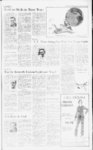
Show i by George Michaelson TOKYO. ow would you like to have a job where nobody would fire you? Well, most Japanese workers are in exactly that position. Even now; with Japan in an economic slump like most of the world the firing of an employee by a major company is practically unheard of. Says Sony TV engineer Fusao Ishii: "A man who works for us would probably e have to be a thief, or a drunk, before he would be asked to leave and even then, he'd probably be given a warning first!" The reason for all this consideration " full-tim- the "lifetime employment system," a e "underunique a worker stays with standing" whereby a company for better or worse, in good times and bad, till retirement age generally 55 do them part. It's a system that has existed here since Japan is employer-employe- began its industrialization 100 years ago and all big companies participate (small ones do not). Under this system, when a worker joins a company he is joining a tight-kn- it family; in fact, there is a well-knoJapanese expression, kigyo ikka, which means "One company is one family." The longer the worker stays with the "family," the more he earns. If he were to shift to a new company, he would lose seniority and suffer a drop in pay. But perhaps just as important, his reputation as a loyal worker would be suspect; and in japan, loyalty to the company has long been considered an important virtue. Flags and pins Major Japanese companies have their flags, mottos, and songs, which employees sing each morning or on special occasions. And to show their devotion, many workers proudly sport a lapel pin bearing the company's insignia. As one Japanese plant manager stated: "The sense of loyalty runs deep, not only on the job but also outside. If a worker were seen in a compromised own Starting the day with a song: In a system that offers lifetime job security in exchange for loyalty, Japanese such as these employees of the giant Matsushita electrical company enjoy the morning pep rally, wear company pins. position, say, intoxicated in a restaurant, he would be embarrassed above all, he happened to be wearing his company pin. You see, to throw a bad light on one's company is far worse than to simply embarrass oneself." In return for their loyalty, employees derive a host of benefits; and, usually, the larger the company the larger the benefits. Most of the big ones, for example, have their own health clinics, invacation resorts, sports facilities cluding golf courses and tennis courts and private housing. In addition, there are often dating services for the single, marriage counseling for couples; and when an employee has a birthday, gets married, or has a child, there is a congratulatory note from the employer, and some yen to go with it. if Lean times But perhaps most important, especially in lean times such as these, is the fact that whether the company is mak- ing money or not, jobs are secure. (Indeed, with only small businesses laying off workers, Japan currently has one of the lowest unemployment figures in the world 1.7 per cent.) What a company will do if it is losing money, is reduce or eliminate the workers' bonuses, which amount to several months' salary; re semi-annu- 12 After work houri, these Sony workers take advantage of a range of company facilities including golf courses, housing and singles dating service. al duce overtime work and, if absolutely necessary, give workers a few days' "vacation" each month, at 60 per cent of their pay. "This way," says one Tokyo executive, "the burden of recession is shared, and nobody loses his job." Nevertheless, not everyone is satisfied. Prior to the economic slump, there had been growing rumblings for change especially among the young. Says researcher KunitakeAndo,a in a major electronics firm: "Lots of young workers are beginning to tion this traditional system which makes you stay in one company all your life. They would like to feel free to go to a new firm without losing seniority, and without having their whole reputation attisuspect. The tude, many feel, should be loosened up; and as for wearing company pins and singing company songs, well, many young workers frankly want no part of it." To almost all of Japan's older workers, however, job security and all the benefits are' ample payment for their unwavering loyalty. And as long as the recession has been going on, even the most outspoken young people have kept quiet; at the moment they seem quite willing to pick up their weekly paycheck and if need be, to go on singing. |