| OCR Text |
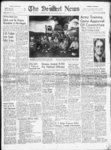
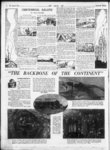
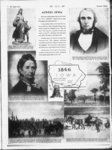
Show 4 es The Dean( NIOil r4,4, 1847 -- 40.44.1 Diah' Smith Esteemed . I Citizen If Utah had an esteemed citthe Mormon Pioneers arrived, he was Jedediah Strong Smith, "the first white man to traverse what is now Utah from north to south and from east to west" In 1947 Utahns can be proud to claim "Diah" Smith, as he was called. He was a Christian gentleman, a respected leader and a matt of proven courage all of this at a time when ribaldry reigned pretty much in the camps of western America's -trappers. The sixth "of his mother's four.i teen- children, Jedediah early in his youth trapped and hunted in izen before " Centennial EdiUc 24 31117 f - gar ( ounty Home beasts CACHE VALLEY'S LAST BUFFALOShaggy once roamed over Utah, and were hunted by trappers as well as by Indians. Cache Valley was named for crude storage vaults for furs dug in the earth and lined with tree boughs. - -- - Historical Society ?Wan. Early Trapper Described Cache Mishap Not all the casualties in Jim Bridger Discovered Salt Lake. Ns other tripper', name is linked more with the lounding of Utah than that of James Bridger, better know ea just plain "Jim." ' Jim got his start as a mountain man when he was an orphaned youth of 18 working in a St. Louis blacksmith shop. Then it was tbat he answered the call of a trapper firm for "100 enterprising young men to escend the Missouri to its sources Demand for Beaver Pelts At the time there was a trefor pelts. mendous demand Men's tall beaver hats were fashionable on the streets of London as well as in the big centers of America. That was in 1822. Two years later, Jim Bridger flo a ted down the Bear River in a bull-bo-at made of green buffalo bide and poles. The stream led him into a vast lake. A mouthful of its water told Jim it was brine. He had discovered the Great salt Lake. In 1847 Jim met Pres. Brigham Young and his first company of pioneers coming west. He described the - valley of the .Anal Utah's trapper era came from the Indians and grizzly bears. James P. Beckwourth, an early trapper, in his journal,i describes an accident in in 1825: Cache Valley "While digging a cache in the bank, the earth caved in, killing two of our party, who were Canadians." Trappers dug caches, or holes, in the ground and lined them with leaves and branches. Then pelts were placed in them, and the holes sealed up. Furs were well preserved in these , crude storage vaults. Great Salt Lake to them, and the gave a gloomy report-abosevere frosts in the region. ut a Bridger had established trading post in what is now southwestern Wyoming, and it became an important landmark along the Mormon trail as subsequent companies paued by. Jim was one of the popular guides of the west. It is said that he knew 11 Indian languages, although he could not read or write English. At 63, Bridger retired to a farm he bought near - Kansas city. Death, came " to him- ' 13 years later. Camps Life of Trappers Had Variety Life in the camps of early trappers in what became Utah was both exiting and dull, if old journals are followed. A favorite rendezvous-i- n the 1820's was on the site of present-da- y Ogden, Utah.' There, at frontier celebrations, trappers and scouts indulged in target shoot- ing, jumping, dancing, songs, drinking and telling of yarns. There were blood curdling experiences, toe. James P. Beck wourth, a well-knotrapper, had a battle with Blackfeet Indians near the Ogden rendezvous. He lost four men and seven others were wounded. The trap-pekilled about one hundred Indians, but took only 17 scalps. After they reached camp, a "scalp-danwas performed by and women, all the many of the mountaineers taking part in the dance." Two days leter, about four thousand Snake Indians came on the scene, and they "took part in our scalp-danc- e, and such a scene of rejoicing as we held has seldom been witnessed in the mountains." Visiting Fort flobidoux in 1842, Joseph Williams, a Methodist clergyman, described some of its Inhabitants as , "fat and dirty, and idle and greasy." While most trappers were no doubtrough and rugged and indifferent to danger as well as to there - were those turpitude, among them who were as well as bravo, One of , ns ce half-bree- ds high-mind- ed of beautiful other scenic and recreation,. spots which are fast chewing tourists to this embraces 'area. - ' - The aria yras not Pam-wa- n, Fights With Bear -While still a young man, he had a fearful experience with a giant grizzly bear whileon his way to the West from a fort situated in what is now South bout with the Dakota. After-th- e bear, Smith lay prostrate on the ground, almost scalped by the brute's sharp claws, and with three broken ribs. Hardly conscious, Smith Instructed one of his men, James Clyman, to stitch up his ragged skull with a needle and thread. The wounds were then - treated with buffalo bile tonic,- beaver wool for dressing, and buffalo flesh as a remedy "for phthisic." Desolate Country Clyman, who performed the crude surgery, also came to Utah later. Crossing Utah's salt flats in 1846 with Lansford W. Hastings, he described the region as "the most desolate country perhaps on the whole globe." Jedediah Smith, tall, well-bui- lt and with blue eyes and brown hair, visited what is now 1 Utah as early as years before the Mormon Pioneers came west. He reported seeing no tracer of buffalo, some antelope and mountain sheep and great numbers of black tailed hares. The following year he again visited the region, characterizing the Indians as the "most miserable of the human race having nothing to subsist on (nor - any clothing) except grass seed, grasshoppers, etc." On this journey, Smith himself found food so scarce he was obliged to eat the flesh of his horses as they collapsed. Smith often roved with a Bible in his hand. He could quote freely from Wesleyan hymns, and he knew ancient Greek history welt .,4.'t ., , & - r.Olefo.00Witoofttim&,M,au. dustry, today, " " is livestock. :701 1826--'-2- A seldom traveled road from which the beauties of Bryce Canyon can be seen 'from on automobile is this road into the town of T. ropic them Was Jedediah Strong Smith, whose adventure took him through much of what became Utah. He traveled with a Bible as well as a gun, and prayed often. is situated near the a,,,g,,,,t t the city being near the north edge of Bryce Notional Pork. Other scenic Can- yon. A road could easily be built from the town into the heart of the national monument. This would make it possible for tourists to see, ., Residents derive a living from livestock raising, farming, mining, sow mills and tourist trade. Future growth will depend largely on tourist trade, . 4 Tropic the first winter, settlers here kept olive on wheat and beef fat until supplies could be brought in.. During the Black Hawk War (1867) the town was abandoned, resettled four years later. This city today is the Garfield County seat. set- tied until 1864, when a few families moved from Iron County, to the present site of Pantuitch. ever, the land and the possibilities of settlement .. were hilly explored by- a group of Pioneers whofollowed the Sevier River to its source as early as 1849. The county was named in honor of Pies. James A. Garfield. Chief in- east boundaries pf Bryce Snowbound fr.. Canyon, Garfield County also Illinois.. $4, detni;,4 e from their cars, the formations which now ere seen only by those who hike into the canyon froM the main lodge. attractions, such as Panguitch Lake, which fills a volcanic basin a mile of a. mil long and draw and tourists wide, sportsmen. Excellent fishing and hunting is of. fired in this area. three-quarte- rs Esc tante, one of the major towns in the county, was settled in 1875 'and named after Father Esca tante, Spanish priestovho came no nearer to this spot thou 150 miles. The natural bridge (shown above) is southeast of Escalante. The Smoker, mountains and scattered Indian pueblos are other scenic attractions of the area. This handsome Main Street livestock trading center. Is in the clouds (latitude', 6624 feet). Residents enjoy their cool summers.' The city is Lost spring, the citizens of Escalanto dedicated a monument (shown above) to the memory of the'first settlers. This picture was taken ing the ceremony. , - 4 0: - , " , ,4 - 4 , , I 1 Much needed 'ts this new - 15 - bed hospit9i,'stoffed by two doctors. is 50-5- 0 . The hospiter was built by the Church end cons. bosis.-- Tropic reservoir was completed 55 years ago. 'Today, the reservoir supplies Irrigation Water for the valley of Tropic, and also provides a beautiful camping area, good fishing. The east fork of the Sevier River is the source of the reservoir. - Adv. Courtesy Pasfulich at . 1104.: Some 17- miles from the city of Panguitch is beautiful Panguitch Jake, which fills a volcanic basin a mile long and of a mile wide-Th- is is a resort center offering fishing, boating, horse backlog: - three-quarte- , Adv. Courtesy .County rs , |