| OCR Text |
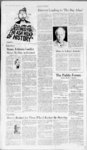
Show LOVE tant modem romantic works which we will soon discuss. Once upon a time on the isle of Cyprus, there lived a sculptor named Pygmalion who believed no woman perfect enough to be worthy of his interest. Instead he carved a magnificent female statue out of ivory with which because she was perfect he fell in love. Understandably, the statue was not moved by his frantic wooing. The desperate sculptor prayed to the goddess Venus to provide him a wife similar to the image he had created. And lo and behold, when he returned home and kissed his statue hello she responded In the area of love, this was one small step for mankind. For, whatever the unusual circumstances, Pygmalion did marry the woman he had created to his own specifications and whom he passionately adored. It was not, however, much of a step for womankind, inasmuch as we note the absence of two rather important elements in the myth. To begin with, even when animated, Pygmalions statue is not given a name (later versions would call her Galatea). And secondly, she doesnt speak a word. Theirs was hardly what one might call a marriage of true minds. But it was a marriage, and one based on romantic love in which the couple lived happily ever after. And, perhaps most important, it provided material for millennia of writers to adapt according to their own philosophies of love. At this point, some punctilious scholars may insist that while Ovid may have given us some strong hints of romantic love, its real inventors were the troubadors poets inspired by Ovid who sang of courtly love in 12th century southern France. But erudite professors notwithstanding, the medieval minstrels really don't deserve the credit for being the Thomas Edisons of romance. Their claim is considerably weakened by the fact that they rarely, and sometimes never, even saw the damsels they immortalized. Theirs was what a modem songwnter has called a fine romance with no kisses." Dante, for example, made literary history with verse inspired by his passion for Beatrice. In fact, he continued read about them in Shakespeare's version. And the Bard romanticized history a great deal, composing a kind of middle-age- d Romeo and Juliet. For in the Shakespearean tragedy, Cleopatra commits suicide after Antonys death as impulsively as Juliet does after Romeos. The Romans did have an extremely modem love 18). Among poet, the notorious Ovid (43 B.C.-A.other things, he composed the most famous how-t- o manual in antiquity, The Art of Love. It contained numerous handy tips on how to seduce the object of your desire. It won the poet eternal fame and nearinstant exile to the Black Sea. But in addition to pragmatic advice, Ovid also wrote a massive work on the mythology of love. And here he showed touches of as well as a sense of w hat romanastute psychology tic love would become in future ages. It would be useful to concentrate on the single myth which, thanks to Ovids account of it, gained wide popularity and has been the source of two very impor- - ! V 0 W 2 4-WA- Y' Breathe free all day with long acting nasal spray. how great it feels to unstuff a stuffy nose So fortify yourself or with the long acting nasal breathing relief of 12 from relief cold sinus or to fortified to hours ef tfs give up spray the breath al lergy congestion Count on of way every Ydu know all-da- y ht Y Ovid gave us the fast sparks, but love is something all of us reinvent every time that special feeling strikes us l.Olft u( vi j) Valentino i Fortify yourself with the breathing relief of long acting nasal spray i , t t I ' 3 4-W- i ' -- 'y r j I . MmmMIHTKJ long acting rmtai , tprty Lt, . ;-- Fast acting Long acsng foutfiour formula- - twalvaxxr formula. Use Only As Directed. Bristol-Myer- ! ; t I pw, r rn YOUKvS s PACE 10 FEBRUARY 12, 1904 PARADE MAGAZINE |