| OCR Text |
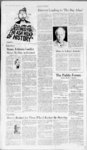
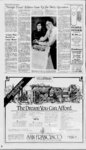
Show He has won fame, fortune and a happy family V WHEN PAUL ANKA WAS BARELY ? 14, he made his way to Hollywood and recorded a song he had written. A month later, he was back home in Ottawa, a failure. That was long ago. Now, as he recalls that moment, he smiles and you know that he is proud of that time and of the way he has since managed his career and personal life getting the best of both worlds. We are in the den of Ankas Las Vegas home his home away from home and hes enjoying a fruit drink after a couple of hours roasting by the pool . It's a torturous way to gain a deep tan. but the result is de rigueur for this nightclub singer who can still make a woman's heart beat a little faster when he hits a husky note in the soft glow of the baby spot. That early failure didn't stop him for a moment. He went back to school, continued to study piano and to write songs. But his writing remained immature. Then fate took a hand: Anka fell in love with an who gave him something real to write about unrequited love. He named a song after her. Diana. Soon after, he heard that ABC Paramount Records was holding auditions in New York and talked a reluctant father into lending him $100 for the trip. My mother always believed in me, he says, but my father had to see it happen before he w as converted. Remember that in those days. 1955, it was very unusual for a to be singing professionally, espeIn a sense, I broke that barrier." his own songs. cially n With a songs under his arm. Anka headed for New York. At the ABC studios, he sat at a piano and launched into Diana. He got the contract, and a few weeks later"Diana was on its way to becoming an international phenomenon, climbing to No. on all the charts. To date, it has sold more than 20 million copies. Anka explains the song's success: A number of factors were involved. Pop music was in its infancy, and The Platters and I were the new w ave. evolving out of the Forties and setting the stage for the Sixties. All the countries that loved everything that w as American were suddenly hit with this new music. And there I ld half-doze- 1 COM PHOTOGRAPH OF ASKFMHy tLRiPAL'L AUCIA.ATHEA ALEXAAPRA I of the times, they couldnt get into the hotels or restaurants, and wed all sleep and eat in the bus. Id never seen a black person until I came here, but 1 knew something about prejudice. At one point in Canada, I was called A lot black." He shrugs and smiles. I'm Lebanese, and I used to hang around with Italians and Jews . We were the minorities. Still, that year and a half of touring w as a valuable experience. I learned my craft, got a good sense of audience, and it probably saved me from getting spoiled. It matured me in the business, gave me a good balance w hich I really needed, because it soon changed drastically. A lot of young people who got to the top too easily and then failed were destroyed by it. Long before Beatlemania was to sweep pop singers off the charts, Paul Anka was one of the worlds top recording stars. By early 1959, before he was 18, he had released 20 top hits of his own songs, including You Are My Destiny, Puppy Love, Its Time to Cry, Lonely Boy. Put Your Head Paul and Anne Anka 20 years of marriage and five daughters. on My Shoulder. Don't Gamble With Love and It Doesn't Matter Anymore, which he sincere, adolescent voice, was, with that and young people everywhere just embraced it. wrote for Buddy Holly. He wrote the score for the film Fame and fortune, however, were not yet at hand. The Longest Day, appeared in several movies and While record companies the world over were reaping completed his high school studies on the MGM lot. vast profits with Diana. Paul was touring the country, Having survived the era of the Beatles, Elvis and with Irvin Feld's rock 'n' roll show. others, Anka's popularity has risen again. Today, beplaying We went for 80 and 90 days at a stretch that was sides playing concerts and nightclubs the world over, our lifestyle, he says. We paid our dues. Seventy he has a most impressive discography. He has written black artists. more than 400 songs and sold close to 100 million percent of the acts were rhythm-and-bluhigh-pitche- d, rs es 0YID BY 4AN E AMELIA ASD AMWDABY ORM AS SEEFF DEM PAGE 4- A FEBRUARY 12, R 1944 I S PARADE MAGAZINE |