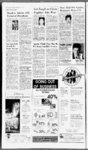
| Show The Salt Lake Tribune Sunday April 15 1990 Lithuanian Secession May Shut Soviet By Elizabeth Wood le and Janusz Bugajski Special to Newsday When Lithuania voted itself an independent state Soviet Foreign Ministry spokesman Gennadi Gerasimov told reporters -Lithuania cannot stand on its own feet if only because it is a recipient of petroleum at — — - -- -- Western Europe Lithuanian secession — ei 4 - 7 t - ::----- Yet Lithuania has followed the lead of Eastern Europe in risking the loss of apparent Soviet largess in the form of energy subsidies for the goal of national sovereignty If energy is indeed a major issue for the struggling economies of Eastern Europe and the Baltic republics then what is the underlying rationale of those states that have said "nyet" to the Soviet energy "carrot"? Evidently the energy carrot is not worth the stick of Soviet hegemony Lithuanians together with the Estonians and Latvians just behind them have opted for independence whatever the consequences A - - !!! --- 0 ''YvlafTrk Moscow has made promises in the past few days that it would not impose an economic blockade on Lithuania But if political pressures and military threats fail to persuade Lithuania to retreat on independence Soviet leaders may well be tempted to turn on the economic heat It is difficult to ascertain however just what the economic cost will be or who will be presented with the larger bill — Lithuania or the Soviet Union While Lithuania may suffer e the loss of Soviet crude oil natural gas and coal that meets 97 percent of its energy requirements the Soviet Union also stands to lose a major component of its energy trade industry and a vital link in the economically integrated Baltic states The Lithuanian city of Klaipeda for example is the Soviet Union's largest port for the export of petroleum products The loss of access to Klaipeda — formerly the German city of Memel — could mean direct financial losses for Moscow as well as further complications for the Soviet Union's already confused oil industry Not surprisingly the Kremlin has demanded continued access to that port on the Baltic Sea if not outright RIR wo - i 'A : 0: - 7 17 I : so ' t - t !6 E1 W4b1 - I - MCIi tax -- - - - - - broadcast''"' : 46" ‘ sxr-- - Av - yr 4 0 14 -- 1'' 4 rat"' : h ' N -- NV d - - : 'At' :"- ' - 00- - -- '' " - " ----- AN111 ffti 4 4 '44 -- : 5:2' 1 il I( triAV It lqz-it:- A" ! ii T "I 44(11 1e ti 014 4 Nte't ‘t Ai - tos mrt :- f ttIRE1 A u ril:--09- ' 1 fit:14:!-- - ANI:iii7!!:N01 oN1I t s'N : 1tOlt 40 gh : ?:- I i Nkv "-- 21 — "0" 't - A — OUP' '16N VW' 1re VI I - 4 't oftik ei t STATES 16011 y ç k r )k BALTIC ta t OP 111E iN 111) a :- Ft4141v 7:11411 OMMIIMS "1 A V" --- z 111- - kr:NZrit4 I Pler 411 '4 -‘ NTERIABONAL COPYFIGN1 BY INC CANTOMWS low-pric- t "But remember who's the boss!" annexation whatever the future status of Lithuania Some basic facts about the Soviet energy trade help place the potential loss of Klaipeda into context Oil and gas trade with the West accounts for close to 80 percent of Soviet earnings and is essential given the dire state of the economy Crude oil and natural gas can reach the European market through existing pipelines trucks and railroads and the cost of transportation to Western consumers is not terribly prohibitive hard-currenc- y However refined petroleum products are more expensive to transport making a convenient port city such as Klaipeda particularly valuable to The Soviet oil industry is lose ready outlets for refined petroleum products This is especially true because Soviet refineries with their old technology yield a product mix that is heavy on mazut (an industrial fuel oil) and scant on lighter products such as gasoline When the Soviets seek larger amounts of lighter fuels for their domestic needs they must run a correspondingly greater quantity of crude oil through the refineries to get the needed amount of lighter products The downside of this equation is a glut of mazut that is needed neither at home nor in Eastern Europe The heavy-fue- l glut is further exacerbated by the recent Soviet trend toward using more natural gas domestically for purposes previously fulfilled by mazut The Soviets use such export centers as Klaipeda and other Baltic ports to dump the excess mazut on US Policy on Postwar Aid to Vietnam By Lindsey Phillip Dew Special to The Tribune In the last segment of her eight-par- t series on Vietnam Diane Cole associate editor of The Tribune's editorial page raises the possibility that she may have been brainwashed on her Vietnam tour I doubt it 4 found the first seven segments to be the efforts of a responsible journalist who justly reported what she saw and heard She's no Jane Fonda However the conclusions she drew in the final segment make me doubt the depth of her homework and the myths she perpetuates cause me to suspect that she had endured considerable brainwashing here in the United States Ms Cole calls the US's refusal to give money to Vietnam and its blocking of international loans "petty spite and arrogance" "bullying and pouting" and "vindictive and unfair" She cites as precedent our policy of helping Germany and Japan regain their ecoShe fails to recognize the nomic important differences between our policies then and now After World War II had wrecked Germany and Japan we recreated their new governments in our own image building new democracies that today are our valued allies However in Vietnam's case the regime that signed and then violated the peace treaty is the same one that is now demanding our help The treaty terms included promises of generous aid from America to help the North rebuild Instead after America had complied with the treaty by withdrawing its military the North invaded and conquered the South At that time they chose to renounce our aid in favor of their ambitions to conquer and dominate South Vietnam Cambodia and Laos After achieving their goal they now want our money I am relieved to hear from Ms Cole that after lying to us deceiving us cheating us and breaking our treaty the Vietnamese rul well-writte- n well-bein- g ers bear us no grudge Vietnam's inability to attract foreign loans and investment is due much more to its own failure than to our interference The IMF the World Bank the United Nations Development Program and the Asian Development Bank (ADB) all made loans to Vietnam as did some individual Western nations It is true that in 1980 the United States used its influence with the World Bank to prevent future loans to Vietnam However the ADB ceased making loans to Vietnam because of its military occupation of Cambodia The IMF suspended making loans to Vietnam in 1981 due to its refusal to instigate economic reforms that would enable it to repay the loans In early 1985 Vietnam defaulted on its loans to Western creditors Most bankers are loath to loan more money to proven deadbeats In spite of Ms Cole's statements Vietnam can't blame its lousy credit rating on America Vietnam is one of the world's poorest nations due to its corrupt inefficient leadership To paraphrase Ms Cole's statement about Ngo Dinh Diem Vietnam's current leaders are more interested in protecting their own power than improving conditions for their people The 11 million-maregular army of Vietnam is more than a third larger than the 800000-maUS Army The cost of such an enormous army is paralyzing to the Vietnamese economy but comforting to the leaders whose powers it maintains It is a fact of life that the term "Communist government" is synonymous with "basket-cas- e economy" Although Vietnam's Mekong Delta is the premier region in the world malnutrition is often rampant Ms Cole's statement that "sentiment against the South Vietnamese regime and the American imperialists was so strong even in the South that there was no salvaging the State of Vietnam" is a restatement of the oft n n g heard myth "The war was unwinnable" It is a fact that the US made lots of political and military errors during the war What we did and the way we did it was like trying to perform an appendectomy through the rectum But the fact remains that when the operation was over the patient was still alive and improving By the time the American ground combat troops were withdrawn the urban centers and most of the populated rural areas were secure The Viet Cong had sacrificed themselves on the altar of the Tet Offensive which was a sanguinary disaster for them (Only in America was Tet regarded as a defeat for Free World forces) The surviving VC realized that their "national uprising" was not supported by the bulk of the nation Many of them accepted the amnesty of the "Chieu Hoi" program and joined the republican forces Most of the rest fled to Cambodian sanctuaries With the decimation of the Viet Cong the effective combination of VC intelligence gathering and North Vietnamese armed might was crippled leaving the bulk of the fighting on the shoulders of the unsupported North Vietnamese regulars That changed the entire nature of the war in the eyes of the South Vietnamese who disliked the Northerners The South Vietnamese are confirmed xenophobes By and large they did not like Americans but they feared the North Vietnamese even more Americans were regarded as a necessary evil to be tolerated until their nation was secure Although few South Vietnamese were enthusiastic about the Thieu regime they much preferred it to the regime in the North By the early 1970s important changes had taken place in the South The "Land to the Tiller" program took farmland from the large estate holders (who were compensated with American money) and gave it to the landless So- Non-Existen- LI 7 11 1 c r I 41t43 j i 4I :4:0 t: 1 ''' 1 igeg) - - :: :411 x -- v - 75----- emori L Inin - 1 )(R -:- 4---- it9 c--- USSR I r-- F n IM 1 4t4 - SOIM liti I 4 Elizabeth H'oodle is an adjunct fellow In energy studies at the Center for Strategic & International Studies in Washington Janusz Bugajski Is associate director of European studies at the center 'f c r(" 9 1' - ------ threatens the productive petroleum Other Lithuanian assets that may be lost to the Kremlin include a superphosphate plant and a nitrogenous fertilizer plant The republic has an offshore oil field as well Though drilling in that field was stopped in 1986-198for environmental reasons the oil resources could presumably be extracted at some future date if drilling methods are considered environmentally sound These and other Lithuanian assets are an important source of supply for the entire Baltic region as the Soviet planners designed them to be For 40years Moscow directed the Lithuanian economy on the assumption that raw materials are more mobile than final products Thus although crucial raw materials are located elsewhere in the Soviet Union the Baltic factories refine these materials and furnish essential finished products to other regions An acrimonious separation between Lithuania and the Soviet Union could require organizing new supply networks with the other Baltic states Latvia and Estonia should they remain within the Soviet Union Should they secede however they are already regionally and economically integrated and they have expressed their political solidarity mutual support and determination to uphold their national independence come what may The question is where will the raw materials come from if not from the Soviet Union? Even with declarations of independence the Baltic states face an intricate process of negotiations with Moscow over their economic and military interdependence Indeed compromises will have to be reached if mutually damaging ruptures are to be avoided The Lithuanians do not envisage a complete economic break with the Soviet Union and would even be willing to continue their trading relations while gradually increasing ties with the West If the Kremlin remains intransigent the Baltics may become more assertive And' any disruption of Soviet industry will have a deleterious impact on the fragile Soviet o -- 1- also viet Union with the loss of a large refinery at Mazeiklai This facility refines some 14 million tons of oil a year far in excess of Lithuania's annual domestic needs of 10 million tons Moreover this refinery is also one of the select few in the Soviet Union undergoing the kind of modernizationihat will yield a more —- prices" d Valve Energy-Suppl- y '-! - 7 A-1- economy by Design t peasants who had long been the hotbed of the revolution With their own land and instant membership in the bourgeoisie these peasants suddenly had a stake in the survival of the Republic They had heard the stories of the forced collectivization of the farms in the North and of the crushing of the peasants' revolt The American distribution to them of 1118 the new "miracle rice" doubled their harvests Like Americans the South Vietnamese "vote their pocketbooks" Though the Americans had never really won the "hearts and minds" of the people they were not feared like the North Vietnamese Many Southerners who were often reluctant to fight their Viet Cong neighbors were much less reluctant to fight against the North Vietnamese who were threatening to disrupt their new prosperity That new willingness to fight was disraster Offensive played during the North Vietnam realizing their failure to gain the support of the people invaded South Vietnam in March 1972 This was no guerilla warfare this was an open invasion of 13 divisions supported by artillery and tanks like the German incursions into France The South Vietnamese initially gave some ground But the war was transformed by incidents such as the battle for An Ninh wherein milithe Southern part-timtia took on and annihilated a unit of North Vietnamese regulars After proving to themselves and the world that they could defeat the best the NVA had to offer the South Vietnamese Army with American tactical air support proceeded to push the Northerners out The North's defeat in the land battles and the severe bombing of Hanoi and other targets convinced the North to sign the peace treaty and try to win by guile while they had failed to take by force much-maligne- d The opportunity soon presented itself as a beleaguered President Nixon found himself losing power and influence in the wake of Watergate Vietnam became a pawn in power struggles between a fading president and Congress which passed a law in July 1973 forbidding future US military action in Indochina Military aid to the South fell to a trickle while the North was abundantly by their Soviet and Chinese allies In late 1974 and early 1975 North Vietnam made some cautious probes into the South to test American reactions An America torn by dissent and preoccupied with a serious constitutional crisis offered little help When the North was assured that no significant American aid was forthcoming a second more powerful invasion commenced A weakened South Vietnamese Army fell back while the new President Gerald Ford tried to dollar aid bill through Conpush a gress However it was too little and too late Its true that in the final weeks no large ARVN units were overrun due to exhaustion of ammunition But knowing that the US would not provide enough aid to counter the massive Russo-Sin- o aid to the North caused a collapse of will and the fall of the South The war was lost but not because it was unwinnable and certainly not because the South Vietnamese preferred communism to their own government To extend further aid to Vietnam is to subsidize its powerful army and shore up its ngry incompetent regime No amount of aid can ever overcome the deficiencies of its system Our money would be much better spent on helping the new democracies in Eastern Europe that have struggled to throw off their yokes We can hope that the time will come when the suffering people of Vietnam will likewise throw off their yoke Let us not postone that day by bolstering their oppressors half-billio- n e power-hu- West Looks Away as Big Gun in Mideast Quietly Assembles Frightening Arsenal I a a By Jack McKinney a Knight-Ridde- a soldier that he even assisted the firing squad With a submachine gun Newspapers r There are people who will gorge themselves on pizza until they risk exploding or hang by their teeth over the Grand Canyon in a gale or wrestle alligators from dawn to dusk all to get their names in the Guinness Book of Records They may be wacky but they're only dangerous to themselves If British arms experts are correct Iraq's President Saddam Hussein wants to qualify for the Guinness archives by having the world's largest gun f g e S S S - MMMIMill 0 Jack McKinney is a columnist for the n Phil- delphia Daily News i He may be wacky too but he's dangerous to any country that's within range of the lethal phallic symbols he's been developing in secret s weapons complexes scattered throughout Iraq At 52 Hussein has been the undisputed when afstrongman of Iraq since ter 11 years in the No 2 spot he ousted his and political mentor Ahmad Hassan promptly had himself named as the new president Sensing his five closest pals on Iraq's ruling council were none too thrilled about his personal coup Hussein had one of them tortured until he implicated himself and the other four in a plot With legal justification thus at hand Hussein put patriotism above personal loyalties by having his erstwhile buddies lined up against a wall He was so intent on looking like I i- mid-197- )- - o 11 n le g WPWMIUWMNPJ i I ) 9 As a young man Hussein's military academy application was rejected He has compensated for that with a wardrobe of medal-laden general's uniforms that makes Imelda Marcos' shoe collection look like remnants of a CARE package He has also empowered a 100000-membe- r secret police force that is already legendary for ruthlessness and sadosexual cruelty Through mysterious research Hussein's personal genealogists have established that he is a descendant of King Nebuchadnezzar who destroyed Jerusalem in 586 BC UnderstandJerusalem feel ably that makes somewhat apprehensive Of late the pseudo:cholarly scalers of Hussein's family tree have stroked him even more Now he also says he is descended from the prophet Mohammed! A man who claims such a pedigree can't rely on standard armaments to support his megalomania Hussein won't feel fulfilled until his weapons are the biggest and deadliest in the Middle East But for some obscure reason the Western world seems to think that if it doesn't notice this threat will dissipate with the windblown desert sands When Iraq was caught trying to import 40 nuclear trigger components alleged experts from privately endowed US think tanks said the Iraqis were still at least five to 10 years away from nuclear capability Few people noted that only two weeks earlier the chief of US Naval Intelligence had told a congressional committee that Iraq al 20th-centur- y ready has "a well advanced nuclear weapon development program" And now there's no great international excitement over the claims of British customs officers that the huge forged-stee- l tube they seized before it could be shipped to Iraq has the makings of a gargantuan gun which conceivably could fire nuclear or chemical warheads hundreds of miles Iraq and the British manufacturers are insisting this monstrosity was designed and created solely for use as a "petrochemical pipe" But arms experts claim the forged-stee- l tube — which is 131 feet long with a bore — could be used as a gun capable of firing warheads as far as major cities in Iraq's two declared enemies — Tel Aviv in Israel or Tehran in Iran Observers also say such a gun would reflect the expertise of Gerald Bull a shadowy ballistics expert who was found dead in Belgium bullets three weeks ago with two 762-mfrom a silencer-equippepistol in the back of his skull Whoever took out Bull obviously wasn't after his money because $20000 in cash was found in his pockets Bull was chief designer of South Africa's imposing G5 howitzers which also have been acquired by Iraq By remarkable coincidence until customs t agents impounded that monstrosity on England's docks the Guinness record for the longest gun ever produced was held by the t jumbo model developed by the combined US and Canadian High Altitude Research project in the That project was headed by the same Gerald Bull! 40 - 1t:k 'c' '''''' ‘ h 131-foo- L- r 11' - ' '' 411 i is - - AI '— ‘' z - - A:-- IJ 111 t 40-Ar- ' t 'tc 1 - ! — :r14 " ' ''' ' — '0" - "1 r rIcill 9 1 " A da (19ca - le t- 1-! ii wa 120-foo- 60‘0664101na mid-1960- s e The Third World |