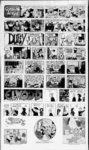
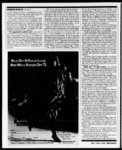
| Show IMa44VOCA04061211ellP fryaikewotegvsowwimikAameZtztcatattnwtontAttfiftthrtava tAwmW The Salt Lake Tribune I Comet Supreme 111: Editor's NOW When the US Supreme Coud was established 200 years ago Its powers un Cies the Constilutton were only laosety defined was ineyitabie that the ccurt So perhaps would rehect eve nation's point& the social trends at the tenet Her's a look al how that 441 rf ' k" 4 I 110' 'I - came about "1 49 IL By W Dale Nelson Associated Press Writer WASHINGTON — Of all the institutions that have shaped America over the two centuries since its birth shaped its political social and even its cultural face perhaps the most influential sculptor has been the US Supreme Court Now the court goes into its third century pondering issues never dreamed of by the framers of the Constitution ruling on such matters as burning the flag abortion and affirmative action They are legal issues to be sure but they are also political and social issues The court in the words of one scholar has become "a barometer of political and social change" And in the words of historian Samuel Eliot Morison "the keystone in the federal arch" It was perhaps unavoidable that the nation's highest tribunal would reflect national politics In one of the first cases to be argued before the court Attorney General Edmund Randolph said "With this discussion though purely legal it will be impossible to prevent the r 2 fL r William Rehnquist world from blending political considerations" Randolph spoke his words on Aug 11 1792 in the court's third year as the justices considered whether a state could be sued by an individual who lived in another state At that time the court had five justices who held court in the Philadelphia City Hall Now the court which observed the 200th anniversary of its first sitting on Feb 1 has nine jusmartices It meets in a three-stor- y ble building on Capitol Hill Without question it has a mystique about it "Most people have a sort of a reverent eye about the Supreme Court" attorney William M says civil-righKunstler a harsh critic of the institution "They go into that building with the carpets and the columns and the aspect of it and they say 'Oh my God! It's the fount of all knowledge!" Hollywood has mirrored this view In the 1942 comedy "The Talk of the Town" Ronald Colman plays a ts n 1 00000000 Arrows inchoate the most common oloutee of appeals - II II HIGHEST LEVEL -s 111tP(4(76511112 t4 I ' justices if elected president "Whenever I begin to discuss the Supreme Court Mr Humphrey acts like we're in church" Nixon complained More recently President Reagan charged liberals with politicizing the court in their successful battle against his nomination of conservative Robert H Bork to its bench in 1a turn-of-th- John Jay of Court of Military Appeals Appeals f Courts Courts APICynthe Greer Losers Can Win Later Split Decisions Lead To Court Rematches years pa earlierp ''''''' e Black band of three senters as the ruled the Constitution did not require states court r 'lAio?'- Twenty-on- 1 ): ''t Hugo Black to provide counsel for criminal defendants who were too poor to hire their own lawyers Now the court was considering the case of Clarence Earl Gideon convicted in a Florida court of breaking into a poolroom He was sentenced to five years in prison Gideon told the judge he was entitled to a lawyer The judge and the Florida Supreme Court both turned him down The situation said Black was "strikingly like" the 1942 case in which an unemployed Maryland farmhand denied a lawyer was convicted of robbery In that case the high court ruled the appointment of counsel was not "a fundamental right essential to a fair trial" Now with all of his colleagues on his side Black's decision ruled that Gideon was indeed entitled to a lawyer "The right of one charged with crime to counsel may not be deemed fundamental and essential to fair trials in some countries but it is in ours he said Black's triumph was a dramatic demonstration of the power of dissent — a power that often has seen the minority opinion become the majority opinion as time passes One of the most famous dissents in the courts history was that of John Marshall Harlan in a Louisiana railroad case in 1896 that established - Fi f ::: f:i l' :::::: iti 4 R ":':i 1 - - -- - ' ' ::'''' ''''''' — ' sri4 :: 1 4' '''' Air - -r tol till virAv 1 dt11 1 J " :: - 1 iftW f& ' '''''' I t trt414V11:61(1‘11°' 41 ' - 1:: ::::4-- : '' 77:Nt ' t y 140: ''' 1 11 lit t —Auo 00103 Ness Phol0 Visitors line up outside the Supreme Court which remains a pillar of justice in the na- - a "self-inflicte- I stood for more than half a century — A judgment in 1905 that laws limiting the work week for men were "mere meddlesome interferences with the rights of the individual" a standard that would give way as the court later approved laws — A judgment in 1952 that President Truman exceeded his authority in seizing struck steel mills — A judgment in 1954 outlawing school segregation rVing that the separate-but-equa- l doctrine had no place in public education — A judgment in 1973 striking down restrictive abortion laws in 46 states — A judgment in 1974 that President Nixon must surrender Watergate tapes sought by a special prosecutor — A judgment in 1989 striking down a law against desecrating the The court was so vilified in the North that a later chief justice Charles Evans Hughes described the ruling as tion's constitutional democracy The court also shifts with political and social winds d wound" Abraham Lincoln taking office as president in 1861 acknowledged that the rulings of the court were "entitled to very high respect and consideration" but added that "if the policy of the government upon vital wage-and-ho- questions affecting the whole people is to be irrevocably fixed by decisions of the Supreme Court the instant they are made in ordinary litigation between parties to personal actions the people will have ceased to be their own rulers" Despite Lincoln's words the court continued to decide ordinary litigation between parties and in the process set national policy "Most presidents at one time or another have made some statement plan was unnecessary Between 1937 and 1940 resignations created five vacancies and FDR had a "Roosevelt Court" that upheld New Deal legislation President Eisenhower's appointment of Earl Warren as chief justice in 1953 ushered in an era of judicial activism including the school desegregation decisions the 1963 ruling against mandatory prayer in public schools a ruling the same year that all criminal defendants must have counsel and the "one man one vote" rule on congressional reapportionment in 1964 "All governments including Supreme Courts are influenced directly by what's happening in the streets of the country" says civil libertarian Kunstler "During the Warren era you had the pressures that came from the streets of Birmingham and other places Martin Luther King and so on that forced the court to do the rule of "separate but equal" fa- cilities for the races "Our Constitution is colorblind 11 a nd knows s 0 4100 rN ':i:: ::: srvt k1-7- kt' 1 ' ob 7! 4 'V'r A1441WV it fti0t l ::: 4 i: 12 s "11111h' ' neither nor toler- - classes ates among citizens" Harlan said "In respect of civil rights all citizens are equal before the law " He was the lone dissenter In 1954 howev- - William Douglas er the court unanimously ruled the "separate but equal" doctrine was unconstitutional discrimination against black children because "separate education facilities are inherently unequal" Often more than one justice files a dissenting opinion In the court's 1986 term for example there were 156 dissents exactly the number of cases the court decided on the merits although 41 of the courts decisions were unanimous Most of the dissents attract little attention In some of the more famous ones: —Justice Louis Brandeis pioneered the theory now widely accepted of a constitutional right to privacy — Justice Oliver Wendell Holmes Jr warned against "attempts to check the expression of opinions that we loathe and believe to be fraught with death" — Justice William Douglas in- veighed against loyalty-securit- y bearings in which "faceless people are allowed to present their pered rumors and and torture of yet fa the president who nominated tarn J Lincoln whis- escape the test Chief Justice Charles Evans Hughes summed up the case for the dissenters this way: "A dissent in a court of last resort is an appeal to the brooding spirit of the law to the intelligence of a future day when a later decision may possibly correct the error into which the dissenting judge believes the court to have been betrayed " Harlan Stone William Taft Melville Fuller Cleveland Salmon Chase Adams FD Hanky Roos? I I Earl Warren William Rehnquist Esorthower Reagan J I : 1 Rogsr Taney Morrison Waite Edward White Charles Hughes Fred Vineon WashogicY1 Jackson Grant Taft Hoover Truman 1790 Military COutt by Lawrence Baum Oho State tatryoreaty Z I ::: :::'::1::::::!::: ' 011var Ellsworth 1800 ilMik Lower Tax Court District 1 ' : '''': at ir ' 1 r WASHINGTON (AP) — Hugo Black had the rare privilege of speaking for the Supreme Court on March 18 1963 54'''' when it unani- mously reversed :A:7:::! itself and decided ii':'::::44 he had been right ::::':i all along speaking I That owls abo hoer appeal& Iluer adrninietroMo emcee Sono woodland owns 04 Irrp3rianol owe aziotiod &Oren l '§' :i f1 I t :4:::: :::4::::::N:::::::: ::: t:11z?:::!::::::"::::: ::: :::: 1 ir! ti e:: ::i' i':' ::'4:':'::':::':?:07:3 ‘ 4V :: - : 4 str'tr" sT - g' John Marshall Washington TRIAL LEVEL 'MI - 4122114r 1km--4:-- Ira ! t :i ''' it t i ikt 77' - 46141111tLooxvvstm'5 - Il jurists scholars and lawyers however say that whatever the issue whatever the setting the court cannot get away from political currents "The Supreme Court has never been above politics" says historian Frank Freidel professor emeritus at Harvard and the University of Washington "I think the court inevitably reflects the social and political trends of the age we live in" says AE Howard professor of law at the University of Virginia and a Supreme Court authority "Much of what the court does is a barometer of political and social change" "It is totally political" says Kunst ler "To pretend it is not is to delude the American people" e The century humorist :T : :7 tcer!t ''' f A: 1987 Many Listed below each chwtt justice Trade SOUK es : - -- f! E7aiWgVh-iZttAlp7U1SI- Court Claims Court Pl ' !14r:::‘:gr::'t:::-- : t - 31111 pkttki ':::: 04mk :' 7 :'!"12070-4L-- t a "t Stikirtf'-:- - 7 Court of International : k 'I I 'h - - !i' 46 :' S US'TERMEDIATE APPELLATE LEVEL Court of Appeals for the Federal Circuit : '::4' - through his Irish immigrant character Mr Dooley put the sentiment into dialect saying "th' supreme coort follows th' iliction returns" Even Chief Justice William H Rehnquist in a 1986 speech at Suffolk University School of Law said "Judges so long as they are relatively normal human beings can no more escape being influenced by public opinion in the long run than can people working at other jobs" The Constitution merely says "The judicial power of the United States shall be vested in one Supreme Court and in such inferior courts as Congress may from time to time ordain and establish" The Constitution says little about the Supreme Court's powers only that it will hear appeals and will have Basic Structure of the US Federal Court System -- -- Democrat Hubert Humphrey in Finley Peter Dunne 1 ' lawyer who is named to a seat on the high court Every time the subject comes up massed violins strike up a soaring melody Richard Nixon running against 1968 campaigned against the mystique as he promised to nominate tcitgiottA! y 0414:zs0 Richard Nixon arometer of Social Political Change small-tow- v A3 15 1990 Sunday April 1810 1820 1830 original jurisdiction over some limited categories of cases It does not say how many justices there should be Congress set the number at six then changed it to five six again seven nine seven again and then nine again In its early days the court was by no means the prestigious institution it later became George Washington recruiting potential nominees for the new tribunal got several turndowns John Jay the first chief justice resigned to run for governor of New York Others also left to take other jobs After the appointment of Chief Justice John Marshall in 1801 the court loomed larger It is the bust of the third chief justice not Jay's that is on the bicentennial postage stamp It is also his name that is associated with the court's first great milestone The power of the Supreme Court to strike down laws by ruling they are unconstitutional is so much a part of American life that it is easy to forget it was not always taken for granted The Constitution says nothing about it George Washington believed the president would exercise this power through his veto But as it turned out presidents used the veto as an instrument of policy instead Then President John Adams tried to make one William Marbury a "midnight judge" by giving him a justice of the peace appointment just before leaving office In 1803 Marshall writing for a unanimous court struck down the law under which Marbury sued to force the new Jefferson administration to honor the appointment There would be no reason to have the powers of Congress limited in the Constitution "if these limits may at any time be passed" the chief justice said He said it was up to the courts "to say what the law is" Marbury never got to be a justice of the peace The court did not again rule a law unconstitutional for more than half a century but when it did it added fuel to the smoldering controversy that would blaze into Civil War Dred Scott was the black slave of an Army surgeon's widow in St Louis and Missouri was a slave state Before the surgeon died however he had taken Scott with him to Army posts in Illinois and what is now Minnesota Scott sued for his freedom on grounds he had lived for years in a free state and territory He lost in Missouri courts and in a federal circuit court Then the case went to the Suprere Court which had a southern majority and was headed by Chief Justice Roger B Tay ney In 1857 the court ruled that 1900 1890 like that" Howard says "Whenever the executive branch has been threatened by the court they immediately invoke democracy" Take Andrew Jackson The Marshall court ruled in 1832 that two missionaries had been wrongly convicted and imprisoned by the state of Georgia for living among the Cherokee Indians "John Marshall has made his decision: now let him enforce it!" said President Jackson Marshall could do no such thing and the missionaries Languished in prison for years In "The Federalist Papers" Alexander Hamilton wrote that the judiciary "has no influence over either It may the sword or the purse truly be said to have neither FORCE nor WILL but merely judgment" Merely judgment — A judgment in 1896 that separate railroad cars for blacks were not discriminatory as long as the facilities were equal establishing a standard for treatment of the races that '4ki--: 1910 1920 1930 1940 American flag "We have seen a shift from structural questions like federalism to social issues like abortion" Howard says "I think the court has registered another significant political change and that is the vast sweep of government The more government does the more opportunities there are for people to complain" In the 1930s President Franklin Roosevelt frustrated by a string of decisions striking down New Deal programs sought legislation en abling him to pack the Supreme Court by appointing a new judge for every one who reached age 70 It was his most stunning defeat "It made him look like a dictator" e says Freidel author of a new biography "Franklin D Roosevelt: A Rendezvous with Deste iny" and an earlier study of Roosevelt "That was a terrible thing to look like in 1937 with Hitler and Mussolini rampant in Eufour-volum- rope" As it turned out the court-packin- g '::1 ::::::: ii ' ''''''? k:'' ': '5 - :'': ::: :::: :'' '' ::::: :: ::: 4: aul 7 t L I '' - ::: irk ' " 'it' ' 0 : ' ''" ' -:- ::? i' 4t A :::::' W 7 1 fi ' '5: ' Woo 1iA 41401 -- - :' " It '''''444 IA t :::'::': - ir "'" ''' '! 7-4a21m- I 6a?''''''1k1::71114'1:-4i- :'''i - '11114"41'4:7 - ' 4:4'''' :'5::q::'-:7:- ' °:'4: ::? -- L :'4'''''''"4e' h :"" ''':': : 0 :7 tf4:1:r4 4iituktA :: i 1"001:t00:'- A rip"l' ': It pri iik44411 '( :ftri ':'fr'''' AV :441:::: - :: 24 '''' :: :''" 4 — :' '''' 40 - ?"e It' 4''!ll clitr:-:::':i'-- ti- - flg'tf4 emark1 ""7- - Stftt:744 I- tt: i:V :: 4': 1950 1960 Burgtt Nixon 1970 1980 1990 right" President Nixon's appointment of Warren Burger as chief justice in 1969 and his subsequent naming of three associate justices ushered in a more conservative era that has continued under Rehnquist In decisions this year the court has ruled that prison officials may force mentally ill inmates to take drugs has broadened the power of police to conduct searches after making arrests in private homes and has upheld a type of death penalty law in effect in 14 states "I regard the Supreme Court as an enemy not a friend and I think it has to be treated as an enemy now" says Kunst ler who has argued the flag burning case among others in the high court "It should be picketed It should be attacked in every way possible because it is not a harbinger of good will and human rights and equal rights and liberties for all" Howard however thinks the panel does a pretty good job of living up to the motto over its front door: "Equal Justice Under Law" "I think by and large it does" he said in an interview "I suspect it is a more evenhanded court than it might have been in an earlier age" Of the present members of the court William J Brennan was appointed by Eisenhower Byron White by John F Kennedy Thurgood Marshall by Lyndon Johnson Rehnquist and Harry Blackmun by Nixon John Paul Stevens by Gerald Ford and Sandra Day O'Connor Antonin Scalia and Anthony Kennedy by Reagan Reagan elevated Rehnquist to chief justice Eight of the last 29 justices had political careers before going on the bench but the trend in recent years has been to nominate people with judicial experience Seven of the present nine justices all but Rehnquist and White were judges on lower appellate courts when appointed Howard said he found this "trou- blesome" 4 t" ::"::r kt k 4 r 7 ''' ': - - f -- rl Ank '' ' : :14'7464 $ 1 4e' o OWfroosmot : 41 "4'0 ''' 7 '4 : r - ' el"'::ltwit Con- gress had exceeded its constitutional powers in adopting the Missouri Compromise prohibiting slavery in some territories Scott was freed by his ovner anyway but died of consumption a year later 1880 1870 1860 1850 1840 Worrotn ifer 24 :: e: 4 1'' - poso Police arrest Scott Tyler for torching Old Glory The court came under fire for rejecting a law that banned flag burning "I think when Hugo Black came from the Senate and William O Douglas from the Securities and Exchange Commission and Earl Warren from California politics they brought a dimension that an appellate judge simply does not" the Virginia law professor said "I would like some of the nine to have been judges but not all nine "I think it should be political in the broad sense It is a place where policy is made for better or worse and Therefore it should be tested by how people feel about it But it ought not to be political in immediate or partisan terms I think it is proper that once a justice is on the court he is frequently an ingrate to the president who put him there" |