| OCR Text |
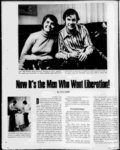
Show 4A The Sa't Lake Tribune, Sunday, April 2. 1J72 They Can t Say Enough Good of Old Charlie Chaplin If They Do , Its With Apologies By Richard Schickel Editor s Note: Richard Schickel is the movie critic of Life Magazine. His latest book is Second Sight, a collection of his reviews. 'tv s Praise, at this point, seems superfluous. Chaplin has received it, in fullest measure, from his peers (the greatest artist that was ever on the screen Stan Laurel; the greatest comedian who ever lived Buster Keaton; the greatest artist that ever lived the best balMack Sennett; let dancer that ever lived, and ,if I get a chance Ill kill him W. C. with my bare hands Helds; from the critics seems unlikely that any dancer or actor can ever have excelled him in eloquence, vaof poignancy riety and motion" James Agee; One of the few great comic who have appeared so Robert War-slto.fax in history Chaplins career is a cinematic biography on the of artistic level highest Andrew ' "Sarris) ; and from the highest levels of the literary world only genius developed in. motion pictures" George Bernard Shaw; "among his Edmund ages first artists , e Wilson). -- 1 It is especially difficult to maintain a degree of critical reserve at this moment as fhaplin, after a quarter cenexile, tury of comes among us again (on two weeks short Tuesday) of his 83rd birthday. It is, I think, a measure not of merely of Chaplins art, but that incredible ego, his really one simply cannot find an article that presumes to critior even to view cize him his life and work with decent which does not objectivity bfgin as this one has: apologetically. He has made us feel that any flaws we detect in his work must be flaws in ourselves. He has involved us, as no performing artist ever has, in the drama of his life, the soap opera on longest-runnin- g record, and he has forced us, for the most part, to discuss it in the terms he has dictated. What He W ants ;To put the matter simply, no. entertainer in history has so Imposed himself on the consciousness of his times for almost a so long a time now. Nearly everyone who has cared about Chaplins art has been convinced that in The Tramp or The Little Fellow, ,to use the terms invariably employed in discussing Chaplins great creation, we had a very direct expression of so the artists personality y , deand unaffected of prethe onslaught spite viously unimagined celebrity. want; Certainly Chaplin has ed us to believe that. And up ;to a point, one does. Surely what is best and wisest ir. him , can be found in The Tramp. But are we really to think thats all that is significant ' about the man? If we were . talking about the great primi-Buster tives in his line Keaton, for example, or Stan the matter could Laurel rest there. Between what we ' knew of them as men and what we say of them on screen there was no important discontinuity. simple Had to Know Him That is simply not true of Chaplin. The feeling of anyone bom after, say, 1930 for The little Fellow is bound to be rather abstract; we simply did not experience the excitement of discovery, that sense of possessing (and being possessed by) The Little Fellow that earlier generations felt. We knew who he was, of ; A course, and our elders end, lessly guaranteed his great-ness to us. But he remained something of an abstraction: be appreciated but j figure to to love in the way impossible he was loved by those who had been present at the creation, Like his greatest routines, fee Chaplin drama has a sima (and pi dty, an Inevitability that is ; - awesome. Of course fate ' helped him out a little bit, especially with his opening into scenes, for he was born and larger doses of pure sentiment into his work. No less than Griffiths, his was essentially a Victorian sensibility and he turned naturally to a cloying sweetness when he was forced, by the public demand for feature-lengt- h films, to extend his works. screen. In effect, they committed us to him irrevocably. Through all the long years when most of them were exercising their contempt for a '"'tyxW poverty, the son of a drunken father and a mother who went mad. It was a Dickensian childhood, but one which turned out to have its uses as the source of his art, which he began to perfect at an early age, becoming the leading comedian in one of the Fred Karno comedy troupes where he learned the classic English music-hastyle. As everyone knows, it was with a Karno company that Chaplin came a leadto the United States and ing comedian at age 21 St was while working with it that he was discovered by Mack Sennett in 1914. The English comic style was not Sennetts; Chaplins relationship with his new, colleagues was roughneck edgy. A lot of his best bits were cut out of his early Keystones, Chaplin claims. As the world would soon know, however, Chaplin has always had what any unique artist must have to survive utter confidence in the correctness of his own judgment. He fought out the stylistic the Keystone with Issue crowd, finally finding a way to demonstrate what he had been trying to tell them. He Got the Call It happened on a day when Sennett was observed glumly studying a hotel lobby set, chewing on his cigar. We need some gags here, he muttered, then turned to Chaplin and told him: Put on a comedy make-up- . Anything wiU do. At which point, if life were as a movie, as the clouds should have broken and beams of sunlight should have lit Chaplins way to the wardrobe. For his time had come. I thought I would dress in baggy pants, big shoes, a cane and a derby hat. I want- ed everything a contradiction: the pants baggy, the coat tight, the hat small and the shoes large. The mustache was added, he says, because Sennett had expected him to be much older and Chaplin thought it would age him without hiding his expression. Character Blossoms I had no He continues: idea of the character. But the moment I was dressed, the made clothes and make-u- p me feel the person he was. I began to know him, and by the time I walked onto the stage he was fully born. He and one is a trifle claims that he dubious about this was able instantly to describe his creation to Sennett in rather poetic terms before a foot of film had been shot: "You know this fellow is a tramp, a many-sidgentleman, a poet, a dreamer, a lonely fellow, always hopeful of romance and adventure. He would have yon helipve be is a scienvist, a musician, a duke, a polo player. However, he is not above picking up cigarette butts or robbing a baby of its candy. And, of course, if the occasion warrants it, he will kick a lady in but only in the rear extreme anger. Immediate Response Perhaps he really was that articulate, that quickly. Fer haps not. Most critics believe it required most of the rest of his year with Sennett, plus a good bit of tne following year (with the Essanay production company), before The Tramp bgan to demonstrate all the A-f- ' 4 K No spurts. markable advances, seems not to interest Chaplin. His pictures are still in this reas raw as spect nearly Tillys Punctured Romance or any other primitive He added, comedy that Chaplin is jealpres-cientl- ous of his independence . . . he is very unlikely to allow himself to be written for, directed or even advised. The issues were more complex than Wilson could possibly have known at the time. In retrospect it seems significant that Chaplin did not appear in an important role in A Woman of Paris a 1923 picture which was, aftpr all, his first production for United Artists, the company he had helped establish. Was He Confined? It betokened, perhaps, a certain restiveness with The Tramp character. Or was it and effects burst an occasional of gibberish. Spotlight Swings But dramatic as Chaplias confrontation was with a tech- Embellishments There were other problems as well. As Edmund Wilson accurately noticed in 1925, His gift is primarily the actors, not the directors or the artists. All the photographic, the plastic development of the movies, which is at present making such re- Chaplin's medium, ur. invent radical change, became moie and more resistant to his particular gifts. Otis Ferguson, tk .first great populist critic of movies since Vachel Lindsay, said of Modern Times about the last that it was thing they should have called Its the Chaplin picture times were modem when tiie movies were younger and the screen motion was a little faster and more jerky than life, and sequences came in ... rather movies in general, Chaplin was always cited as the medi-- u ms one unquestioned, unquestionable artist, the individualist amid the corporate herd, a man clinging to his peculiar vision while everyone else went hooting off in pursuit of momentary fads. Yet this fact remains: Chaplin never again achieved the perfection of those first years. The little films of The Little Fellow were, in effect, solo ballets. As such, they had no dimensions Chaplin ascribes more need of plot, of subsidof characterizations, to him on, as it were, their iary one themes than of the great In first meeting. particular, Nijinskys variations did. the undercurrent of pathos, which in time was to become Despite the reams of apprea veritable torrent, was not ciative analysis written about the early films, the pleasure visible for another year. we derived from them was Still, the public almost imessentially kinesthetic and that observed mediately therefore non- - (and even persomething wonderful had been One wrought. The demand for haps anti) intellectual. could go on watching them for films featuring The Little Fela lifetime. Indeed, one has. low was immediate and huge. But popular arts like the The 1915 Essanay contract called for $1,200 a week and a movies are cruel in their demand for novelty. And so $10,000 bonus on signing. A are the intellectuals who have year later he was to receive taken such arts for their prov$675,000 for a years work with Mutual, and a little more ince. No matter what they thought they thought, there than a year after that, in 1917, was in their endless nattering Chaplin signed his famous million-dolla- r contract with over Chaplin an implicit demand for development, First National. for big ideas and statement. Close with his money, and No doubt Chaplin made the determined never to suffer same demands on himself. again the kind of poverty he had so recently escaped, ChapBeginning with The Kid in 1920 he began to inject larger lin began accumulating one of the great show business fortunes. He was entitled to it. For in an age when 40 or 50 prints of a movie comedy could satisfy the demand for other actors work, distributors had to make up close to on 200 prints of Chapins films. For which they could charge well above the going rates. It was a golden time. It required only a simple poster of The Tramp, bearing the legend I Am Here Today" to bring the people In. And the two-relength of these early comedies was perfectly suited to his gifts. There are lots of ways to put it; he found poetry in the ordinary, he transcended reality, he extended the range of pantomine to perviously unimagined dimensions. Yet none of them quite explain his phenomenal appeal. V, ll He Calls the Shots P r (it expression same time the movies, At the a nological advance he disliked, and exciting as his triumph over it was (no other screen artist dared so radical a strategy). I do not think it was fear of movies that talked whicn stayed Chaplins hand. It is that every stylistic and technical change which has come to the movies since the end of World War I has im plicitly interfered with his of (and our) contemplation his screen self. Length, of course, implies the necessity for and the presence of other actors in significant roles. Very distracting. He was in a double bind. He was an artist universally beloved because he had created a universal symbol of the common mans virtues, flaws and aspirations, a man whose presence had helped to create a great audience for a new medium at the same time that be had given the medium respectability as an art form. Yet as the century wore on, the common man increasingly showed himself to be capable of the most terrible crimes and indifferences, to be Jiie dupe of such evil mass move- the beginning of a lack confidence in The Little Fellow as a means of expressing all that Chaplin was beginning to feel about modem life? At any rate despite the The notable exception of Gold Rush Chaplins art and his production pace grew A. hesitant. From the time Woman of Paris was comThe pleted to 1940, when of Great Dictator Ferguson called it a feature picture made.up of several one- - or two-reshorts . . . and proposed titles like The The Jailbird, The Shop, The Singing Watchman, Waiter. Like everyone else he could see the momentary beauties of these sequences, but they did, not, he thought, s make Chaplin a sub-plo- appeared, Chaplin made just five films, the last of which contained his final appearance as The and in a role that Tramp was quite overwhelmed by of Chaplins impersonation Hynkel, the dictator. The coming of sound, naturally, was a threatening problem, solved in City Lights and Modern Times by the simple expedient of ignoring the microphone and filling the track with music, sound ments as Fascism. first-clas- picture-make- r. Have to Learn "He may personally surmount his period, but as he cant carry his whole show with him, and Ill take bets that if he keeps on refusing to learn any more than he learned when the movies themselves were just learning, each successive picture he makes will seem, on release, to fall short of what went before. This is a sadly accurate prediction. There is not a subsequent Chaplin film that does not contain its sublime moments. Still, The Tramp was dead, done in, as Robert War-shoobserved, because the essentially innocent relationship between him and his society could no longer be sus; tained. In truly modem times, this kind of relationship was impossible. Now the two were compelled to become con- scious of each other, openly and the and continuously, Column 1 See Page dire- ctor-producer w A-- 5, MTTIK PTOC Other Influences Chaplin has never been generous in acknowledging influences, but some critics have noticed a correlation between his work and that of Max Linder who had brought something of the European comic tradition to the screen through his Pathe shorts. Edmund Wilson has emphasized how much Chaplin owed to the classic turns of the English music halls. And despite his protests it is clear that ChapLn learned a great deal from Sennett, especially about pacing and the use of the chase as a climax. In short, he summarized much that had gone before, linking the art of screen comedy to a much older tradition. This was very significant to those intellectuals who began to take the movies seriously in the teens and twenties of this century. For if nothing else, it gave them a classy frame of reference in which to place Chaplin. Was Unchallenged In turn, thin writing has been extremely valuable to Chaplin, insuring his reputation as an artist agenst both direct assault and the more Insidious danger of neglect during the long periods when he was ab'ent from the COM 12 EXPOSURE COLOR PRINT FILM earlier 20 EXPOSURE COLOR PRINT 20 FILM 2.97 EXPOSURE SLIDE FILM 8 MM SUPERS COLOR COLOR MOVIE 36 EXPOSURE 1 SLIDE FILM OFFER EXPIRES APRIL .77 8, 1972 KODAK, GAF, FOCAL, AMD FUJI OMLY 4? f imor ) i 1 17 1 i I H ihW fjnrafr.i"litt ? wWijfSNi JJJt - : ; till 3 1 1 3 5 nvAlif iFVr!T' ' VTJ |