| OCR Text |
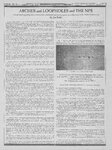
Show ARCHES and LOOPHOLES and THE NPS A weak climbing policy and a non-existent commercial permitting system do a disservice to the Arches backcountry By Jim Stiles one could possibly disagree--no other national park in southern Utah is so lax. Even at In 1927, a few thousand acres of sandstone desert characterized by large eroded _ Canyonlands N.P., which operates under the same SE Utah Group administration, the openings called windows or arches was set aside and protected from further abuse and policy provides much more protection. Among those protections, “No new climbing degradation by a proclamation from President Herbert Hoover. It was called Arches hardware may be left in a fixed location.” If that rule were applied to Arches, it would have National Monument. Over the years the monument grew in size and in 1972 Congress eliminated most of the commercial routes that are now offered. upgraded Arches to national park status. Today the park encompasses some 75,000 acres and deals for better or worse with more As the problem of allowing unrestricted commercial day use at Arches became more than 800,000 tourists a year--a far cry from the 1500 or so who wandered into the apparent, the NPS needed to find out if it could, at the superintendent’s discretion, monument annually in the 1940s. terminate commercial activities in the Arches backcountry. After almost a year, the U.S. In the summer of 2002, the average Arches visitor would have every right to assume Solicitor’s Office determined that it could. On See 21, 2001, Arches National Park that, as a national park, Arches is well-protected by law to maintain its pristine integrity Superintendent Rock Smith notified two companies to “cease commercial ye and beauty. And indeed a plethora of rules and regulations controls almost every aspect activities in Arches National Park by December 1, 2001." It further stated: of the park experience. Visitors are provided a list of DO’s and DON'Ts at the park entrance where they pay their fee. Signs warn visitors that they must only camp in the "We...are beginning the process of bringing all commercial day use activities into campground and that they cannot gather wood and they must keep dogs restrained at all compliance with the Code of Federal Regulations. Part 5.3 of Title 36 of the CFR states, in times and that pets are not allowed on the trails. It is illegal to gather rocks or flowers or essence, that engaging in or soliciting business in park areas, except in accordance with the feathers or anything that naturally occurs in a national park. It is illegal to deface or mar a sandstone wall or arch. While some people might argue that the parks are over-regulated, most of these restrictions and limitations are gs With almost.a million visitors a year, the lack of controls would be disastrous. But Arches has an Achilles Heel; in fact, it has two of them. For all its controls and restrictions, Arches National Park has practically no rules to regulate technical rock climbing and commercial day use operations. It’s hard to say whether this lapse is an oversight or whether NPS administrators simply do not believe that a problem exists. But , these two loopholes have combined to create a situtation at Arches that could have serious and negative long-term implications for the pristine nature of its backcountry. The best way to-tell this story is to follow the chronology, from the time I became involved in this issue two years ago, to the way things are today. (For regular Zephyr readers, some of this will sound slightly familiar; I’ve alluded to this story before but never dealt with it head on, until now.) Here’s what happened... In late summer 2000, a friend of mine described a tour she’d taken to a remote and seldom seen section of the park. I knew the area well from my ranger days and was stunned when she explained that the trip was part of a commercial tour. It didn’t seem possible to me that anyone could be leading paid customers into the backcountry, off-trail, to such sensitive locations on a regular basis: In addition to the hike, these tours called for a dramatic denouement in each trip--a technical rappel into a series of canyons. The tour operator pounded steel anchor bolts into the rock at several locations, using a hand-held drill to make the holes. At other locations, he left ropes and slings and carabiners and other equipment as part of a permanent anchor system. Ultimately, I learned that five different tours were being offered inside the park. In September 2000, I called Chief Ranger Jim Webster, who said he was unaware of any such commercial group operating in the backcountry and promised to check it out. A couple weeks later, Webster got back to me. Because the Arches commercial use plan had not been updated in years, and because of a legislative gridlock in the U.S. Congress, operations like the one offered. by the canyoneering company were considered legal and legitimate and, Webster explained, there was nothing the park could do about it. linquired about the climbing ethics being employed and again, I hit a stone wall. There was nothing the park could do. Slowly it all came back to me. In January 1988, the park’s climbing policy had been watered down considerably from what it had once been. Now I learned that there is very little a climber can NOT do at Arches. There is no regulation that prohibits the use of permanent bolts. Climbers are simply “encouraged to abide by,” according to the amended superintendent's directive, "a clean climbing ethic." They are "encouraged to leave dull-colored webbing at belay and rappel stations." In addition, they cannot climb any arch identified on a USGS map and Balanced Rock is off-limits. And that’s it. Anything else goes. If a visitor walks up to the Devils Garden trailhead and scratches his. name on a rock with a car key, he'll be ticketed and fined. But if he pulls out a bag of steel anchor bolts, and hangers, and a hand drill, and sling rope and starts: pounding the bolts into the rock at three foot intervals, all the ranger can do is encourage the climber to stop. With regard to the commercial Gaon Webster nested that future tours in the Fiery Furnace would be required to watch the standard video that is mandatory of all noncommercial users and pay the NPS fee. That was as much as he could do. I decided to visit SE Utah Group Superintendent Jerry Banta. Banta was a ranger in the Needles District in the early 1970s and now, decades later, he has returned to one of his favorite places on earth. I discovered that he was completely unaware of the commercial operations at Arches. Before the appointment, I had hiked one of the commercial routes and documented cross-country resource damage and the array of climbing equipment that was being left in the park. At one location, the tour company anchored its rope to a pinyon tree with If at first you don’t succeed...anchor bolt holes at Arches. "The Park’s Commercial Visitor Services Management Plan, written in the early 1990s, exempted commercial Day hiking from the requirement to obtain an incidental business permit... This exemption is not consistent with 36 CFR $.3." Letter from Arches superintendent to canyoneering company. provisions of a permit or contract is prohibited. "The Park’s Commercial Visitor Services Management Plan, written in the early 1990s, exempted commercial day use sightseeing and day hiking from the requirement to obtain an incidental business permit or concession contract. This exemption is not consistent with 36 CFR 5.3. Commercial outfitters providing services within the park must be authorized to do so under either a concession contract or incidental business permit (IBP).” In other words, Arches National Park’s own rules violated the Code of Federal Regulations! Regardless of what one might think of the environmental impacts these canyoneering companies cause, it’s also easy to understand their frustration. Arches Superintendent Smith suggested that the companies may be able to apply for an IBP and re-start their tours in the Spring 2002. One of the companies did just that. Meanwhile, it became exceedingly difficult for this publication to obtain information from Arches relevant to the ongoing permitting process. Finally, on March 17, 2002, I filed a Freedom of Information Act (FOIA) request, asking for access "to all documents related to the current permitting process that would allow two companies.. .to operate day fours in Arches National Park." On April 24, I received a reply from the NPS and was provided almost all of the material that I requested. After wading through dozens of documents, letters, and intra-staff memorandums, I gained a clearer picture of how this conflicted situation arose. It was also apparent that the Arches staff does not see a current problem with commercial canyoneering or its climbing policy. It begins with a letter from then-superintendent Walt Dabney, to Matt Moore, the owner . of one of the canyoneering companies. On August 22, 1998, in response to an inquiry from Moore about commercial tours, Dabney, in effect, gave his blessing if not his permission. To convey the twisted logic that Dabney provides ixin making that decision, it’s necessary to read the letter. Here is an excerpt: carabiners and sling material. The anchor rope itself--the very rope that the paying customers expected to trust with their lives, was left at that location each time they rappelled the 100 foot vertical canyon wall. Nothing degrades rope like sun and rain and wind, and apparently this vital part of the rappelling procedure was left to endure the elements. Months later, according to Banta, Arches staff removed the climbing rope and associated gear, but the tour company never sought to re-claim it. Today the company uses a selfremoving anchor at this location, but continues to use bolts in the sandstone on some of the “Commercial rece rock climbing is prohibited. Commercial canyoneering is allowed and managed under our commercial backpacking and hiking regulations. Technical rock climbing is defined as ‘ascending or descending a rock formation utilizing rock climbing equipment.’ Canyoneering is defined as ‘cross-country travel involving occasional ascending or descending a rock formation utilizing rock climbing equipment.’ "The distinction between technical rock climbing and canyoneering can be ambiguous..." other routes. Indeed. But ultimately, “using this criteria," Dabney continued, "we have determined your proposed routes would be canyoneering and are permitted under current commercial use regulations.” But then Dabney pointed out that "presently we do not require permits With regard to the Arches climbing policy, Banta called it one of the weakest he had ever seen in a national park. After reviewing NPS web sites and their climbing policies, no |