| OCR Text |
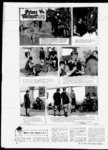
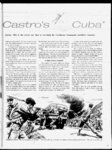
Show ANONYMOUS A asJoldtoDon Hinkle llluslraltd by Ed Vtbtll Heres an inside-Cub- a SOMEWHERE report of a guerrilla raid against Castros IN THE CARIBBEAN ever since the abortive Bay of Pigs invasion, a war has been going on in Cuba. It is a war of Cubans some of us operating inside Cuba, some outside against Castro. It is a war of sabotage, terror and death death in action," death before firing squads for those of us who are caught. Castro is afraid of us. He better than anyone realizes that if we can keep up this guerrilla war of attrition, we can overthrow him the way he overthrew Batista. He cannot help but be impressed by the effectiveness of our operations: We have burned of his total sugar he this that so cannot meet his crop for year, with Communist naexchange export agreements tions. CASTRO IN TROUBLE one-fourt- h Mounting evidence has come from Cuba this spring and summer that the regime of Fidel Castro is in We have badly mauled his militia in sneak attacks, harrying his supply lines from one end of the island to the other. trouble. Despite a government decree ordering execution of saboteurs, within 48 hours oj capture, fiery destruction has gone on. Castro himself ordered his followers "armed to the teeth" to prevent the burning of sugar cane fields. Later , his Minister of Industries Maj. Ernesto Guevera, told Cubans "ue must simply recognize that this is a bad harvest," and admitted widespread burning of fields was partly to blame. In addition to fields, most of the San RamSn sugar mill went up in flames in April. When the sugar crop was finally harvested, it totalled 2 million tons 4.8 million tons under last year's a serious blow to Cuba's sugar-baseeconomy. On top of all this, fire destroyed 13 stories of the half built National Bank in Havana. Fires and explosions ripped tobacco uarehouses, a d fertilizer plant at El Cotorro and parts of an oil refinery. Who is doing this to Castro? Cubans. Operating inside the country is the Cuban Underground; outside, from undisclosed Caribbean bases, the Raider Command, the Frente, and the Hour of Freedom -- -- guerrillas. The accompanying article is a report on action inside Cuba by a captain in one of these latter groups. It was given to Don Hinkle , a This Week editor, on condition that the author's name and unit would not THE editors be identified. Come along with us, and youll see how we guerrillas carried out a raid a few months ago. You Radio Havana doesnt probably never heard of it like to talk about these things. Occasional references to our activities usually blame the trouble on the U.S. Central Intelligence Agency, a highly overrated bogeyman. It . was late in the evening and the scheduled full moon had not yet risen. I was worried. The young, green guerrillas were scrambling on two antiquated planes, preparing to jump into Cuba. They looked brave and reckless, standing on the air strip, but they had never parachuted before. Their nervousness hung in the air around them as they climbed into the old planes. Chico, the tallest Cuban in the group, turned to me, holding .22 caliber rifle aloft and smilhis ingly said: "Commandante, what are we going to shoot with these popguns rabbits? I chuckled and some of the other men chuckled, too, but not tiny Pedro. He was clutching his weapon fearfully in one hand and a carton of empty pop bottles in the other. semi-automat- ic By the seat of our pants The engines coughed and sputtered. But they of us pulling by the seat of bur pants. We turned toward Cuba at a height of only 200 feet, to evade radar. Informers had told us that we wouldnt be bothered by interceptors because the Cuban air force doesnt fly at night, but we wanted to play it safe. When the outline of the island rose up sharply in the bright full moonlight, I could feel the tensing of the other men. climbed gallantly off the runway, with each Once past the coastline, the planes rose to 800 feet, our jump altitude. We were to drop into central Pinar del Rio Province. Our targets were El Central highway and the railroad running down the southwestern peninsula to military installations. We jumped into rolling foothills near the it was a fast trip down mountains. I jumped last and I could see the other white parachutes scattered out below me. We gathered and hiked east. Shortly after dawn, we reached the highway where we thought another raider force would meet us. But a messenger was waiting with bad news. rfThe other force had decided to concentrate its actions in Camaguey. Our original plan had been to set up a roadblock and stop convoys of any size. Eventually, this would force the army to send heavy armored tanks to crash through our roadblocks. Because the highway is poorly paved, the tank tracks would quickly tear it up. This would effectively slow all transportation on the highway. Now I had fewer than 25 men and had to use strategy rather than force. Ahead of us on the highway was a sharp bend around a steep hill. I posted a lookout on that hill and set the raiders to preparing our simple but effective weapons. Pedro poured gasoline into the empty pop bottles, plugged them with rags for fuses and soon had 24 Molotov cocktails. Other men slid metal sleeves filled with blasting powder over nautical distress flares. Then they packed magnesium rivets" inside the sleeves. This made a hand grenade that would scatter incendiary shrapnel. Militiamen bn the march ' By this time, several large convoys had parsed our position. Chico took the unit, leaving only Pedro with me, and openly marched them down to the road. Dressed as they were, they easily passed as Castro militiamen on a training march. Every 20 yards, two men dropped out and hunched to the ground on opposite sides of the road. Chico and the last man both armed with concealed incendiaries and hand grenades dropped off the road about 50 yards from the turn. Then we waited. About five in the afternoon, the lookout signaled small a convoy was approaching, one we could handle. The first truck rounded the bend. There were five of them in all U.S. Army trucks carrying about 75 militiamen altogether. By the time the last truck had passed Chicos position, the lead truck was within 35 yards of me. I aimed my .22 and opened fire on the driver. Pedro, on the opposite side of the road, did the same. Then two grenadiersjiurled their flaming THIS WIIIC Mogoiin Avgvit 26, 1962 |