| OCR Text |
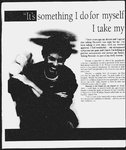
Show As __The Salt Lake TribuneNATION Sunday, September 7, 1997 Adoptions Often Based On Parents’ Race After a court struggle — and a three-month separation — the Freemans were granted temporary custody and then were allowed to adopt Eddie. Today, Eddie is in first grade and doing well, the Freemanssay. @ Continued From A-1 ed social workers from requiring that children be adopted only by parents of the same race as the In 1996, a federal law prohibit- “We've been trying to figure out what to do to help not just black families, but other minor- ities, to adopt.” Thomas said. But it is expensive. Thereis the counseling to help birth mothers understand what it is they are do- ing, attorney fees, office space. secretaries, financial support of the birth mothers. It goes on and on The infant-adoption programat LDSSocial Services — an agency supported by The Churchof Jesus Christ of Latter-day Saints — is one of the state’s largest. Brent Scharman, anassistant commis- sioner at the organization, said adoption counselors attempt to keep infants with parents of the samerace andculture. “But from timeto time we don’t have parents of the same race and we place children with white fam- ilies,” Scharman said. “We sug gest training and an orientation for them The other side of the story, say some white families, is that while social workers and politicians have argued about theright thing to do, black children — especially those in foster care — have suffered For years, Michelle and Dick Freemanhad been foster parents in California for children of all ages and races because there were so few nonwhite families as white parents, they can instill racial pride in their black son. The Freemansbelongto a support American University group forinterracial families and have sought black role models for their boy. Manyexperts agree that white parents can be successful in raising black children Rita Simon, a sociologist at the American University in Washing- ton, D.C., has studied children of color who were adopted by white families. After 20yearsof track- ing these children, he found they had healthy attitudes about their racial identities and their parents. Transracial adoption serves the best interest of the children,’ Simon said. “I do not say that transracial adoption is better than in-race adoption, but given the alternative — a long wait in aninsti- tution — it is better.” Poussaint is not so sure. The Harvard doctor wonders how manywhite parents are prepared for the task of rearing black chil- dren. “My feelingis that it can work, but I don’t feel children of a dif- ferent race should be given to just any white couple,” Poussaint said. ‘Some parents comein and say, ‘I don't care about color. The world should be colorblind. That should raise a red flag, but some social workers are impressed by Utah, they asked their California they don't have black friends, I The social worker replied that there was not yet a family avail able So the Freemansaskedif they child.” Poussaint has found that black adopted children face the most difficulties in white families “That's moreofa loaded situa: don't come upfor others, but becauseof the unique history of rae- was, ‘We strongly encourage black children to be with black families.’ She absolutely refused tolet us adopt ‘The Freemans moved and were forced to leave Eddie behind. After Micheile Freeman found out that her foster son was being bumpedfrom one hometo another, she returnedto California to try to adopt the 2-year-old “Eddie went from a happy, talking, potty-trainedlittle guy to and her husband visited some white friends who have a black daughter. “The little girl ran and hid whenshesawus," Denise Rockett said. “My blackness frightened her and she was darkerthan me.” An even greater problem than infant adoption, however, is the number of minorities in foster care and the difficulty in finding ethnic minority families to adopt them. Foster care is a temporary living arrangement — like Eddie had experienced with the Freemans — in which foster parents receive government payments in return for looking after children. Adoption, by contrast, is a permanent arrangement where the new parentshaveall therights ofbiologicai parenthood. Until World WarII, which left thousands of children looking for Rick Egan/TheSalt Lake Tribune Denise and Dwight Rockett hopeto use these baby booties and other baby clothes someday. homes,it was rare for white cou- United States increased dramati- ples to adopt black children. Well into the 1960s, the guiding policy was that every effort should be cally, more than tripling from 733 cases in 1968 to 2,574 in 1971. The mostrecent U.S. figures show about 600 interracial adoptions through public agencies in 1993. made to match a child with the skin color and religion of the adoptive family. During the civil-rights movement, interracial adoptions in the ers’ association took a position against transracial adoptions. A backlash followed, and a debate has raged ever since about the benefits and hazards of placing children with parents of different No figures are available for pri- races. vate agencies. See Next Page In 1972, the black social work- CEeeeetek reat § SEATER HOT TUB 33 TOTAL JETS! DUAL MOTORS! — tion than say, a white couple tion, all of a sudden this social worker made an about-face,” said Michelle Freeman, who now lives in Layton with her husband, six children who were transracially adopted have good parents — parents wholove them. But they also have weird images of black people. Theyare scared of them; theydon’t want tobe like them." Rockett remembers when she about the black experience, if adopting a Chinesechild,” Pous- children and three foster chil dren. “Her excuse at the time Ded Atlanta. “Thechild would always stand out. I don’t thinkit would be fair. In the same way, many black would tend to question their ability to deal with raising a black could adopt Eddie. “When we talked about adop better.” Rita Simon that. If families do not know social worker what would happen to Eddie, one oftheir foster chil: dren, who had been born addicted to cocaine. in an institution — it is child. The Freemansbelieve that available in the Bay Area. When the Freemans decided to move to "T do not say that transracial adoptionis better than in-race adoption, but given the aiternative — a long wait -80,000 yard clearance (Oe gi WRUUae COMPARE AT 5000. saint said. “It's not that issues x\ a ism focused on African Ameri- child. Toni Oliver, a spokeswoman for hard time imagining the reverse situation: A black family adopting TORUSee OMICS AE oot 4az = vont THIS S cans, the issues may be more acute for an African American the National Association of Black Social Workers, said she has a Leer Tree) 10 year written guarantee ta, M-Sat. 10-7 Sun. ae6 REUPHOLSTERY INCLUDES: ReSuur RROeeCue 5 Sinan earner Werema) Faa neat ‘SPAY 7208 So. $00 &., Midvale 569-3507 PoreAS LyeteCd orsoaae DaasAk a eeu Borwhacecy ix a white child “Tf Ladopted a white child, that child would be the only white child in the school, the only white child in my church and | rarely have white friends visit me at home,” said Oliver, the founder of a nonprofit adoption agencyin achild who hit other kids, hit him- self and wiped his feces on the wall," Freeman said. he was just catatonic.” “And then WeyXie(orelschel Masic.atinstrument aaasenile ees es Mee LE Set ras TTT Ve) nts i) een es a JUST BRING THEN TO THE aa rasa ONE DAY SERVICE 487-5662 at" State Fair Specials 2432 South State © Complete 18” Digital Satellite ® Professionalinstallation © 90 Channels of Programming Big Price @ 5 Year Extended Warranty @ (6) HBOs or Showtime Pkg. zero Reduction! Bown! oac. Save*Séto°56 EXODUS 2 LOW Men's & Women's Reg. $89.99 Brown/Blue Only BXCDUS LOW Men's & Women's Rog. $85.00 ‘Tan/Grey Only Extreme durability and comfort at such a nice price! Suede/Nylon upper with shook absorbing 00 Midaole, Stainlesssteel shank, high-grip outsole, and FREE V.FS ouatom ft for any widthfoot! ‘SS:RitherStyle Good selection, butall sizes may not be available. @ Kirkt Kirkham’s 'S § outdoorprod Pri, 9:30 ucts to 00 $186 Bo. State 486-4161 Sat. 9:30 to 7:00 Bun, 11:00 to 6:00 T Ke METRO 269-8282 PNM UTAH COUNTY 627-2266 373-2266 |