| OCR Text |
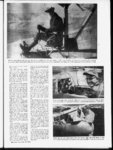
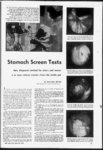
Show Dr. Henry Colcher, gastroenterologist and cameraman, prepare$to photograph the insides of a woman's stomach with color motion picture film at Columbia-PresbyteriMedical Center, New York. Pictures come up as a composition of dots, each dot transmitted fiber. At the right, the exclusive by a hair-thi- n photographs, first ever presented for newspaper reproduction, show a cancer and an ulcer as they looked .to the camera's investigative lens in human stomachs. an t t s i t tomach Screen Tests New diagnostic method for ulcers and cancer is to take colored movies - from the inside, yet. by Dave Alan Ehrlich C1M4, World Book Encyclopedia Selene Bur Tic. A- REVOLUTIONARY new photo medical technique is enabling doctors to take color movies of the inside of the stomach and thus discover ulcers and cancers that have hitherto gone undetected. This means good news for the millions of men who now have stomach ulcers and the estimated 15 per cent of the U.S. population who will develop ulcers sooner or later. Worse, more than 25,000 people develop stomach cancer each year. The disease is fatal in 80 per cent of the cases because the lesion usually is found too late. Diagnosis of serious stomach disorders has always GI series, barium enebeen difficult. Standard tests fail to determine the often series bladder ma, gall and fluoroscopes yield fuzzy piccause of pain. tures and miss abnormalities hidden by bone or inflammation. ALSO, THE STOMACH is constantly moving rolling, So work. to its essential is activity churning unfolding, of little is inside taken even a good, still photograph would have to catch the value. A trouble a spot is revealed. exact moment when The logical, solution to this problem would be color movies of high professional quality. In recent years, Dr. Henry Colcher, a Romanian-born- , Belgian-traine- d American gastroenterologist (stomach and intestines specialist) has been making an extraordinary contribution to medicine in this very doctor-photograph- area. y INSTEAD OF "chasing shadows he has been perfecting a system to take color movies inside the stomach and producing the clearest, most detailed, images anyone thought possible. . Dr. Colcher, 50, teaches and works at the vast Medical Center in New York City. The world pioneer in cinegastroscopy (movie photography of the stomach) has just passed a landmark, his 500th case study. He has found 100 cancers and helped save many lives. More than 25 other hospitals are already using this technique and Dr. Colcher is building a large film-X-ra- time-sequen- an Salt Lake City, June 1961 In. lending library for medical schools and hospitals over much of the world. n movie camera and Dr. Colcher uses a fast new film. He and electrical engineer-collaborato-r George Katz have designed a flexible fiberglass chain of tiny lenses inside a hose that the sedated patient swallows in an easy gulp. Light is provided by a small bulb on the end of the hose. slow-motio- THE PICTURES come up as a composition of dots, each dot transmitted via a hair-thi- n fiber. The room is semi-dari- c and the patient kept as comfortable as possible. Dr. Colcher, his eye at the instrument, scans the stomach and shoots 8 or 16mm film when he sees something significant Normal tissue looks like pink velvet Cancers are irregularly shaped and red or brown in color. Benign polyps or tumors are smooth and round like pimples. The very motion of the stomach can show a cancer, which stiffens the area around it Physicians decided this photo showed a benign tumor, not an ulcer. Subsequent surgery confirmed diagnosis. The movies show the stomach in action. . operations have been scheduled In many cases. In others, as in the case of a man, an operation was canceled, sparing the patient the woman had severe pain, discomfort One but no doctor could find out why. After y and other tests failed to show the source of trouble, Dr. Colcher found a bleeding ulcer and the subsequent operation proved the precision of his color movies. Not content with his achievements to date, Dr. Colcher is now working on special new dyes to stain the stomach and to show abnormalities even more clearly. He has expressed confidence in the new technique but is not ready to report on it professionally. LIFE-SAVIN- G X-ra- HOW DID HE START as a medical movie-maker- ? Was it a hobby? "No, I never was an amateur photographer, he says, "although my three children are camera fans. I just started working because complaints involving the stomach and intestinal tract bring more patients to my office and file offices of other American doctors than any other ailment I decided it was time I did something about ft. rest of stomach normal operation was successful. 21 |