| OCR Text |
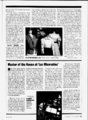
Show ft m. m it it i3 is u li in 3 SPORTS mm mm 7(10001 More stars, more good teams clash in college I'f, ijhu,.,i i m 1 18, University of Florida freshman Halle Cioffi hits backhands with tpvf. ITU book perfection. So it wasn't much of a surprise when Cioffi, who is ranked 46th in the world, won the Virginia Slims tournament in Indianapolis last October. But then came the zinger: Cioffi passed on the $45,000 prize money so that she could remain an amateur and stay in school. "I know what I want to do, as far as tennis goes," says Cioffi. "But turning pro is a very hard goal, and it would be easy for it to not work out. If it doesn't, I'll always need something to fall back on." A rising number of serious tennis players now share that e point of view. In the past, some top men such as Jimmy Connors (UCLA) and John McEnroe and Roscoe Tanner (Stanford) enrolled in college before starting their professional careers. Because women mature faster physically than men, however, college tennis was thought to stunt their competitive development. That thinking is changing, says Stanford women's coach Frank Brennan, whose team has won the NCAA championship for the past two years. He notes that Patty Fendick, Stanford's top player last year, graduated and reached the semifinals as a pro in this year's Australian Open. "Certainly no one can look at Patty and say, 'Poor kid, she should have turned pro when she was 18'," says Brennan. long-rang- Big-tim- e teaching: f ' I '""M'''-''""- ' r u, jt PHUIOhc :i988 DAVID MADISON Stanford coaches Dick Gould, Caryn Copeland with player College tennis is netting talented athletes for several reasons. Cautionary tales of players such as Tracy Austin and Andrea Jaeger, who shot to the top as teen professionals and then suffered injuries and career burnout, have the importance of being well rounded. Then, too, the bloom is off the tennis money tree of the 70s, so that many young players are now happier to be than touring pros. The colleges offer players skilled instruction, a strong schedule and an education. Those who pass that up for the pros run the risk that they will "just rot on the vine," according to Dan Magill, men's coach at the University of Georgia. The new popularity of college tennis also owes something to its greater breadth and depth. The traditional California power top-ranke- d houses, Stanford, USC, UCLA and Pepper-dinstill retain much of their clout but they no longer dominate the game. The University of Georgia, for example, took the NCAA men's championship last year and in 1985. As many as 30 universities are good enough to contend for NCAA Division I tournament places in any season. The sport still has a long way to go before losing its elitist image, however; partly because of the expense, it remains largely a white, middle- - and upper-clas- s preserve. Only a handful of black players have ever received tennis scholarships, says former Wimbledon champion Arthur Ashe. For all its glamorous trappings, college tennis is rougher than fun and games. Varsity players usually put in several hours a day of weight training and practice. After he became University of Kansas women's e, 34 NEWSWEEK ON CAMPUS MAY 1988 |