| OCR Text |
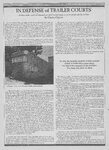
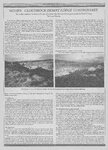
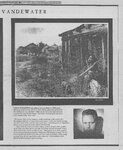
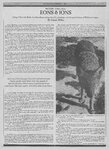
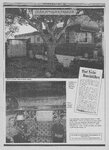
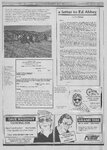
Show Ee a IN DEFENSE of TRAILER COURTS As more trailer courts are banned from small western towns, so are the people who live in them. By Charles Clayton _ Back in the 1970’s there were hundreds of folks who came to Fraser for the freewheeling scene and endless possibilites of fresh powder and wilderness. Many of them decided to stay, and they put down roots and brought a variety of incomes and ideas to the local community. They became teachers, builders, journalists and drunks, and volunteered their time and effort to build dugouts for the baseball field. This is becoming less of an option for the working class folks who are not already well established, due to the simple fact that it’s too damn expensive to buy a house or even a condo anywhere in the Fraser River watershed. A couple of low income housing developments offer some cheap shelter in the short run, but these require much in the way of planning, platting, funding, and infrastructure, which inevitably lead to courtroom costs and delays. Which brings us back to the trailer park. In their limited vision, the town councils I'm part redneck. While my hippy experiences and California alma mater are important elements of my soul and psyche, my roots are in the frozen earth of the Fraser Valley, Colorado. My childhood lacked the sidewalks, parks and matinees of the average suburbanite, which was fine, since I had a jungle of creekside willows to play in. My role models were all from my mountain family, and I often got to ride on | a bulldozer as it blazed logging roads, or listen to a tape of truck songs in a red, white and blue-green Kenworth dump truck. Furthermore, there have always been horses somewhere on my family’s land, complete with hay bales in the barn, and you wouldn’t believe my cousin’s collection of Copenhagen lids! If these aren't enough to convince you of my genuine partial redneckness, this little ditty might: 1 GREW UP IN A TRAILER COURT! Yes sir, my childhood abode was a mobile home, and not even a double wide. In fact, I lived in two different trailers in two separate mobile home parks, both of them and county commissions have banned the introduction of new mobile homes anywhere in the county. Even a rural rancher is prohibited from setting up an old . situated on former swamps. While this was fine for awhile, as I got older I began to resent the fact that we had to live in such substandard housing. ee es aR se So trailer on his own land, and the existing trailer courts in town will most certainly be phased out whenever our leaders see the chance. The rationale for such regulations is that mobile homes tend to be eyesores, particularly when clustered together, and that in the interest of high property values such lowbrow shelter should be discouraged, if not outright zoned out of existence. This kind of thinking is both unfortunate and misguided, for mobile homes are the quickest and most efficient way to solve the local housing crunch. So why the hostility towards mobile homes? ‘I hate to make this a class issue, ‘but this is the essence of the problem: The filthy rich have no class. I'll be the first to admit that mobile home life leaves much to be desired, but even during the harshest winters of my youth, which were undoubtedly colder and snowier than they are now, our trailer kept us cozy and warm. Furthermore, a space in a court can be rented for a few hundred bucks per month, and a brand new trailer can be bought for under 50 grand. . One could rent a space and pay the monthly mortgage on a mobile home for less then the cost of rent in a condominium, A "classic" trailer at the Parkside Trailer Court in Moab. Some of my friends lived in real houses with actual stairs and even balconies and decks. They didn’t have to shovel the roof to keep the snow from caving it in. They could sleep in bunk beds or hang hammocks on the wall without compromising the structural integrity of their home. The pilot light on their heaters never seemed to go out, not even in February winds. Their roofs rarely leaked, their central heating was efficient, and it didn’t take five minutes for the hot water to reach the tap at the far ‘ end of the house. In short, life in a mobile home left much to be desired, and I couldn’t wait for the day when I'd be rich with a real house to call my own. Now I'm older, and I sure ain’t rich, for it turns out that good grades in school don’t necessarily translate into a fat wallet. | studied religion in college instead of business administration, and in the four years since graduating I’ve pursued careers in manual labor, cash register punching and gardening for a rich lady who lives in a real house. But I don’t mind being in the bottom income bracket—for one thing religion did teach me was how to be content with the simpler things in life, especially having a roof over my head. If you’ve got a warm house to sleep in then things can’t be all bad, and a mobile home provides climate controlled shelter at at reasonable cost. Grand County, Colorado, is currently going througlva real estate and development boom, the likes of which are unparalleled in local history. The market is hot, and upwardly mobile upper classes are flocking to the Fraser Valley and investing in all sorts of gigantic houses, many of them occupied only a few weeks each year. This boom, which is happening in comniunities throughout the Rocky Mountains, has led to a have and than huge jump in property values, and the proliferation of decadent log mansions driven up property taxes. Costs are high, and land is at a premium, so builders investors are focusing on "high end" development for "monied" buyers, rather simple housing for the Carharit clad simpletons who labor away on the stone fireplaces and redwood decks. This .1as created a severe housing shortage for those who cannot afford the obscenely high costs of renting one of the few available houses, and buying is out of the question sine the average price of a home is 250,000 dollars anc rising. The long term consequence of this is that eventually Fraser will be an enclave of rich folks, and the armies of workers < nd servants will have to live 15 or 20 or even 30 miles away in towns that are slight y less expensive. I’m sure that the Valley will always have its share of ski bums and _ransient freaks, but one can only live in a van or tent for so long before real life step: in and it’s time to move on. let alone 4 house. This means that families could be gaining equity on a home rather than shelling out 1200 bucks each month to a resort town slumlord of development corporation. Sure, trailers are not the most energy efficient homes, but the underlying structure can be improved upon bit by bit with such additions as a snowload roof, storm windows and even solar panels to take advantage of that mountain sunshine. And if a family outgrows a trailer then one can expand accordingly. My step father added _a living room and bedroom to our trailer and remodeled the kitchen entirely for a fraction of the cost of building a small sized home. Besides, the most inefficient structures in the whole county aren’t mobile homes but 10,000 square foot log mansions with vaulted ceilings and no southern exposure or natural lighting whatsoever. It seems as if some architects never step foot outside their offices, for they are constantly designing buildings which refuse to acknowledge the natural world in which they will be built. This drives up the costs of light and heat, not to mention those semi-permanent glaciers on the rooftop or a patio that never sees the sunlight. Expensive does not mean smarter. So why the hostility towards mobile homes? I hate to make this a class issue, but this is the essence of the problem: The filthy rich have no class. They can only think in terms of dollars and cents, which means that common sense is tossed aside whenever it conflicts with the bottom line: Turning a profit on a real estate venture. And talk about eyesores, these high rollers put the biggest, most ostentatious buildings on sceni¢ ridges so that the citizens of the valley will be forced to look at them everyday. They destroy postcard views by displaying their trophy homes prominently upon the mantle of the mountainsides, as if to remind the beer swilling proletariat below that feudalism is alive and well. And then they complain abut the trailer parks and junkyards, calling them blights on the community and writing fiery letters to the editor suggesting that they be removed lest property values decline. They like the valley enough to build a home here, but not quite enough to let it continue to exist as a real community of mixed incomes and architectural styles. There’s been a whole lot of talk about the housing crunch in the valley. The papers report on it, and the councils debate it, but thus far we have seen very little in the way of meaningful action. This is inexcusable, for examples of a partial solution already exist right in the town of Fraser, all lined up in orderly rows. TRAILER COURTS ARE THE WAVE OF THE FUTURE! If the Fraser town council can annex land to provide municipal services for another Koebel expansion, essentially a government subsidy of a giant corporate builder, then they can just as easily give tax breaks to those who would develop their |