| OCR Text |
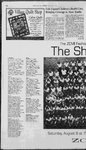
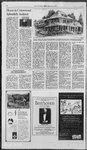
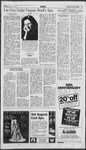
Show UND AUGUST 3, 1997 The Salt LakeTribune Utah's 10 most infamous unsolved homicides claimedlives both obscure and notorious Socialite Dorothy Dexter Moormeister,left (with husband Frank), was run overrepeatedly with her Cadillac, below, in 1930. William Sadler, above, claimed to be the killer to get out of a Texas prison in 1964; the con man was acquitted of the crime. during a 130-year span. Why was justice — Cex PASI not served? Rachael Runyan, 3, was 15 feet from home when she wasabducted and killed in 1982. CE HORIUCHI E TRIBUNE J. King Robinson was a surgeon, Andrew Johnson a ranch hand. Deputy Seymour Clark kept the peace in Weber County. And June Nelson was the 12-year-old daughter of a cafe owner. All have one thing in common: They were murdered by killers who have not been broughtto justice Robinson, Johnson, Clark and young June were among 22 victims of Utah's 10 most noto- rious unsolved homicides, a list compiled by The Salt Lake Tribunewith the help of dozens , of law-enforcement officials, historians, reporters, authors andthestaffof the state crime lab and medical examiner'soffice. Thelist was refined with the help of retired Tribunehistory writer Harold Schindler and Tribune religion columnist Robert Kirby, who is writing a book on murdered Utah law officers. The murders span 130 years. Most of the victims were female. Three werechildren kid- napped and murdered, a rare occurrence even today. In several cases, police knew who committed the murders but were powerless to catch them. Every investigator is haunted by unsolved murders, Often, there are no witnesses. As the clock runs, the killer has time to destroy evidence, build analibi or flee. A detective has to build a case before any of that happens. Meanwhile, the victims’ relatives must deal The 1928 kidnapping and murder of June Nelson, 12, outraged Salt Lakers. sacked cabin wasspattered with blood. Propery uthorities believe thekiller commandeered a wagonfromtheranch, load- messenger. Suddenly, there were shrieks, then gunfire. Robinson was found bleeding near edit with stolen goods anddroveit into Utah Lake. Main Street, a short distance from his house. Witnesses took him home, wherehelater died. Witnesses heard footsteps after the shots “They spent a lot of time looking for the wagon at the bottom ofthe lake, andit really wasn't there,” said Utah historian Robert Car. and saw six or seven men running from the area. Even with a bright moon, none of the witnesses got a goodlook at anyone in the mob The Robinson murder was one of several ter, whois writing a book on thehistory of Utah Lake Neverth highly publicized killings at the timepitting what little evidence Utah County Sheriff's deputies gathered pointed to Harry Hayes, who was indicted and went to Mormons against non-Mormons. His assassina- tion fueled accusations and rumors “It was just one damn thing after another trial the following December “He had somepeculiar personality quirks, Carter said, They found it hard to like him anddidn't have anybody else to associate with so in theory such cases remain open. But homi- that got in the way of therelations between Mormons and non-Mormons,” said former Brigham Young University history professor D. Michael Quinn, “It was a community that was totally divided along religious lines. hours, the chances of ever solving it diminish by the hour. mob led bypolice officer Alexander Burt. And Robinson was embroiled in another conflict jail talking to Hayes and walked out knowing not only with the loss but also with the frustra. tion of knowingthekilleris still free. Thereis nostatute of limitations on murder, cide detectives learn early that time is their enemy: If a killing is not solved within 24 Of the 54 murders committed in Utah in 1996, seven remain unsolved, In Salt Lake City, about one in five murdersis never solved, slightly fewer than the national average, ac cording to Salt Lake City Police homicide Det ChuckOliver. Utah's top 10 unsolved murders went beyond typical whodunits, outraging whole com munities and driving detectives to near obses: sion. Here, in chronological order, are the details of killings never laid to rest J. King Robinson, 1866: A week before Halloween 1866, J, King Robinson, a surgeon at CampDouglas (now Fort Douglas) knownto dislike Mormons, was awakened about mid- night by someone knocking on his door. Aman hadfallen off a mule and broken his leg, the visitor told Robinson. The doctor went out into the night with the the crimes, So they built a circumstantial case st him and convicted him was sentenced to die. But George Robinson owned a liquor store and a 10-pin alley in Salt LakeCity, which were burnedby a He unsuccessfully sued the city for land he claimed was hi Robinson's death was investigated andare: ward posted. Even LDS Church President Brigham Young contributed $500. But the inquiry led nowhereandthe climate betweenthe two groups grew morehostile. “All regarded the murder as a foul and das tardly deed,” Orson Whitney wrote in his His tory of Utah, “but nonefelt that the investiga. tion had been as thorough as it should have been, and for that, each side blamed the oth- er. All that was left was suspicion about who killed the well-known Mormon- baiter, who also ran a Sunday school for gentiles, as non: Mormons werecalled, According to Quinn, many historians believe the same mobof offi cers who burned down Robinson's saloon and bowling alley also killed him . the new Utah County sheriff, had doubts Thesheriff spent the night in the Provo he was innocent ‘So [Storrs] went back to work on the Title page hut, publ the only book Length ata After killing six men (three of themlawmen), Rafael Lopez vanished in 1913 Albert Enstrom, Andrew Johnson, Alfred Nelson, 1895: On April 16, 1895, the body of Albert Enstrom was found on the west shore of Utah Lake. A few days later, two more bodies washed up with the waves. They were cousins, all shot dead The three men — Enstrom, 23, Andrew Johnson, 20, and Alfred Nelson, 17 — helped run a ranchin n Point, Utah County, for Harry and Caroline Hayes, The victims’ ran and lo and behold, some of the articles that werestolen from the cabin resurfaced in south: ern Utah County," Carter said Authorities traced the missing property to George C, Wright, who had posedas a surveyor andlawyer andspent muchof his life livingoff what hecouldsteal Meanwhile, Hayes, awaiting his hanging, was pardonedandreleasedfromjail. Investigators located Wright's wife back East and she fin gered himas thekiller, But Wright was never found, despiteStorrs’ scarching “Ror the next five or six years, maybe long er, ma," he visited places from Hawaii to Oklaho- Carter said. “People would claim they had Wright in custody andit was never him. See 10 CRIMES, PageJ-3 |