| OCR Text |
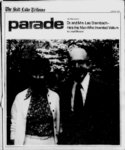
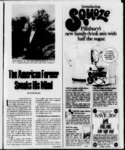
Show 10 A Ito SaH Lake Tribune, Sunday, Jun, 27, 19i6 The Press And the American Revolution End to Debate Role Had in Newspapers Bringing Independence ists: and the successes of British forces around New York City m the summer and fall of 1776 inclined him to belittle Dr. Francis G. Walett Worcester State College By Copyright, 1976, American Antiquarian Society When the Continental Richard Henry Lee s resolution that the colonies ought to dissolve our union with Britain, the elated John Adams wrote to his wife: The second day of July, 1776, will be memorable the ephooha m the history of America. 1 am apt lo believe that it will be celebrated by succeed. ng generations as the great anniversary festival. It ought to be commemorated, as the day of deliverance, by solemn acts of devotion to God Almighty. It so happened that it was two days later that Congress approved the powerful Deiaration of Independence that Thomas Jefferson had drafted The 4 of July, the day when Congress in formed the world that an independent United America was hi ing formed, was therc-lorchosen to be the day of celebration. Great Debate A great debate over independence had been in raging for months private circles, in Congress and in the press. The role of newspapers in bringing the debate to culmination had been great. John Holt of the New York Journal wrote that 'it was by means of the NewspaKTs that we Slates of e American any Spread the receiv'd worded the Declaration of Independence in firm and solemn terms that made it a literary mas- military While Americans the Declara- celebrated tion of Independence. British authorities at first paid little attention to it. They regarded it as merely another piece of rebel propaganda, which the Declaration was in considerable part. Gen. William llowe was waiting at the time to engage in talks to effect reconciliation with the colon tion. For a nunber of years the colonists had been complaining about the legislative acts of Parliament and the policies of the British ministry. In their opposition Patriots had argued that the English legislature did not have the right to pass laws regulating the internal affairs of America; Parliament was an older legislature in the British Empire, but it was not superior in power to the colonial assemblies. Opposition to British rule prior to the Declaration of Independence had been directed mostly against Parliament, and expressions of affection for George III had been common. In stirring up support for a cause, and the Declaration of Independence was in considera neces.sanlv In against so. treatment his Popular Ideas making his case George III. Thomas Jefferson also drew upon the doctrines of natural rights and the social contract. These ideas, laid down by John Locke and other political theorists, were popular in the 18th Century. In a state of nature, the argument ran, men where endowed with certain "unalienable rights including "life, liberty and the pursuit of happiness." Theoretically, a contract between the ruler and the ruled protected these rights; and subjects owed obedience to a government that safeguarded these rights. If the ruler should break the contract by acts of tyranny, it was the right and the duty of subjects to rebel. Following this line of reasoning, Jefferson asserted that the colonists after much "patient sufferance were now obligated to "throw off" the govern Unhistorieal Statements There were uncertainties ef the time that f orci'd the author of the Declaration, for the sak of its el feet, to use a number of unhistorieal statements. For example. the document was called 'The Unanimous Declaration of the Thirteen I mted States of America " but not all colonial delegations to Congress had voted for the Declaration and the signing of it dragged on for nearly six rnonttis. In ble part try ing to do that, Jefferson realized that it was wiser to direct attacks against the king rather than against the impersonal legislatuie. Jefferson, a master propagandist, did this by accusing George III of many crimes. "He has," the Declaration reads, "abdicated Government here, by declaring us out of his Protection and waging War against us. Did this not constitute sufficient reason to break away from Britain? a sovereign nation, Jefferson wrote in general and not always accurate terms. But this was U-e- parades, cannon fire, the pealing of bells, civic banquets, and bonfires. for government would certain- places The American colonists, having disobeyed Parli-ment- s laws, were declared to be outside the kings protection. These facts did not indicate, however, that George III was trying to establish an absolute tyranny over these states, as Jefferson stated in the Declara- terpiece. Announcing the determination of Congress to form a new ly i Jefferson Thomas Notice of the Tyrannical Designs formed against America, and kindled a Spoil 'hal was soffit lent to repel them." Without the active and determined Patriot press the movement toward have been delayed and perhaps shunted aside. When action had final l.v taken, news of the peeJnraimn ms well as the test was printed m the papers as soon as it wa-- i rienvid. Usually there was little or no explanatory comment as publishers allowed Jef ierson's eloquent document to speak for itself. The press did, however, note the ceremonies and celebrations in many pro- nouncement. Similarly wlwn news of the Declaration reached Londorfit was not taken seriously. approved Congress Parliament. in of George III as a tyrant "unfit to be the ruler of a free People. Jefferson was weakest of all. No serious historian pictures the British king in that light today; he was a rather dull monarch who was trying to ftield power by manipulations George III. Most Loyalists and the British ridiculed this philosophy of natural rights and the contrart theory; later political scientists have discarded it as invalid, too. But for the Patriots in 1776 Jefferson's assertions were an attractive and logical way to justify the American War for Indepen- ment of dence. Called the King s War In Britain the ministry founded nothing logical about the Declaration of Independence, but the increasBritish public ingly annoyed by the American conflict soon referred to the war in America as the "King's War." Other European monarchies, for all that they wrp happy to see Great Britain embarrassed, could hardly look favorably upon Jefferson's justifi- cation of rebellion. Here in the United States there was mixed reaction. While some rejoiced when the Declaration was adopted, and many lukewarm Patriots were encouraged to support the cause, there were others who were bitterly opposed to the formal break with Great Britain. Few Loyalists, if any, were persuaded to support independence, either by the Declaration or hy the threats, attacks in the press, tarring and feathering and social ostracism. Most stubbornly clung to their beliefs, sincere in their attach ment to Britain. It is quite true that all of the charges against not be Geroge III could of some that and proved, them had little or no basis in fact. Equally true is the fact that political Jefferson's theories have not stood of up under the scrutiny modern scholars. If the Declaration was partly defective in content and argument, it has nevertheless stood the test of time and been found to he morally v alid For the Patriots of the revolutionary period, for countless school children and other Americans over the years, the Deof claration Indepen- dence has ciime to be regarded almost as holy writ. Those who have believed that traditions had been broken, American rights violated, and justice threatened. Jef fersnn had stated the ease brilliantly. Although the Declaration did not make clear what kind of government the Americans would create, it did assert unequivocally that they were not going to tolerate injustice. After a period of trial and error, the people did learn more of what was needed to establish a government that would guarantee the human liberties promised in Thomas Jefferson's immortal Declaration of Independence, made known to the world 2o0 years ago this week. Jeffersons Free , Vigorous Mind Begat the Colonies Declaration wt It Editor's Not as author of hit country's fundamental charter of freedom that Thomas Jefferson earned tut place a mono the first founders. The Declaration of Imtepen denre was presented to the Continental Confess 700 years 90 this weed. By Don McLeod - Associated Press M ritcr Freedom begins in the 'mind. The treedom to think, to learn, to expi ess is the highest treedom. From it all others spimu Unless a man thinks tree, he isn't tree. This is what made a revolutionary of Thomas Jetlersi in, an unlikely rebel and vet one of the most thorough. It was Jefferson's nund and a passion to use it vv Inch made him want to be free He had an obsession lor mental growth and exercise. A threat to that w as a danger to his soul. ' I altar have sworn upon the of God eternal hos- tility against every form tyranny over the nund of man," was his creed. Great Contribution And it w as with his free and vigorous mind that Juffcrson made lus contribution to freedom. He w on no great victories on the battlefield and lew m the legislative halls. But of all the men and women who made the United Stales, Jellerson play have been the greatest. Because he didn't just make a country tree, he-- showed the world how to he free He did it by composing the fundamental iloi u ment ol American treedom in word- - mi compel ling and timeless itn v si and today as a heat "ii to tile world ad la Iniight a lifetime lor Its principles Wrote Declaration His Declui ation ot independent e w as reported 10 the Continental Congress on June 2h. 1776. two centuries ago Monday. It was destined to revolutionize the order ot government among men The eaie o! human tile and happiness." would say later. is the lirst and only legitimate object of good government." By the standards of his Wc Hold These Truths... A Chronicle of America June 28, 1776: At 11 this morning, the British fleet begins bombardment of Ft Sullivan, at the entrance to Charleston harbor. After nearly !2 hours of pounding the spongy palmetto logs of the p fort with 7.000 cannon balls, the ships withdraw Peter Parker, in his flagship Bristol, having received a blast that, in the words of an eyewitness, "ruined his britches; they were quite torn off, his backside laid bare " British casualties ore 225. wiih two ships badly damaged undone destroyed Casualties toColonel William Moultrie's 435 heroic defenders of the fort about 35, The British defeat is one of England's most humilmtingfmsi os of the war And as a result of it, the southern colonies remain free from British attack for the next several year Jel-leisn- . native Virginia, Jei-lerso- was among those horn to govern But he took it as a duty, not a right, and shunned the prerogatives of birth and wealth Successful Planters lie was horn April .1. 171.1 His father was a liiiued surveyor and produced the liiM aceuiate map of Virginia. Peter Jellerson was the third in a line of successful planters. a member ot the colonial legislature and a lieutenant of the militia l oin's mother. Jane Randolph Jeftorsoii. was Irom one ot America s first families The I toy vi.is i lose (,, hi- - lather who was renowned as a man ol stroi.g'h. ami inherited h'din him a 1" c ol air vev i n g . si lence ami hooks along u i'h a moo est libi ai an infant boy wns From his experience emerged a and sensitive miing mail Me was ex t einelv jealous of his own id' nt.ty and for all Jclter.'Oii In, life sh and liotorioii,-lthill skinned ,on inherited '1e.iltie estate, and .1 el lei me Mother. Sisters bed i t j, 'in k at ion it i a in father's his with .It .it h w hi But Peter Jl til ' son died w lit ii h.s son u as I and i or.li an t only h.s mil H r ! adit :oii o'othi il'il no' it mat i lot n a. fit ha' let: I" a ai 'o t a s' a ,i a ef tin .to j 11 in turn, a good t studied I Wt.l, he i Iv I hold ot rights Clay niter I ulor b !!' " w ; ,, g ' ' I. l '' e el l mbed ,oii ot ."1 'III I ; Ilihlic lie ( III! IPlltl Igitin schools until he as ready lor the College ol William ami .Mary in w 176U. Tin colonial capital of Williamsburg also was an excellent school of Here pi action! polities Jitfei'sun observed sessions Court of ol the General Virginia aid debates llo'i'c if Burgessi In 111 and the s Heard Patrick Henry P was as a young stadeiit that he stood in a (tool w ay ol the Capitol j, Iatru k lleiirv dcliveled hi' 1! ,t great oral n ai toi Viieiiia!' lights wa'ii rev July 4 Big Day in Boston This Year il - Merchants angered In British BOSTON I on colonial mimneive two lentmits ,,jo huddlnl in red hi uk halls across tin, pi,,. in. i, harbor town to halt h the American Revolution C-'- m . the I.ii.dions .spotlighted in the mythology ,d n k of an Rev oliitiun he ci, m, try burying ground, the ancient and salute able artillery company fires a he remains of importer John Hancock, oi ei meii h;e:t peter Eaneuil, pamphleteer Thomas Paine and Sam Adams. The outfit was formal in 1' ' to drill i oionials. Addresses Marchers t lovei-ity President John Siller uddres--i- ' B'.s'ui, marchers at Funcuil Hall, a combination mt rt mg meiiti.uit hall erected in 1712 by a wealthy metrb.cit Revolutionaries met in the same second Rooi t fuii'i h ,ty ie assembly hall to map early V I, "i o- I landowners ami importers united metis of men wi'hout piupcilv to imwd i rooked col. oilstone streets to ovcrtluow a century and a hall o' Briti .h rule Wcallliv 1 i But it will teiemonies begin in front of the ultra m.mori, t it lull, a mixture of concrete anti red I, ink, ul.m v Mayor Kevin If. White raises a flag k I, mi i.i A block away, on Maiih .7. 1770 a bi named Crispus Attucks and four other membeisoi street mob were gunned down by Butish t"o,i;is m what became known as the "Boston inassacu of the A in 17 a. in. Parade winds past many , into hi ill's! politic al treatise and set out fur illiamsbm i it ti it But the heat, or his nerves, gave him such a i ;ise ot dy sent cry lie had to turn hai k So. lie sent copies of ha vi rev olutionary rhetoric to Williamsburg, where tin delegates discreetly let it he. But the paper found its way into print and soon was reproduced in other colonics and in England under the title Summary View of the " Rights of British America " Jetlerson was an night celebrity. over- Serv ice olutionary Brils at the old North Church toll in the afternoon Silver, nii'ii Pad Revere awaited a signal from the (iiiirih steeple before riding to Concord and licvngtou on an August night in 1775 to riert militiamen the British were coming to confiscate guiipuwdi r and weapon Hi Iiiiif mi , .services are planned with represenla-- ! ves ot a variety of religions including Roman .i hulii i tdashop Humberto Cardinal Medeiros at i ld South Meetmg House p m at t Juli ceremonies conclude witn a traditional 'oi.iert on the banks of the Charles River hy the Rost, ,m pops, a portion of the cdy's symphony ( 1 ol i hi s i a F-- 1, politics l.etter against iishend Duties the 'I ow Raleigh Tavern was among the BurgesM's who ad lourned to the Raleigh Tavern and continued their work in rump ses ,k hi He also signed the Jefleison agree nonimportation ment ill opHsilioii to the lieu British tax But England hud done 'omethmg further wtiu Ii struck the most sensitive nerve et Jellerson s tiling It had suggested t.t .'-- ported old an The Canon FTb is what a fine SLR camera should be. It is tool through which you can meet any simply a photographic challenge head on, and get the quality you demand. Like the the FTb draws from an array of more than 40 superb Canon lenses, and many fine Canon accessories from photographic through the microscope to astronomical photography. Its a serious tool for serious photographers, and a camera you can grow with as you grow in photography no-nonse-nse The Assembly was dissolved for endorsing the Mas,achiisett, Circular 6 1976. Jellerson expanded this document Public serv ice tor began in the tv manner ot the ir gima gentry. He served as parish vestry man and Ulstiee ot the peace, and became a colonel of militia at 27. Jellerson was only 23 when he entered the House ot Burgesses in 1760 Despite his youth and poor speaking alnli-tv- . he was a good lawyer and a npi nor w l iter The House had been ill sissiun only in days, however, whet) Jefferson got hjs first taste ol ev ii a, of .rib III Il.g J mankind . i Opening shots n a seven year war to i.'v.iU a nation were fired 1.7 miles to tin west where Bnt.st; imps and local militiamen squared till and died Fashionable Boston The war that began in uliai now a in-- , j, fashionable Boston suburbs lunl moved risen hi e by .lulv 4. 1776, when colonial le.a'eis g.itniud m Philadelphia to sign a declaration ot m'lepoi iVtwc flistorv leaves Boston little ext me to mark Jmv of For seven years Jellerson would practice law During these years he also married Martha Wav It's Skelton, a young willow, and begun raising a luinily at his beloved Munticello These were his happy day s Where It All Bewail restraint the common as pi-e- i l'. 11 of the late Caesar. Finishing college m two years, Jellerson began to s(udy law under George Wythe, a leading lawyer of the colony who aNo would teach John Marshall and Henry mg George Selective, central area spot metering All metering information visible in finder Shutter speeds from sec., plus ' B" Accepts Canon Auto Tuning (CAT) system for foolproof auto flash Breech lock lens mount QL Quick loading mechanism la accused t" tie trails to Eli-- uni lor 1 ml I Crime id Disagreeing The ' ,i e.i ,n,i ulnih III,, mu, aimed was i he teeing (line ol Jellerson d.,-a- to think moie about political philosophy. Before the next crisis he had joined a clique of building fire brand, who met informally at Raleigh Tavern ill the evenings In July of 1771, was elect, d to the In gan deeply Virginia Convention which replaced the Assembly. and lie drew up Miiermarie County's instructions to, its delega- 74 tion It was Jefferson's first effort at political writing. instructions said "subject to the i The Americans were law which they adopted" and ' no other legislature itever e;.n ngh'ly exercise authority over them " What's more he dared. pn ilexes uVy u h 9 RETAIL $430.00 WITH FREE CARRYING CASE TT HOURS M0N.-SA- tip tumlMj T. 10 TIL 9 SUN. Ph. Noon 'til 5 p.m. . 266-424- 2 9, USE YOUR BANK CARD Wklker Monorod Koro, gZTjCS |