| OCR Text |
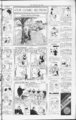
Show LEHI FREE PRESS. LEHL UTAH What Do We Mean by "America"? By WILLIAM C UTLEY i and f going to bear plenty in the 1936 election YOU'REabout "what America wants" and "what America These are phrases which roll off a political orator's tongue like peas off a boarding house knife. s around xthc f I s J if .. f I v-- NATIONAL JCAPITAL J - py 2 .? 4 i s 7" i rr i - innnr s sfffii A TMirir' " i V ...i. I - f. i- ..'jmS,-- ! i - It takes all kinds of people to make a nation. Left: Nearly 5,000,000 Americans are criminals, but more thr 4,000,000 are at large. Center: Probably 20,000,000 are on the dole. Right: Only 46 persons have a million-dollar income. And before you and 1 try to figure which ODe of these spellbinders Is right about "what America needs" It might be well to know Just what they're talking about when they say "America." Certainly when they tell os that what will solve America's problem "from the coast of Maine to the shores of sunny California" la a tax on mustache cups or a return to multiple petticoats, they are not talking about the land Itself. No elm tree ever started a communist meeting under Its shade In the public park. No mountain ever wrote a letter to the editor which began: "Sir: I note, cot without some due alarm, that things hare come to a pretty pass when, etc." The land never needed anything until we started living on It s When the refer to "America" they mean us you and I and those awful Smiths or J neses or Czerwlnskls who ran that unspeakable speakeasy below the tracks. They mean society. And what Is society In America? There are some 130,000,000 of "us." To decide what 130,000,000 people need, let's find out whatktnd of people they are. The contrasts between class groups Is really as startling as that between individuals. To begin at the very bottom of our society, there are, according to J. Edgar Hoover and the Department of Justice, no less than 4,811,866 active criminals whose fingerprints are on file In Washington. A few thousand of these are conscienceless, bold rascals who would slit their own grandmother's throat for five bucks, but the vast majority are only petty crooks who would steal the pennies out of a blind man's cup, or put on dark glasses and pretend to be blind men themselves. Probably 20,000,000 are on the dole-ge- tting relief. There Is undoubtedly some overlapping between this and the first group. Three-fourth- s of all the nation's families live on Incomes of less than $2,000 a year. And there are only 40 persons one In every 2,820,087 whose Income Is $1,000000 a year or more. Many Crooks Go Free. Roughly, and purely for the purpose of comparison, our society may be cleaved Into two divisions, admittedly arbitrary. They are 75 per cent of the families on less than $2,000 Income and the other 25 per cent, some merely and some solvent, some "well-to-do- " wealthy. In the larger group are approximately 97,000,000 persons. These Include all but a few of the 4,811,806 criminals, proving that crime does not pay. Only about 12,600 are regarded as "big shots," public enemies, by the Department of Justice. Yet crime Is said to cost $12,000,000,000 to $15,000,000,000 Id America. Federal and state prisons and reformatories In 1932 were entertaining only 84,447 "guests." The number of persons In city and county jails Is believed to fluctuate around 300,000. These totals leave more than 4,000,000 criminals actually practicing their art. Living conditions of the great mass ef 20,000,000 on relief are certainly much below standard, but these conditions vary greatly with the geography ef the country. To people on relief In Mississippi or Arkansas, the living standards of relief families In Chicago, New York or one of the other larger cities would look pretty good. The whole group Is equal In the condition that It Las been parted from all valuable possessions. Research conducted by the PWA reveals that 30 per cent of all the housing In the United States Is "definitely substandard." In some southern states, where the share cropper and his 111 lot are a familiar figure, there are many cases of 10 or 12 persons living la shacks of one or two rooms. Oflt rock-boun- d stump-speaker- . Relief Standards Are Poor, la 1930 any apartment !n Chicago which rented for less than $30 a month was likely t be far below standard. I with such a thing as a bath tub regarded as a luxury, and with rooms having no outside window a commonplace. Yet at that time nearly one-four- th of all housing In Chicago rented for less than $30 a month and for less than $20. nearly Not all relief families live by such standards, of course, but those who don't are the exception rehabilitated farm families, for example. But It may be said that at best all relief living Is subsistence living or less, and that malnutrition Is common and starvation sometimes existent. A large portion of the farm families of course fall into the class which have a yearly Income of less than $2,000. Since the farmer Is able to raise much of what he and his family eat, this Income would be proportionately greater than the same Income for a city family. Yet that would be speaking of the average In the class. It must be remembered that Individuals in each one of these class groups vary with amazing difference. In the southern Appalachians, even In the golden year 1929, there were 52 counties where the annual Income per farm person was less than $100 and even this Is an average! These people, too, must be considered when we speak of "what America needs" ret they, with their primitive methods and manners, belong to the Eighteenth century more than to the Twentieth. More than 10,000,000 of the 49,000,000 gainfully employed persons in 1930 were employed In agriculture. Most of these fall below the $2,000 line. In fact in only a few farm counties was Income equal to that in Industrial one-tent- h areas. Thirty Million on Farms. Some light may be thrown on the living status of the farmer today when it Is cited that" even In Iowa 62 per cent of all the farmers are tenants. The tenant-farme- r situation in the South, with Its desperate plight of the share-croppewho lives at the "very lowest ebb of subsistence standards, has been widely publicized of late. When the political orator says "we, the people," he Includes, whether he knows It or not, 30,000,000 persons who are dependent upon farming for a living. How do these people live? The facts may surprise you. If the figures compounded by Morris L. Cooke, head of the Rural Electrification administration are correct, 25,000,-00of these people have derived little benefit from the Inventions and the advances of science which are said to have so much bettered our living standards In recent years. Here is what he claims to have found out: That 93 per cent of all persons who make their living from the soil have neither bath tub nor shower. That 76 per cent are still lighting their homes with either gasoline or kerosene or less efficient means; that 10 percent of this figure either use candles or go without artificial light. That 73 per cent have to carry water from wells or other sources of supply. That 33 per cent use fireplaces in heating their homes. These estimates seem to have been substantiated by another government bureau, the PWA, whose research men say that between 75 and 80 per cent of all farm homes have no modern conveniences whatever. It Is safe to say that all of such homes fail below the r, probably shrunk considerably" since then because of the Increase In unem ployment. Among the "clerks and kindred work ers" in 1930 there were 4,877,235 men and 3,072,220 women, most of whom were office workers and hovered Just a little below the $2,000 mark. Most of them live In houses or flats of three to five rooms, and some have a small car. You don't really begin to get above the $2,000 mark until you get Into the "skilled workers and foremen," and even then It Is difficult to tell just how ninny are above. The group which the depression has Injured least Is that labeled "proprietors and managers." Unskilled workers, of course, have suffered most, although not much more than the "professional persons." The great bulk of the 3,339,002 persons whose Income in 1933 was between $2,500 and $5,000 comprises "propri etors and managers." These folks, on the whole, live comfortably In the better suburbs In houses that cost $12,500 up and were all built several years ago. They have economized largely by limiting themselves to only one car, cutting down on the number of servants and sending their children to the state universities Instead of the more expensive private schools. They and their families are the great "middle class." Figuring four to a family, this class totals about 13,350,-00persons. Of all the Americans, fil Itig Income tax returns on Incomes of more than $2,500, 91 per cent were In the, $2,500 to $5,000 class. There were only 318,450 persons, or about 1,273,824 families with Incomes between $5,000 and $10,000. Certainly this would Indicate that the top class, In regard to Income, the class making more than $10,000 a year, constitutes a very small slice of the nation's population. Another group severely hit by the depression has been the "professional" class doctors, lawyers, artists, actors, reporters and the like. Many of these In the past two or three years have dropped into the division below $2,000 and many more are even worse off. Relief rolls Include plenty of dentists, doctors and artists. Teachers Have Suffered. There are of course a few at the peak of each profession who have large incomes. But the majority of artists, authors, actors and reporters have not A recent survey, which was concerned principally with me'tropolitan newspapers, where the wage scale Is higher than It Is on small town papers, placed the average reporter's salary at a little more than $38 a week. Teachers, who include 202,337 men and 860,278 women, have had their pay checks badly cut-w- hen they get pay checks at all. According to Prof. Walter Rauten stranch of Columbia university, the Income of persons engaged In production has diminished far more rapidly than that of persons in service and distributive industries, which latter he refers to as "overhead." He says that the cost of overhead, iucreasing quickly In the last 15 years, has been further speeded upward by the depression. Service and distributive workers increased their Income as a group ISO per cent from 1917 to 1932. In 1917 actual producers numberea 24,677,000; In 1932 they had slipped to only 17,279,000. Whether employed or not, their average yearly Income was $2,000 income. $038; for those employed. It was only Now we come to another group, and Dr. In the transition It Is well to remind $875, neither of which figures, says to Is sufficient support Rautenstrauch, Is be bound to ourselves that there some duplication In segregating the an average family "decently." At the end of our study of the popuvarious classes. lation are the 46 persons whose InSix Kinds of Workers. comes are more than $1,000,000 a year. The census bureau divides all work- They are, to most of us who read newsers Into six classes professional per- papers, not a class but a group of Insons, proprietors and managers, clerks, dividuals whose names are more or skilled workers and foremen, semi- less familiar In headlines. skilled workers, and unskilled workers. This, then, Is "America." We have At least the unskilled and semi skilled to remember the problems of all these workers come Into the class of less vastly different classes when we ponthan $2,000 Income. There were nearly der with the orator over "what Amer8,000,000 semi skilled workers listed la ica needa." the 1930 census, but this figure has Q Weatera NwpaPM t'nl. 0 Carter Field A) Washington. Herbert Hoover Is not going to say anything about his possible candidacy for the Republican nomination next year for some time to come. That may be accepted as a fact, regardless of various stories to the contrary. This statement Is based on the Impressions obtained from the former President by one of his close friends, who had a long talk with him. While no single word can be put in quotation marks of what Mr. Hoover said to this friend, the Impressions the friend obtained are highly significant In a word they are: 1. That Mr. Hoover craves a vindica tion. 2. That he therefore wants the noml nation very badly. 3. That he would prefer to have the nomination come to him without effort, either on his own part or that of his friends. 4. But that 11 It becomes apparent that the nomination will not come that way, very little twaxing would be required to Induce aim to get out actively for It As this is written anything can happen to change it the famous public utility holding company legislation seems destined to die, so far as this session Is concerned. Strangely enough, t mere lifting of a hand by the President would result In Mr. Roosevelt's getting more than half a loaf really s of a loaf. Even without the death sentence the bill Is terrifically drastic. There would be no trouble putting the measure through both bouses of congress If the conferees of the two houses should report the "bill back without the death sentence. nine-tenth- Very Much Exaggerated Actually the Importance of the death sentence has been tremendously by the publicity over this fight between the President and the utilities. The utilities concentrated on this one objective, and as far as congress Is concerned, they won this fight. But Its Importance can best be Illustrated by the simple statement of the alternative, or house, provision. The senate draft forces the end of the certain holding companies on a certain day. The house provision leaves discretion as to whether the sentence shall be executed in each particular case by a commission members of which are appointed by the President. So that Mr. Roosevelt could obtain his objective without the slightest difficulty IF he would acknowledge defeat In this spectacular battle. The utilities would emerge with some glory, but without the fruits of victory. The President would have the fruits, but little glory. Yet betting odds at the moment are that he will wait until next year, when he expects to win both fruits and glory. exag-Serate- d Downward Revision Processing taxes and farm benefit payments are both due for a sharp downward revision next year. High AAA officials, In private discussions, explain this on economic grounds. Actually President Roosevelt will force their hands on political grounds. Experts who have studied the Rhode Island situation so disastrous to the New Deal in Its Implications bring back a remarkable story. They say that the price of ham and bacon had more to do with the result than even the cotton processing taxes, although the latter are blamed, together with Japanese imports, for the closing of so many textile mills. These reports flabbergasted the administration and delighted the Republicans. Both the New Dealers and G. O. P. leaders had figured that while the conditions affecting the first Rhode Island district extended to Massachusetts and New Hampshire, they were not general. On the other hand, resentment against high prices for pork products, it Is figured, would be Just as apt to be strong In California or Michigan as In Rhode Island. In this connection there was much Interest In the apparent healing of the breach between Governor Davey of Ohio and the New Deal. All the bitterness against Davey following his caustic comments on Relief Administrator Hopkins was carefully concealed. Davey had In his power to force a state-wid- e election in Ohio to fill the vacancy caused by the death of Truax, and most political observers believe that If an election were held today In Ohio the state would go strongly Republican. Must Cut Food Prices the first place, Ohio was never strong for Roosevelt Its delegadid not even vote for him on the ballot at Chicago. On election when roost states were piling np majorities, Ohio gave Roosevelt only about 73,000. Moreover, resentment in Ohio, which has considerable state pride, Is rather strong over the failure of the President to put an Ohloan In an Important place. Is now faced The administration with almost the necessity of reducing food prices before election. On the particular Items on which there Is now the most resentment, pork products, no In very tion final day, record-breakin- g difficulty Is anticipated. Pigs are usually marketed at the age of nine months, so It should be possible to have a plentiful supply of pork for the cation's bousewlves well before November, 193a Reduction of benefit payments on hogs would naturally have the effect of enormously increasing hog production. Similarly, reduction of processing taxes on pork would help to reduce prices on ham. bacon and other pork. But danger threatens from several other sngles as far as the grocery bill Is concerned. Reports from the Northwest and Canada about the ravages of black rust on the wheat crop are alarming. Some of the AAA experts are fearful that wheat may touch $150. This would be fine for farmers not affected by rust but would bring the same kind of clamor from housewives. So a sharp soft pedaling of the wheat reduction program, accompanied by a reduction In the processing tax on wheat. Is In order. In fact It may be taken for granted that regardless of all past theories, the administration will do Its best to have food prices down by next summer. Sally Sez Jttt way to kerp from gcttii( M PATRONIZE HOME INDUSTRY and that's n fish alory, cither. beat Th u -- nooKca To Make Concessions President Roosevelt will make concessions In the present labor war on relief projects. The concession will not be to pay union scale wages on work relief projects. The President's Jaw is firmly set on this. It will be to remove present restrictions which limit Jobs to people now on relief. Very little has been heard from union labor sources on this last phase, but It has been vitally Important to the unions. Not only to the rank and file, who need work in many instances, though they may have had sufficient pride and sufficient savings to stay off relief, but to the leaders. For men out of work are not apt to be regular in paying their dues, and thus the union treasuries get hurt Especially as union leaders have been forcing in the check-of- f system wherever possible for years now, with the result that union workers. In more than a majority of cases, are not used to paying dues personally. They are educated up to having their dues deducted from their pay envelopes. Hence, no pay envelopes, no dues. Work relief Jobs, under the original formula to which the union leaders object so strongly, were to be given only to persons on relief rolls last May. The Job could not be obtained unless the United States employment service so certified. In the near future orders will go out from Washington that the employment service must certify union men who need Jobs, whether they were on relief last May or not. This will meet a very important point in the present .controversy between the government and union labor, but It w!lf by no means leave a good taste In the mouths of the union men. THIS WEEK'S PRIZE STORY Labor Dy we eelebraU In boner a . Work develop! all the goe there is in a man; idleneis all the tU. Better than celebratini--, always bar In. termannUin Hade Goodsbest raloes ee tainableanrwhere; make your dollars werk too, furniihlnf employment for those who desire to be workers, not moochers. JOHN M. GRENFELL, Bellevse, Ida. working-men- At 400 Utah Oil Refining Service Stations in Utah and Idaho Lepers Recover Many lepers get well without medicine, without even knowing that they have had this disease, which the Scriptures call "ths wrath." NEXT YEAR GO TO Westminster College SALT LAKE CITT, UTAH Junior College Beautiful 40 acre campus. Modern rmidinss anJ tauinnr& ifgo Scholarship, Strong Character and A . - Social development. Special Mnsie work for credit. Physical education. Lew Cost Tuition, Board and Room dormitories. In regulated home-lik- e Government jobs for needy and worthy students. H. W. REHERD, D.D., Pres. May Cause Feeling The situation makes for artificial discriminations likely to raise bitter feeling. For example, two groups of bricklayers may be working across the street from each other. One group will be on a public works project one approved by Ickes under the old "spend our way out of the depression" theory. Those men will be drawing the prevailing wage. The other group will be working under a work relief project approved by Harry Hopkins. They will be drawing relief wages. Under the Hopkins schedules the highest rate permitted at present is $94 a month! Obviously every man drawing the lower wage will be sore for they will be union men In each case ; the administration may be fairly brave at times but It Is not going to employ many bricklayers In big city projects. The man drawing the lower wage will have a grouch against the government to start with. But John Taxpayer also enters the situation. He is being taxed for relief, and knows It. The average middle class taxpayer has more or less of a fixed opinion that union wages In the building trades are too high. He resents the day wage rates for carpenters, bricklayers, plasterers and plumbers, though he thinks It fine that Henry Ford has raised minimum wages In his plant to $6 a day. The answer to this prejudice is that the average automobile buyer thinks he gets his money's worth when he buys a car, but thinks he gets stuck every time he has a tidy repair bill on the home. He also thinks the price of building homes Is too high and blames It on high wages for the building trades. It is not Important for the moment whether there Is any Justice In this view or not But there Is no doubt whatever that It Is very widely held. Hence It is politically important. Stopping and Starting Costs The cost to stop and start a rail, road train varies from EO cents to $2.30 for passenger and freight trains, according to the number of cars and the type of locomotive. non-unio- n As to Huey Long this talk about Huey Long Is food and drink to conservative critics of the administration. There Is noth ing they would like better than for Huey to be an Independent candidate for President, and to run In as many states as possible. They figure . he would not get any electoral votes, save possibly those ot Louisiana, where his machine controls the election machinery. But they also figure that In certain radical states, particularly in the West, every vote he would draw would come from Roosevelt's strength, thus aiding In the election of the Republican nominee. No one takes seriously Huey's al leged statement that he would support the Republican ticket if Borah were the candidate. Politicians think this would never happen. Long before election day the KIngfish would discover certain issues on which he could not possibly- go along with Borah. .. Cotrrtaht. WNU Srvlo All . '.S . . SAII FRANCISCO OGDEN & SALT LAKE CITY FROM This bargain one way fare is coaches good in and chair cars on our fastest ROUNDTRIPS VIA SAN FRANCISCO LOS ANGELES . $31.00 SAK DIEGO . . $37.10 These are first class fares, good Pullmans in (berth extra). See San Francisco and many other California points on your way to Los Angeles or San Diego. (Visit America's Exposition at San Diego.) Southern Pacific Forinformatfon and illustrated folders writ D. R. OWEN, General Agent, 41 South Msia Street, Salt Lake Cky Find Hill in Red Sea Egyptian scientists discovered on the bed of the Red Sea, near Sheduan, a hill 1,300 feet high. nrt III Ar) I Th.'S Tu,v,w Intermonntsin per week will be paid for the bent article en "Why at yon should made Goods" Similar Bend to shore. your story in press er verse to Intermenntain Products Col umn. P. u. Boi 1551 Bait Lake City, n your story appears this column yea eciTS check for Week Kaw S5U - $3.00 W.N.U. Salt Lake City Manna of the Bible said Is that the manna ot the It Bible was produced by seals insects which exude from their bodies a clear juice that falls to the ground la drops. These drops harden Into sugary grains which the Arabs ot the Slnal peninsula still gather for ase as food and medicine. Another kind of manna consists of lichens ot the genus Lecanora, forming small round bodies that are easily blown ever the ground and acca mulate in such quantities as to sng gest the Mea that they have fallen from the sky. |