| OCR Text |
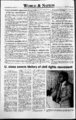
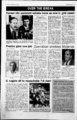
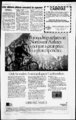
Show Spectrum The Daily Utah Chronicle - Page Ten hosts national collegiate chess U. , Wednesday, January if , ; , i&KS&.H f W toyraamnieimt including 51,000 in cash given to the player with the highest - " 1 3, 1990 ""SK ' student at the U. who formerly headed the y chess team, said he was University of very excited to have the event at the U. He added that although teams weren't here in quantity, they were here in quality. "The top teams in the country are here," Lither said. "The Lither, a graduate California-Berkele- quality is incredible." Among the 20 college teams that came to the event, which was were Harvard, Stanford, Berkeley and Toronto, held Dec. , all top chess competitors. Each school team consisted of four members and an alternate. '4" 27-3- 0, ; Six rounds were played, with all four members playing consecutively and one-hapoint being given for each win. At the tallied were and the team with the highest score total scores end, lf won. The final round of games ended Saturday. After a tiebreaker, beat Harvard 15 to 14.5.ended up with 2.5 points. The team out ahead of U. team The Brigham Young University, which finished with 2 points. "We didn't play as strong as we would have liked, but we did OK," said U. player Suvir Singh. Other U. team players included Lither, Mark Reeve, Tim Taylor and alternate Paul Raskin. Henery Chiu, a member of the University of British Columbia team, said he was pleased to finally see the tournament held in the western United States. "This is the first time we've been able to participate in our team years," he said. history, some Chiu said his team boasts two grand masters, which indicates achievements of excellence in the world of chess. But he said until this year, the team was unable to compete because it couldn't afford to travel to the East Coast. Joe Lafomara, a player from Monroe Community College in Rochester, N.Y., said coming to Utah was an interesting experience. "When we heard it was going to be in Utah, everybody said, 'Utah? Where's Utah?'" he said. To raise money for trip expenses, Lafomara set up 20 chess boards in a circle at his school's student center. He stood in the middle and challenged passing students to a game of chess. Lafomara bet $1 on each game. He said he raised $200 in this fashion. Between tournament matches and during breaks last week, players wandered into the makeshift bookstore. There they could find hundreds of books and encyclopedias, all on chess. "There, are more books written on chess than on all other sports combined," Lither said. "There are encyclopedias written just on chess openings." Lither said new editions come out every six months. He said the art of chess is one that never reaches a peak; it just keeps ' going. Lither said he was happy the U. was able to sponsor the chess tournament. He believes the publicity will help promote the university's image. "This has upped our credibility," he said. "Not just in the chess community, but in many communities." - UC-Berkel- ey I I ir j t t rii n f 'iftm nu Chmnidc I'hotos In Amhvu llollowav Intercollegiate Team Collegiate chess players Andrew Serotta, left, and Bert Wilson compete in the Hotel last at the Park chess an national held annual was tournament that week., University Championship, Pan-Americ- defeats Harvard UC-Berkel- ey By Ingrid Ricks Chronicle Staff Writer - - While others were recuperating from Christmas and resting up for New Year's Eve, a few dedicated college students from around the country met head to head for a four-da- y battle of wits at the Hotel. Park V University The event, sponsored by the University of Utah, was the Pan- - in an chess final American Intercollegiate Team Championship, an annual national chess tournament that usually takes place on the East Coast. "This is only the second time in 20 years that the tournament has been held on the West Coast," said Dave Lither, president of the U. Chess Club. Lither said a lot of hard work and persistence enabled the prestigious event to come to the U. He spent a year and a half organizing for the bid and working out details with ASUU. He said the University Park Hotel also helped in obtaining the bid. More than $2,600 in prizes was offered as enticement, 40-pl- us inckley assistant director to retire after 20 years at program, Gardner said, she has enjoyed the diverse speakers who By Heidi G. Sorenson Chronicle Staff Writer In 22 years of work, a retiring University of Utah official has become virtually an institution herself while students placing in political have visited the institute; her favorites were former President Gerald Ford, former Vice President Hubert Humphrey and former Sen. Mark Hatfield. "We've had members of Congress, including our own congressional a delegation, which is very generous in their willingness to Come," she said. "John Kenneth Galbraith was one of the most prominent recent ones," she added. Hinckley Institute of Politics assistant When students coordinate the various Hinckley speeches, they have been given a great deal of internships. Serving "dedicated, bright and ambitious" students at the U. since 1968, while at the same time enjoying stimulating and challenging experience, was Bae Gardner's favorite part of her job as the director. Gardner's decision to retire early came as a result of her husband's recent retirement. The two have plans to take advantage of their new situation and do some traveling. Starting out with an English degree, Gardner worked part time in the U. political science department. She soon e became a staff member as the Institute and her children Hinckley full-tim- grew. . Gardner feels fortunate to have had the opportunity to grow with a job in which every day and year have been different, she said. As a result, she was never compelled to move on to a new position. "The challenge is always there when you are still growing," she said. "I never have had a day when it was boring." As the supervisor of the political intern program, Gardner has helped place more than 2,500 student interns during her stewardship. "You are always getting fresh insight as new students come in," she ' explained. , Besides coordinating the internship ill Pifl': tin V latitude in creativity, Gardner said. Sometimes they need direction and suggestions; but on the whole, they come up with their own ideas for guest speakers. "Within certain boundaries, of course, we give them free reign for scheduling," Gardner said. "They have new ideas and that's what has been the secret, I think, to keeping our program fresh." The- institute also gets calls from - other campus departments with suggestions about possible speakers who are coming into town, she said. Thanks goes to the Hinckley family's two endowments, said Gardner. The institute is able to continue to provide opportunities for students to become involved in politics. Other private foundations have been generous contributors as well, she added. Because of the Gramm-Rudma- n Act, which caused mandatory across-the-boa- rd budget cuts (including funding for programs such as those offered at the Hinckley Institute), the endowments have been especially important for the institute's growth. Bae Gardner, retiring assistant director of the U.'s Hinckley Institute of Politics, said she never had a boring . day in more than 20 years at the U. "Robert Hinckley's stated nation's capitol. The Institute tries to them on a regular basis in the S y Pif,L ?y5 beeon,: ol?ain intemshiPS with those agencies Supreme Court, with the National What s in it for the students? who "are crying for help" because it is Science Foundation and on the ; here students will have more real Education Committee," Gardner said. ,.nur.?a With its funding limitations, the responsibilities rather than just busy "We have a couple of good institute primarily provides work she explained. international spots and two or three "We've had former interns in every opportunities for stateside internships, public administration spots," she either locally or on the Hill in the Utah congressional office. We have see "Gardner" on page twelve , ?P .. T |