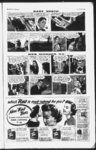
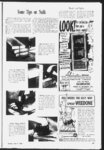
| Show McGuffe by Leonard IL ilk bre Batril 't Kirkpatrick J11 Hardly a day passes without somebody or some group moaning about the "good old days" when the youngsters really learned a lot in school Some say we don't teach anything at all Others complain we are teaching the wrong thing Well the University of Utah owns a large collection of school books volumes that go back to the days of ''Reading Writing and 'Rithof Bessie Stone nietic" Through the and Frances Whitworth some of these primers were tried on youngsters la today Others have been analyzed by educators or tried on the writer's own children The results vindicate our modern textbooks One of the readers used in the study was Krackowizer's First Reader printed in 1894 It contained nature myths and stories from Hiawatha t1''i i"i i ' old-tim- and t '4 g rc I ' Cal Here are some remarks made by children of today: "1 don't like this one at all It has only a few 411 :5 oto-- ' - 1 v "These pictures aren't up to much" "I can say a lot of the words but I don't get what they mean" (The youngster referred to words like horrid abdomen translucent embryo calyx concave and convex Remember this is a first reader!) "I like this book best because the Indian names sound so funny" (The ones that delighted her were: Nokomis Chibiabos Mudjekeewis and Minnehaha After sounding them out she would giggle and forget the story Just laugh and repeat: "Nokomis or Mudiekeewis") One child was disgusted with the Hiawatha kind of Indians He remarked: "Our Indian stories have pretty colored pictures and the Indians don't just sit" "The Independent Primary Reader" by J Madison Watson was printed in IV& It contained easier words and many more pictures However several of the lessons simply did not make sense Here are lessons one two and three combined: "Is it a can? It is a can"--"- Is it a pan? It te— nt is a tin pan It is big"--"- A pan and a can"— "A can in a pan"—"A can with a pan"--"Ia tin can with a big tin pan? It is"--"- A tin can is in a big tin pan" Our modern youngsters have learned to read from books that are more meaningful Here is what some of them thought of such lessons as the one just cited: "I don't understand it Why does it say pen and can so much" asked a little girl A boy observed: "The first stories are abort 4 vw e - 4knwto4tmtkroor'Wlloiowebwawsmwomoltwl'-- ceatory "first reader" typical or daps" in cdocAtion has pretty Jane Lund daughter of Mr and Mrs Eugene Lead 1618 Laird Ave just a bit puzzled but they don't make sense They say the same thing over and over and there Isn't any fun in the stories: The New National First Reader published by A S Barnes in 1886 made the biggest hit It contained short stories and many pictures It showed children playing with the pets and toys they had 60 or 70 years ago Incidentally rats and mice are mauled enough to make most grownups squeamish Everett Dean Martin has said today's psychologists would be lost without rats Yesterday It was the elementary readers that couldn't get along without them! Many of the children noticed how differently the textbook children dressed The girls had longer dresses and all the boys had short pants Several youngsters noticed the stories all seemed to be about farm or country life A typical story teaching a lesson went like this "Bad boy! bad boy! Come down from that tree Do not take the eggs from the nest What a bad boy to take the eggs of a bird! "Go away bad boy do not take the eggs and soon there will be three pretty birds in the nest" Educators and parents of today prefer stories emphasizing good conduct as a more positite approach They recognize the boy in the tree may have been just curious and would hesitate to call him bad They further suspect such a yarn will inspire a few young men to go out looking for a tree for them to climb In many of the old books the language Is phrased properly but in a way that sounds stiff and unnaturaL Several of our children noticed This Iiith Oa "good s old As :5x t N- 7' — 1 WA pictures" 4f t4A iik'' e !7t 1 history 0 iI r y '' i -— t?- e ' 4 ' 4 '4!!! 'I rtP - V ':"114 't 17154 A v t A I w1:' - 1111111111§ MiM11111111 John MI4gky left and sister Marty third from left children of Mr and Mrs Grant Midgley Senwitoy JUIN 7 1913 ) join Mike and Phyllis Kirkpatrick the author's children in evaluating old readers 1111-2n- d Ave this: For instance one boy said: "The children talk funny Why does Ned car 'Are you not very cold Ray?' Why doesn't he say 'Hey are you cold?'" Of course king of all the textbook writers was Mc Gulley His readers are a legend Yet the stories actually stressed bad conduct used fear as a motive and did a lot of name calling Most parents would hate to use either of these yarns from McGuffey's New Primary Reader printed in 1868 for bedtime stories: "Look look is not this Frank Brown? What can be the matter with him? "The poor boy is dead He was on his way to school when a bad boy met him and said: "'Come Frank go with me to the pond' 'No' can not I must go to school' said Frank (Turn to Page 15) Nil to l |