| OCR Text |
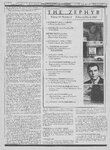
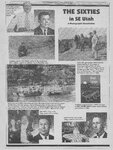
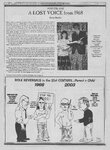
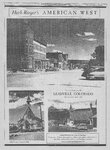
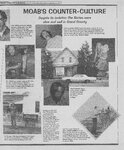
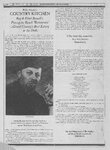
Show THE ZEPHYR/FEBR the new creation as Bates’ Park, and many animosities and disagreements over the administration of the new park did not crystalize until after Bates Wilson’s retirement in 1972. While SE Utahns debated the emerging importance of tourism, Moab’s most prominent citizen left town. Charlie Steen, the Uranium King, who literally transformed Moab almost overnight with his uranium discovery in 1952, announced his imminent departure. Charlie had been elected to the state legislature, but ran into a very hard wall when he introduced bills to reform liquor laws. This was, after all---Utah. Frustrated and angry, the Steens left Moab and moved to Nevada, where the tax structure was also more favorable to one of the richest men in the country. The citizens of Grand County were shocked by his sudden exit, and from that day, the Legend of Charlie Steen has rooted itself firmly in the pop history of Grand County. Despite Charlie Steen’s farewell, mining continued to play an integral role in the economy. Texas Gulf Sulphur began construction on a railroad spur line from Crescent Jct. to its new potash plant along the Colorado River. The price of uranium rose and fell as the decade proceeded, but by the late 60s growing Opposition to nuclear power and concerns about its safety seriously affected mining and its processing in SE Utah. Other projects, however, continued to provide jobs and revenues for the county. The Interstate Highway System, introduced in the 1950s by Eisenhower, now reached into southern Utah. I-70 would follow the route of US 6 from the Colorado border to near Green River; beyond that small town, however, the interstate highway would enter virgin territory. The new highway would be blasted out of the sandstone flanks of the San Rafael Swell and ultimately connect with I-15, more than 150 miles west. The project would take almost 30 years to complete. In 1963, at Green River, a missile base was proposed and very rapidly constructed on the east side of the river, in Grand County. With the Cold War alive and well, and just months after the Cuban Missile Crisis, the project was approved with little or no public opposition. Missiles were fired from the Green River base and targeted to the White Sands Missile Complex in New Mexico. Until the early 1970s, portions of Canyonlands National Park were closed by rangers to eliminate the risk to tourists of falling booster rockets and errant missiles. Goofy ideas have always been a part of Moab’s history--past and present. In the early 60s, proponents of a series of dams on the Colorado River were still active, even as Glen Canyon dam was being built, 200 miles downstream. The Bureau of Reclamation’s dream of controlling every mile of the Colorado River died when opposition to damns inside Grand Canyon National Park received national attention. But it was too late for Glen Canyon. In early 1963, the diversion gates at the dam were closed and sealed, and the free-flowing river died. At least for now. For those Grand County residents who remember the battle to stop a proposed highway over the Book Cliffs to Vernal in the early 90s might be surprised to learn that the same fight was waged in the mid-60s. Support for the road had seemed solid, but in 1966 the Ute Indian Tribe withdrew its permission for the road to cross its land; eventually even ranchers and sportsmen opposed the project and thé idea lay dormant for 25 years. And finally, in 1967 the idea of "Fort Moab," a tourist theme park to be located just north of town, was bandied about, but never went anywhere. They were just a bit too early. Io by Pa Volume 14 Numba 6 February/March 2003 4.. SOUTHEAST UTAH in the SIXTIES A Photographic Recollection 6... POINTBLANK: A Lost Voice from 1968 By Rusty Reeder NEW WEST BLUES By Jim Stiles "Role reversals in the 2lst Century (Parent v Child) By Jim Stiles 9... HERB RINGER'S AMERICAN WEST ‘Leadville, Colorado, from 1952 to 1961 \I3.... THE ZEPHYR BACKBONE REPERTORY COMPANY presents: THE SIXTIES! 14..... SINS of the FATHERS A Boy Scout trip to Glen Canyon nies a life By Rich Ingebretsen 16.... MOAB'S COUNTER-CULTURE in the 60s Despite its isolation,the tumult of the Sixties did not miss Moab... 18... MOAB, UTAH: NOVEMBER 22, 1963 It was a quiet fall day when the world turned upside down... By Jim Stiles 20.... Willie Flocko's COUNTRY KITCHEN - In the 60s the best restaurant in Grand one was the Porcupine Ranch ‘Restaurant" 22... HOW THE SIXTIES CHANGED THE WORLD And how it changed the life of a Mormon River Runner By Ken Sleight 29....GLEN CANYON RETURNS...sort of How much silt does it take to fill a reservoir? We just might find out. In 1968, a Marine pilot from Moab was lost in action in Vietnam. He would not be the last. In Richard Firmage’s otherwise excellent History of Grand County (to which I referred frequently while writing this story), he writes: "Grand County did not experience much, if any, counter-culture social unrest or protest during the latter part of the 1960s." That was simply not true, although it might have been difficult to find any public mention of it in the local paper. Sentiment for and against the war was intense at times, but opinions from both sides of the aisle were frequent. (For more on Moab’s “counter-culture" see page 16) Lyndon Johnson’s last hurrah as president ruffled some feathers in Moab, when the lame duck president signed a proclamation dramatically expanding the boundaries of Arches National Park. He signed the document just a few minutes before leaving for the capitol and the inauguration of Richard Nixon. Some locals complained bitterly; the expansion brought all of lower Courthouse Wash and the Petrified Dunes under Park Service control. When the NPS closed the wash to vehicles (much as it has recently done at Salt Creek in the Needles), jeepers were livid. Ultimately however, the crisis passed. A year before President Johnson’s final act, McGraw-Hill published a modest book of essays by a relatively unknown writer. If the term environmentalist had even been coined in 1968, Edward Abbey would have been called one. Desert Solitaire received a smattering of good reviews. Joseph Wood Krutch called Abbey “eloquent, bitter and extravagant,” and called his book "a passionate celebration." A.B. Guthrie wrote, "Only the damned engineers, the Bible pounders, the chambers of commerce and the proudly prolific studs and dams will fault this 30..... FEEDBACK: THE READERS RESPOND book. There are quite a few of us who will answer to its sensitivity, its style, its stout thought and its downright honesty.” There weren't that many at first and the hard cover version faded into history after one printing. But it was released in paperback a year later, and slowly, year after year, thousands of young men and women found their way to the words that would change many of their lives. In the decade to come, the crusade to save the canyons would have far-reaching implications, even into the 21st Century. For some, at least, that crusade would prove to be bittersweet. COMMERCIAL CANYONEERING UPDATE Following a meeting with NPS officials in August, representatives of three environmental organizations, this publication, and a Utah attorney sent the following letter to SE Utah Group Superintendent Jerry Banta in November: Superintendent Banta: As a follow-up to the meeting held in Arches National Park on August 26, 2002, we would like to reiterate our concern about the commercial use of Arches backcountry. If you have an update on would be commercial Thank you the issues raised at that meeting, your information appreciated. Please keep us informed of current perntitting and of future commercial use planning. for your courtesy in this matter. It was signed by attorney Julie A. Bryan, Bill Hedden of the Grand Canyon Trust, Bill Love and John Weisheit of the Sierra Club’s Glen Canyon Group, Liz Thomas of the Southern Utah Wilderness Alliance, and by me. Last year, when the Park Service approved an Incidental Business Permit for a company to run off-trail, backcountry commercial day tours, the NPS insisted that, with regard to the tours, there were "no affected publics." Now the one year permit is expiring and due to be renewed or rejected, and one thing is certain, there ARE affected publics. I hope the NPS keeps that in mind. STANDARD END OF YEAR DISCLAIMER As always, the Feb/Mar issue is printed before Christmas but not distributed until late January. If any event occurs in the interim that renders part or all of this issue tasteless, inappropriate, or disgusting, it’s not our fault. ee ee ee eS |