| OCR Text |
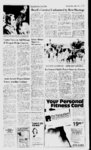
Show ' kW v' Vj n ;i V 'vir' : ' - M V ' ?-t- ; j' kt-- w fciEsrswwa? & 'SlfirK :;c & ;. Vi ! NJ. :4i By Ann Kilbourn Tribune Lifestyle Writer ... and therefore I" never send to know whom the bell tolls; it tolls for thee. J'or John Donne There will be no tolling without Lorraine Nickersons permission. 14 Actually, most bells with tolling potential 5, are in her home. Shes acquired her expansive collection while traveling with j V her husband, Robert, xi Antarctica is the Jl one continent Mr. 4 and Mrs. Nickerson havent toured. I seriously doubt ;j there are many bells V there, she said (with f-apologies to South Pole residents). , The Nickerson col-- ( j lection includes bells crafted for religious There are bells to notify the gods that the devout have come to pray. Bad Spirits Bells can clear the air of distressing evil alerting spirits that they dont have a spirits prayer of continued existence in her neighborV X f . r'' i $ , S'-- r. - hood. (Her bell collection could probably eliminate most evil spirits in the city.) An additional zap might be sent in the direction of lingering evil spirits by using a bell and hand-helrattle from Bhutan. d Ankle Bell These items are used in religious ceremonies the rattle is called a double thunderbolt, she explained. Bhutan is part of what is called the Thunder Dragon Kingdom, a Himalayan country, she explained. A hollow metal vessel, an unusual type of bell, with a leather strap to attach to the ankle, comes from the Kikuyu tribe in Kenya. Finely detailed cloisonne bells from the Orient also are included in the Nickerson bell collection. d Mrs. Nickerson likes the old, wooden, in bell Bali. Among purchased temple the bells at the Nickerson home is a flat, steel Burmese bell used in worship and struck with d a wooden mallet. A teak, bell from Bali and camel bells from Jaiphur, northern India, also are favorites. hand-carve- hand-carve- bird-shape- I have shopped for bells and other items from Cape Hope to Cairo, she noted. Bells of a less exotic nature, but still appealing and collectable, were purchased in Europe. British Bell I purchased a detailed, painted bell from Staffordshire, England, in addition to bells from more unusual places. Closer to home are bells from the United d States, including a cranberry glass, bell Mr. Nickerson purchased in the Antique wooden temple bell from Bali has deep sound and calls natives to worship. rose-colore- South. This particular bell is a Mary Gregory. When we take a major trip, it is usually for six weeks, Mrs. Nickerson explained. The couples vacations are carefully planned and executed. Each of us takes one suitcase. The suitcases are half full, she explained. When we return, our luggage is completely filled with items purchased during our travels. Ideal acquisitions are those that can be packed flat and framed back at home. Many parcels must be carried by hand. When we bring home glass items, we have to be careful. We like traveling to exotic Diaces. We enjoy bringing home remembrances from countries we visit. Mrs. Nickerson acknowledged shes always been interested in bells: "I like the sound they make, she smiled. Her interest in bells is a happy coincidence coupled with the Nickersons extensive traveling pursuits. Where there are people, there are bells, she assured. Does my husband mind my acquisitions? He must not. He helps carry my purchases home. Mellow-soundin- g is made of dark bird bell teak wood. part of Nickerson collection, wooden a mallet is used in temples. struck with A flat, shining bell, d work can be seen in this unique bell purchased in Peking, China. Intricate, hand-detaile- SsX i. B.F. Skinners ideas on how to improve the world By Sally Squires Washington Post Writer Psychologist B.F. Skinner says there are three major things wrong with life in western society today. For one, theres too much punishment. For another, theres this habit of doing work not for enjoyment and the positive reinforcesatisfaction but ment, as psychologists put it rather for negative reasons, such as not being fired. And third, people go too far in their quest to avoid anything that might be unpleasant. "We not only resist the constraints imposed by tyrannical governments and religions," Skinner says, (but) we resist seat belts, hard hats and signs. We escape not only from painful extremes of temperature and exhausting work but from the mildest discomforts and annoyances. As a result, There is very little left to escape from or act to prevent, says the grandfather of behaviorism, whose thoughts on Whats Wrong With the Western World will be included in a new volume of essays called Upon Further Reflection, scheduled for publication this year. What should be present in life as a teaching "negative reinforcement people how to behave, survive and exist has been lost. Shielded from the natural pushes and tugs of nature, he says, humanity may cease to grow. Many of those who live in the western democracies enjoy a reasonable degree of affluence, freedom and security, Skinner says. But they have a problem of their own. In spite of their privileges, many of them are bored, listless or depressed. They are not enjoying their lives. In short, says this man who wrote about a utopian world in the 1976 nov el Walden Two and has spent much of his 81 years figuring out how to encourage improved behavior, many people today are simply unhappy. They do not like what they are doing, he says, because they are not doing what they like. This does not qualify by Skinners own measure as "the most serious problem in the world. But it could, he says, be the ultimate one, since the rest of the world tries to emulate the lifestyle in western nations. "Is there not something more promising in the future of the species? Skinner asks. He believes there is. His answer draws upon the core of his philosophy: focus on rewarding good behavior, not punishing bad behavior. If this pattern is followed often, and thoughtfully, he says, then bad behavior simply wont exist and cooling your house in the summer Formerly known as behavior modification and more recently as applied so that you have to wear more clothes behavior, this idea has been used to is all an absurdity. train animals in laboratory experiAll of these cultural actions, Skinments and teach children more effecner says, are done for immediate tive ways of learning. In Skinners comfort and gratification, with little view, education should be a step-lik- e or no thought to the future. path designed to be stimulating all What's needed is to give satisfacalong the route. tion back to people. Its the differ"Anyone who has improved a situaence, he says, between a craftsman tion so that things are done more easwho makes a complete chair and a ily, more effectively, has used these person on an assembly line who principles, Skinner says. Certainly makes only the legs. The craftsmans anyone who has found an alternative work, Skinner says, is constantly reto punishment has used them." inforced by the process of seeing the Skinner's ideal world would be chair take form, and finally of procloser to nature. Society would realducing the finished chair. But the assworker sees only chair embly-line ize that "If you are hot in the sumnever the comleg after chair leg mer, you ought to be hot in the sumpleted product. mer, he says, "and if you are reasonSkinner is not advocating eliminaably cold in the winter, you are tion of important modern advances, reasonably cold. Heating your house in the winter such as the assembly line. But he so that you have to strip youi clothes would like to see industrial engineers and psychologists continue to team up and produce better work places and better ways of working that will offer modern employees the psychological lift that the craftsman once felt. For Skinner, these ideas are not mere theories but practices that he' has tried to implement in his own life. He has applied them at home, first with his daughter, Julie Vargas, now a professor of educational psychology at the University of West Virginia, and later with Deborah Skinner zan, his daughter who spent much of her first 24 years in the also known as the baby box. This 4x2xtt-foo- t plywood and glass box was a temperature-an- d rolled structure designed to a child with a "very comfortprovide able, stimulating environment. Although the box has been used to See Page W-Column 1 now-famo- Air-Cri- b, humidity-cont- 4 t.i 1 |