| OCR Text |
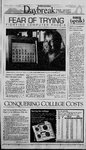
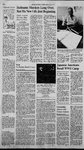
Show The Salt Lake Tribune aybreaksw MOVIES * COMICS ¢ TV * WEATHER MONDAY, MAY 29, 1995 FEAR OF TRYING FIGHTING COMPUTER ci (speak) PHOBIA Nodding Acquaintance With Gestures Can Save Embarrassment By Julene E. Fisher SPECIAL TO THE TRIBUNE In the warm twilight, we rose to leave the wine bottles and candles of a small cafe. As young tourists, we were too excited to linger over our first dinner in Rome. A manfrom the neighboringtable lifted his hand and motioned to me. Puzzled, I advanced toward him. He continued to motion as a bemused smile played on his face. When I reached him, he leaned upand kissed my blushing cheek. T hurried to join my friends in confusion. MuchlaterI learned that what I had mistaken for a beckoning gesture was an Italian goodbye. Accordingto social anthropologist Edward T. Hall, 60% ofall communication is nonverbal. Consider the myriad possi- bilities for insulting, funny, bewildering miscommunication gestures can lead to. Suppose you win Easy Speak’s Pronoun Contest*, a real possibility, and the prize is a world tour to promote your new word, an in-your-dreams possibility. When youstep off the plane in Tonga, you ask a taxi driverif he can take you to your hotel. No reaction. Maybe he doesn’t speak English, so out comes your trusty phrase book. Still no reaction. You try a louder, more emphatic inquiry while wavingpa’angas and watchhis face intently to see if anything registers. Finally you notice his upraised eyebrows, the Tongan equivalent of an American head nod. He hasbeenpolitely gesturing yes all along and probably wondersifall Americansare as dense as you Your Bulgarian tour guide asksif you like the art of native son Christo, who wraps beachesin plastic. Not wishing to appear rudeor uncultured, you nod vigorously. You wonder why your accommodations are downgraded to subpeon | class until you find out that in Bulgaria nodding means no and shaking your head meansyes. You keep your handsand your head to Steve Griffin/The Salt Lake Tribune Jill Gebelt, a computerinstructor at Salt Lake Community College,teaches a 30-part computer-literacy course over KULC (Channel9). Viewers Can Learn Basics With Televised Course By Lance S. Gudmundsen ‘THE SALT LAKE TRIBUNE If channel surfing last Friday or Saturday afternoon, you might have run across Jill Gebelt on KULC(Channel9). She was the bright-eyed young womancalmlytalking about WANs,paralleltransmission andfile servers. Stuff like that. She also was calling the shots as a young man named Cameronused a computerto link up to send anelectronic-mail message to Gebelt's sister Janet, a studentat Rutgers University in New Jersey. If you didn’t understand lingo like “LAN” and “login,” don’t feel dumb: What you saw were some of the last programsin a 30-session telecourse from Salt Lake Community College’s campus on Redwood Road. Later this month, you'll have several other chancestostart at the beginning. Titled Basic Computer Concepts, the course is a graduation requirement for all 17,000-plus SLCC students. “And we have a waitinglist,” said Gebelt, 30, a Minnesota nativein her third yearof teaching at the Salt Lake County campus. So, she said, the telecourse was designed to help clear the student logjam in classrooms — plus appeal to a general audienceinterested in the ABCs of computing. Afterall, ‘‘a lot of us don’t need three college credits,” Gebelt said, smiling, ‘and anyone can just flip on the TV and watch.” Thespring quarter just ending wasthefirst time Computer Literacy 101 has been aired by KULC. The30 classes will be repeated on Channel 9 during the coliege’s summer quarter, beginning June 20. The telecourse may be repeated during the 1995-96 school year,station officials said. Theclasses, Gebelt said, ‘are designed for people with little or no computer background."’ Sessions generally alternate between lectures and demonstrations. The “information-intensive” lectures basically tell viewers,“This is your computer. . . this is how it works ... this is a hard drive andthis is a floppy drive ... this is your CPU .. . andthis is your printer.” Naturally, the subjects become more complex. In the demonstration shows, Gebelt begins by assigning students to play a computer video game — like solitaire. “Tt soundssilly, I know,”shesaid. “But we wanted to be fun and nonthreatening.” Later, she guides viewers step by step to create a document, calculate the interest on an auto loan or take the first plunge into “surfing the Internet.” Computer Literacy 101 costs $154 for Utah residents, either on campusorvia telecourse. The laboratory fee is $5, and the textbooks costs $48 newor $36 used. Students receive a 125-page syllabus explaining the objectives and concepts of the 30 programs; access to computer laboratories on either of the two local SLCC campuses (4600 S. Redwood Road or 1575S. State St.); use of a ‘class hot line” if they run into a thorny questionorglitch; and, of course, three hoursof college credit Cost is the same if you audit the telecourse — taking it for no college credit. ‘Auditing eliminates the pressure of homework deadlines and the tests,” Gebelt explained. Youstill have access to the SLCC computerlabs yourself, and OK becomes your word of choice because almost everyone under- stands it. Then while you are in Brazil eating the most delicious churrasco you've ever tasted, your server asks if your food is OK. Your gesture of OK is met with a plateful of churrasco in your lap. A North American OKis definitely not an OK gesture in Brazil. If you see a future of foreign travel, foreignvisitors or the 2002 Winter Olympics, you might wart to brush up on how the rest of the world motions goodbye and hello. On the other hand, being kissed by strangersin cafes isn’t that bad Two excellent sources on international gestures are GESTURES, The Do’s and Taboos of Body Language Around the World by RogerE. Axtell and CULTURGRAMS published by Brigham Young University. “For contest details, write to ‘Easy Speak,” The Salt Lake Tribune, P.O. Box 867, Salt Lake City, UT 84110 @ See TELECOURSE, C-2 JuleneE. Fisher is a retired teacher of English as a second language. CONQUERING COLLEGE COSTS Start Saving and Investing Today — Saveearly, save often Make Upthe Difference With Aid You'll needto start socking away $232 a month to pay for a four-year education for a child whowill attend a public college beginning in 18 " ay the tab-aug and a By Richard Brack GANNETT NEWS SERVICE Oneexpert calls it ‘the Matterhorn of personalfinance.” Indeed, with the four-year price tag for many private colleges breaking the $100,000 barrier, the prospect of saving for college can be as intimidating as making an assault on that famous peak. And with headlines screaming at new parents that by the time their babies head away to school the price could be as much as $275,000, more families are realizing there's no way for them to stuff their piggy banks fast enough to foot the bill. So how do peopleactually pay their college bills? The simple answer, says Gary Nichols, executive director of the Towa College Student Aid Commission,is that they don't. Notall the bills, anyway. Financial-aid programs help out. And families should realize they don’t have to pay for the whole thing up front — loans are available, “The problem is they sometimes read these scare headlines and their reactionis, ‘I can’t do anything aboutthis,’ ' Nichols says. Then, See of never being able to save so much, they throw up their hands forget aboutit. That's a mistake, Sure, some savings will be required. But thebills also will be paid from currentincomewhile the studentis in school and from financial aid and loans, “ The mix required varies from family to family, Simply put, the bigger the income, the less financial aid you'll qualify for, And the bigger the savings, the fewer loans you'll need. That's why it makes sense to save early, Because, as Nichols says, you can either save now and earn interest or borrow later and pay interest. Tim Pratt, a certified financial planner with American Express @ See COLLEGE COSTS, C-3 How to invest college savings § , ed IN TEAL years. For private school, save $485 a month: Projected increasesin college costs and required savings No.of School Projected cost Monthly rs year 4-year total investment ‘int io 1995 1996 Serre $41,687 44,189 1997 1998 1999 2000 2001 2002 2003 2004 2005 2006 2007 2008 2009 2010 2011 2012 2013 2014 88,916 94,251 99,006 105,901 112,255 118,990 126,130 Source: T. Rowe Price Associates, based on $87,103 92,329 97,869 103,741 109,966 116,564 123,557 130,971 138,829 147,159 155,988 165,348 175,269 185,785 196,932 208,748 221,273 234.549 248,622 $3,326 1,693 1,148 875 712 602 524 465 419 382 362 327 305 287 271 256 244 232 222 263,539 213 Board's surveyof col Schoo! year. Costs include tuition, room and board, transportation, books and tng $6,950 3,537 2,398 1,829 for the current other expenses |