| OCR Text |
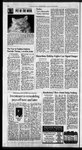
Show The Salt Lake Tribune OPINION AA3 Sunday, December 30, 2001 Putin’s Version of ‘I Feel Your Pain’ MayNotFly WithRussians RUSSIAN VIEW An old man with bushy eyebrows spokeslowly, with obvious difficulty. _ Desperately trying to look straight into the TV camera, he was stroking the hair of little girl — his granddaughter — whosaton his lap,visibly bored. The man was saying big words aboutpeace and happiness, and about speeches — he was busyfieldingrae questions forwarded to him onthe air by the TV audience. The broadcast, which involved a live hookup with residents of 11 Rus- sian cities as well as questions by telephone and Internet, lasted for ‘unemploymentis down andbirths are generations who talked freely and in- up, coherently and has a good command of facts and figures no longeris good enough for the Russians. It seems as ifan eternity has passed since Yuri Andropov, shortly after Pa MICHAEL NAKORYAKOV knows and deeply cares about everyone watchingthe program — but there were not many people amongmillions Two decades later — last week — TV crews were back at the same ornate Kremlin office, but this time things were different. The man in frontof the camera was sharp,fit and firmly in control. He was not making any carefully scripted dull. dreams, with thefirst Soviet leader in The fact that they have a leader whole setup was designed to project an image of a kind, wise leader who nothing. (restructuring) campaign were a blast. That was the time of great hopes and “Here’s the rule: Got nothingto say — don’t bug the people.” who obviously is in charge, speaks how great the Soviet Union was. The of the TV viewers who were buyingit. MostformerSoviets knew it wasjust a setup. They knew the man, General Secretary Leonid Brezhnev, was only a sad puppet whose words were writtenfor him by others and meant doing on TV?” fumed the station's commentator Andrei Cherkizov. almost three hours. Some questions were rather tough, ranging from low salaries to traffic cops taking bribes, but Russian President Viadimir Putin neverlosthis cool. Things sure have changed lot. Actually, the changes have gone even deeper than .it may seem, although the obvious differences be- tween BrezhnevandPutin are rather stunning. Busy calling the Putin broadcast “unprecedented” and “amazing,” most U.S. news outlets may have overlooked something arguably more important: Russians succeeding Brezhnevin 1982, made a huge splash, publicly — ifcarefully — questioning somebasics of the Marxist teachings. After 18 years of Brezhnev’s regime, with no accessto the top leadership except for heavily retouched photographs and TVreports showing dark-suited old guys giving each other multiple state awards, An- dropov’s radio address and his thought-provoking magazinearticle that followed prompted the former Soviets to wonder what would come next. Nothingdid. Andropov, the former radio station poll, 67 percent of Rus- head of the KGB,was an elderly,frail man with numerousillnesses, and he died a year later. Only after Mikhail Gorbachevtook overin 1985 did things start moving again. No matter what manyRussians sians were not satisfied with their leader’s answers. “What in the world was [Putin] are saying about “Gorby” now, most of them would haveto agree that the first years of his “perestroika” were notall that impressed. According to the Echo of Moscow telligently and with the newspapers and magazines that were interesting to read. Boris Yeltsin, with all his numerous flaws and shortcomings, continued more orless in the samedirection, even when he himself became a Brezhnevlike caricature of himself. He mingled with people on the streets during cross-country trips and even danced joyfully. on stage trying to prove he was in good health. In other words, Putin did not seem Economy? Wages are up 21 percent, reflecting Russians’ about the future,he said. optimism Corruption? A judicial reform is under way to help protect people's rights and removethe foundation for corruption. The United States? The U.S. leaders “know whattheyare doing, and so do we,” and “Russia will not do anything that may cast a shadow on jour relations.” Hejoked. Hetalked, albeit briefly, about his superstitions (no more than most people) and hobbies (martial to really pioneer too much by going on arts). He pledged to help an elderly live TV, even though hesaid he had to woman whose pension was too small ignore some ofhis advisers’ warnings against the last week's broadcast. Lilya Shevtsova,a political analyst with the Moscow Carnegie Center, complained that Putin’s conversation with the people was an “imitation of communication” and an “imitation of democracy.” She might have a point— despite a numberof tricky questions Putin was asked, the program was well-orchestrated in order to prevent any heated exchanges and hostility. Heneveroffered any in-depth expla- nations of such thorny issues as Chechnya andpress freedom. Theatmosphere remained cordial, if not George Sutherland Was Utah’s True Independent Thinker anda fifth-grader whose school had no heat. All in all, Putin did quite well. Many Western leaders probably would do worse under the circumstances. But he may need to do better yet to impress his struggling and ever-skeptical country. In any case, that wasn’t Putin who coined the phrase, “I feel-your pain.” Tribune News Editor Michael Nakoryakov was a journalist in Moscow, Russia, until 1991. He welcomes e- mail at michaelun@sltrib.com. essential to his carrying out to a suc- cessful conclusion the purposes above mentioned.” Eloquently summarizing his life, political conservative, yet he champi- BY PAUL T. MERO oned manyprogressive reformsof his Not many Utahns are familiar with George Sutherland and yetall of us should be familiar with this homegrown American treasure. Heis argu- ably one ofthe most consequential and influential political figures to ever come out of Utah. The lives of all Americanshave been touched in some respect because ofhis dedicated public service and sharp legal intellect. Sutherland grew upin Springville in Utah County and graduated from the Brigham Young Academy. After receiving a law degree from the University of Michigan, he returned to Provo to practice law and unsuccessfully ran for mayorandforterritorial delegate to Congress. After Utah statehood, Sutherland served in the Utah Senate, the U.S. House of Representatives (1901-03) and the U.S. Senate (1905-17). Hewasnevereasyto pigeonhole. A Republican andanon-Mormon, hecan be described easily and fairly as a day, including women’s suffrage. But perhaps Sutherlandis best known for his appointmentto the U.S. Supreme Court in 1922, the only such appointmentof a Utahn to date. Heis forever Justice Sutherland. Sutherland wrote for the majority of the court in the controversial “Scottsboro Case.” The 1931 incident centered on nine black youths who were indicted in Scottsboro, Ala., on charges of having raped two white women. All nine youths were found guilty and sentenced for up to 99 years in prison. A court majority, led by Sutherland, reversed the convictions on the grounds that the young men were denied the right to counsel and that a jury of their peers was not present(noblacksserved on the juries involved). Some years later all nine were exonerated as oneofthe alleged victims recanted her testimony. Sutherland’s focus in Scottsboro contrasts this broad scope in the 1936 case Curtiss-Wright Export Corp. vs. United States, a case involving illegal Amendments to the U.S. Constitution armssalesto a foreign power. Sutherland foundthatthe executive branch of our federal governmentheld cer- apply to more than simple judicial proceedings likethe right to a fair tri- tain powers not only separate but independentof the legislative branch. taking away thelife, liberty or prop- al. It meansthat in the due process of erty of an individual there must also The case arose as a challengeto the be rendered a judgment as to what delegation of power from Congressto the president with regard to foreign Sutherland applied it, substantive due relations. Oneof the “Four Horsemenof the Apocalypse,” he was disdained bylib- erals of his day andridiculed for opposingall of Franklin Roosevelt’s New Deal programs as unconstitutional. And yet conservatives of our day, ju- rists such as Bork, Scalia, and Rehnquist, also routinely chastise his many court opinions for grounding his more “liberal” opinions in the very same logic he used in opposing FDR’ssocialistpolicies. At the source of this even-handed rancor was his support and developmentofthe legal doctrine of substantive dueprocess. Thelegal theory of substantive due process holds that the due process clauses of the Fifth and Fourteenth constitutes those three assets. As process provided the legal basis, for such important rights as that of par- ents to control the education of their children andthe rightofall people to freely contract with one another. Defending the legitimacy of substantive due process, Sutherland once wrote, “The liberty mentioned in that [Fourteenth] amendment means not only the rightof the citizen to be free from the mere physical restraintofhis person, as by incarceration, but the term is deemed to embrace the right of thecitizen to be free in the enjoyment ofall his faculties; to be free to use themin all lawful ways; to pursue any livelihood or avocation, and for that purpose to enter into all contracts which maybe proper, necessary and work and keen intellect, Sutherland biographer and noted constitutional scholar Hadley Arkes says of him: “The young man onthefrontier, who read earnestly, who committed pas- sages from Burlamaqui to his commonplacebook, alreadyhad the discipline of the thoughtful jurist and the passion to know well. Yet, even before he.committed those passages to writ- ing, he knew,in himself, all that he needed to know about the groundsof his judgment. For he knew himself, as surely as any young man of twenty years knew anything, the power of judging that nature herself had placed within him.” His mind and works were testimonies to the legitimacy of natural law jurisprudence that foundlife in court cases involving substantive due process. I am proudto preside over an In- stitute named in honor of Justice George Sutherland. Paul T. Mero is the presidentof the Sutherland Institute, a Utah-based public policy research institute. OFFICIAL PIN OFFER Salt Lake 2002 Olympic Nola amaCltch', Pin Collection Ca sd -4 Ue 2el NY CALL TOLL-FREE: 1-800-704-6466 24 hours a day, 7 days a week. Credit card payments only. Delivery Time: 1 Set of 14 Pins plus 1 Free Album FAX TOLL-FREE: 1-877-922-2242 Credit card payments only when, faxing the order. a MAIL TO: Torch Relay Pin Collection Suite 127, 2315 Whirlpool St. Niagara Falls, NY 14305 USA First-class postage stamprequired. Allow 4 to 6 weeks from order placement. The product will be delivered, via UPS, to the address you have included below and will require signature upon delivery. ‘Tax information: Sales tax does not apply Payment Methods: (i US funds only ~ please do not send cas) 1) Credit Card ~ 208 below 2) Check, Sule 127, 2315 Whifipod St, Niagara Falls, NY 14305 USA ~ allow 5 werking days for checks to clear Payment Detaite: cre (TET) Name: the U.S.A, and is valid untit February 28, 2002. Orders received after this date will Ce eet Taky & Ss = each Pires q ae ve SMmes TULey Ce eneace Dee. cet ya See the coupon in your Deyey Sunday or Monday. BMCe UH eas |