| OCR Text |
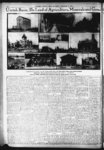
Show 9 V. C. . I Cfto J." odioioi. XT! - y Ul here and Hoiu Ulhij, n 11 -.- . - SDETE C -. it Ulorks LJ n ,- JK t i t - I t ? 'aiiiRiniD c ! o 5 i -- ;. T i; that cheerful pastime known as going the Americana have made the world's record. as individuals and as a nation, we nave for 200 years been the horrible example of spendtbrlit folly at which our more experienced and less fortunate neighbors have held up tand incidentally, out) their itching palms. ( In family life we have over and over proven the xajings that In America It is only three generations from to and that a Euthrows ropean could live on what an American In national life we have blindly exploited away. the richest resources that ever a nation fell heir to in a manner strongly suggestive of the hero in Brewster's Millions. I'nder the doctrine of laissex faire we have been 'pending the principal as well as the Interest of the national patrimony, and mortgaged the toil and privation of our grandchildren for our present sellish gratification. Our coal has been waatefuily mined and still more nastefulty burned. Petroleum has been similarly misused. Worst of all. on account of its allied effects, our once magnificent naturaLforests have been cut and burned until the finish of the present stand of umbel-- , under the increasing rate of consumption, is plainly in sight some authorities say no more than 25 years hence. Our natural water ways are h. iked With debris from the denuded mountain sides, the floods from unregulated run-owash millions of dollars worth of rich agricultural soil Into the ocean and cover hundreds of thousands of acres of farming lands with sterile sand and gravel. The flood asters themselves are lost for purposes of irrigation or Inland Navigation, and each flood Is followed by a period of low water. Throughout our history private extravagance, has But tho reflected in national thiiftleasneaa time. 4 counting the cost and of active measures for aat arrived. The increasing rnrvnphmpnt ha itistof the staple of Ufa- haa aroused the attention f Americana as no amount of propaganda could have done and the conservation policies of the r.v eminent are the natural correlative In state craft f the economies found necessary In American homes. trained experts, forest si hools. IX shirt-sleev- es of the vaiois The administrative work, which l far more extensive is confined to the national forests Of these there are 152 comprising IS! ToCfinn acres of timber 1. lands, mostly mountanous. ated malnlv in the I'nited Elates west of Denver, though some are in Arkansas. Minnesota Wisconsin. Mil hlgan, Florida, Porto Rico and Alaska These enormous areas comh of the f.rrt lands of the naprise only tion, the remaining having passed into private ownership For convenience and to save time in administration of the national forests, the west is divided into six administrative distrh ts w HIT htadquai tors respectively at MlS'oula, Denver. Albuuuerciue. San Franftsro, Pmtland and Ogden Each district is In charge of a district forester with an iissociatedl-trte- t forester the absence of hi i hief The district forester derives his authority from the forester, who Is chief of the service and who In turn derives his from the secretary of agriculture, the president and Congress The districts are subordinate to the foresters office In Washington, whit h formulate all mature of service polity, while the districts concern themselves only with the diree t control and business affairs of the national forests one-fifi- shirt-sleeve- s, four-fift- who-ets-t- in the Fourth District. Work The business and the handling ofeai h distrUt I very similar to that of the oth-rand for this reason the present discussion wilt be limited to the fourth district, the central' office of which Is located at The building occupied is of brl. k with three Ogden , floors and a basement, and measures 50 feet by j;-It was constructed especially for the cse of the service In 10 and Is rented from a ritlxen of Ogden It contains besides office facilities, the storerooms of the property clerk who supplies all the western forest office with practically every article they use in the management of forest business He purr hases these artiele anddIMrtbute them as requisitions anr sent in. One floor and the basement are filled with his stovk of stationery, blank, typewriters. Ink. drafts-mensupplies, tables, chairs, cots, tents, flags, water-hagcameras, saddler.-blanke-ts, axes, and all the special Instruments required bv forest engineer and surveyors. The stock runs In value at different times of the year from-1-70 00 to 1100 00o, und about JSO.OOO worth of supplies and instruments were stnt out ill 1010 The executive offices are on the second and third floors The work of the office ts divided among each TTfwhhh control a special line of actli- these there are six- tl) Law, The law officer Is a mrmb-- r of the secretary's office, who render opinions on the legality of proposed artlon and handle the suits brought for trespass He also draws all i gal paper which are not already prov Med In forms. rv 12) The flscal agent, who la a bondsd'TSffiiVKoTTfie-wwrrlu' office, receive and disburse all mony In the year befor the district and audit all bill tween July 1. IN end June 3. 191. he paid dut ff s. - "t 's Conservation the Watchword. survey has mapped the coal beds and regions and calculated the remaining supply and the probable time It will last under the Increasing rste of consumption. The bureau of soils haa In a similar way charted the areas of productive farming Kill and drawn attention to the heavy annual loss I lirough erosion. The reclamation serv ice la engaged in building great reservoirs for the retention ef flood water so that they may be used for Irrigation. The forest service l struggling tQ.prutecLand perpetuate the natural supply, of timber and to prevent flooda nd erosion. Thla brief statement incniffhl"! very wide rang of activities; It cover fhe protection of 'landing timber from fire, theft, and the depredations of Insect pests, the introduction of economical methods of logging and milling, the Invention of preservative arid seasoning processes to make poorer 'pedes take the place of the more valuable, the production of turpentine and resin without killing th tree that supply the pitch, and measures for assuring a continuous crop of young timber to take the place of that which la removed. The protection of watersheds by extending the timber cover and regulating graving In Itself prevents losses by floods and erosion and tbs lining of reservoirs with silt. The work of the sendee I so broad and so funds, mental In nature that It supplements that of other bureaus. It strikes directly at the causes of loss In wood, water and toll. Foreign nations hav learned al a great or greater cost than w that no country can continue to b prosperous without a comprh nl rs and firm policy of forest management. flood forestry ta as fundamental necessity In tba building of prosperity aa good soil, good climate, or ih industry and frugality of th people. mainly graduate The geological oil e. lty(f . $495,000 Operation eondtt. is correspondence with th forests In regard to personnel the construction of building and trails, the money that may be expended for different purposes, the record of existing claims, drafting, and the location of boundary lines It also maintains s very complete of the forest atlas containing all maps and tabulated records Operation takes charge V the office building Itself 13) U. S. () e a' Income for Counties. It should be known that each year 27 per cent of all receipts from timber sales and grazing are returned to the counties in which the forest are located for use tn di v eloping schools and roads The ttnl personnel nf the office consists of $0 person of whom 19 mnv lie classed as technhal experts There are 37 clerks, stenographers In various line and draftsmen, and the remaining 14 are laborer, messengers and uatchmen. Some of the technical force are frequentlv lit the field engaged In inspection of the forests, special studies 4n 'timber work and grazing, and in surveys of vanou kinds an organization ma be No mntti r how its planned it earmoi do sureessful work foundation Ts firm The foundation or ail administraIn tile forest service Is Its effiiient corps tive work of rangers Hml uperv Isors. 'The ranger is the min u (sin, whoso activity and loyalty, wisely directed by a competent supervisor, depends all tho success of the service He Is the "man behind the gun lie Is the man whcil up agalnstLha envrgcnclcx that call for tart, murage, and the firm, kind hand that controls and makes friends at the same time It is he who must ride patiently hour after hour, through the biasing sun and choking dust of summer or the. hitler frosts and blinding storms of winter, often alone and far within the mountains away from hH family for days or weeks at a time It ts he who must he cook, packer, rowpuncher. tlmbercruiser, carpenter, telephone expert. Surveyor, draftsman, hunter, game warden, deputy sheriff. Are fighter, typewriter, and not shuttle of a legal espert, all rolled Into Ope For these services and occasionally a few other the rangers receive salaries ranging from $l.ln0 to $1,400, and provide their own horse,, pack horse and horse equipment and food for themselves and their horses, In most cases Icey ary now -- provided with cabins, bams and pastures on their districts. All are Picked u&en Each ofthe 32 forest m district four Is manned by a body of such men, drawn from the local country. It U needle to say that they are picked, first by a civil nervlce examination and next hr close Inspection of their character, ability and work performed To be eligible they must phUai-ly- . capable of enduring the severe labor necessar a$ time, and aged betaken 21 and 4 The total number of ranger fnthe district la about 240. The area of forest land In the district is ap 2$,000 000 acre. The average ranger, therefore, has a district of 120.000 acres to manager and patrol This area equals 100 square miles or a little oer fle townships It would form a strip flv mile wide and as long as from Salt Lake City to In the summer and during times of danger Ogden from fire, extra temporary employes, known as forest guards, are emptoed for patrol The first duty of a ranger is the protection of his district from fire and trespass, consequently patrol s a constant fat-rof his work He keeps a diar hi(vh hows his travel and kind of work done each da. Next comes his timber a oik, consisting of the preparation of the contract with the purchaser, the marking "of the trees to be cut, the stamping and scaling of the logs, and general supervision to se that the huer 'gets his due and that he disposes of the Uh in a manner ahich will not leave a fire trap SaUFln which the timtxr Is aorth more than $50 are usually handled bv the super Isor, those over $100 by the district, and some very large contracts Settlers e aMowed to cut a cer- by theforeter tain amount free each year on permits Issued by the rangers Usage In regard to tbta feature varicj on different forests. nd a-- Grazing Privileges. In district four pariicuarl, mher a Uirco part of the open forest Und Is valuable summer rang sheep and cattle, a rrat deal of the rangers v.ork consists In summer of l he taking of applications for 'grazing permit, super irion of the actual grazing find to prevent damage to th range and adjustment of dlfTennees botweon grazers, a ho may ant the same territory s He must also n port upon the appliration of a ho deMr to tte forest lands for jrh ks tne loneirurtion of power plants, flumes. reer-oir- s. and buildings, map the loeatsms or lie k tho map proMded. see that bn:i fid' use is mad of the privilege granted anil that construction is in accordance with the permit and read the electric meters at the power plants tj determine the poser generated Htning claim vilthin the forest Ate examined by the forest officer m regard to thtr validity and reported to the land office tender a special law mv agricultural areas" trrimn the fnr-- t may be segregated ard filed upon rr homestrdw. tl and these the ranger is upon t survey and report. fr pr-s-m- pun'" Diccrsij icd A ccomphshments. To maks travs! easy and q.iii k to rrmot poll ti whnh may b thtsatfisd bv flr to nvoyrr mu( I ly out and build or auprrvla th building of roads aid brails Iln ts ra!ld upon to fisvist In buillng cabin, hams, bridges, femes and ditches Frequently he Is asked to report upon te hr lea I matters, such as the- amount of tree seed available and then haa to gather, thresh, ,1ft and ship It wher Meed..! He may plant tree seed or young trees Forest District.4 Headquarters, Ogden, Utah forests with an area of 29,000,000 acres. Total number of rangers, 240 men. European forests of same area would give government employment to 8,000 rangers and t.000 supervisors, while the forests of the Vtiiled Stales would employ 100,000 people instead of 3,000 as at present, Tlie disastrous tires width occurred in Idaho, Montana and the Sorthwcst in 1910 could have been largely prevented if the patrolbeen sufficient. had force ling Thirty-tw- o Xranchetot Work. In tlie forest servks there ar two distinct branches of work; on consists nf ths administration .of tho federal 'timber lands, the other consists of orient Ifle study of all matters pertaining to th Improvement of our forest conditions, th utilisation of forest products, and the preps ration of technical advice to owners of private holding lit regard W th proper treatment of their timber lands, Th scientific work Is carried on all over the United ffitatsa by specially anil aleo handles the mail, of which 27.700 pieces were sent out In the last year and 22 500 pieces were re i ived Lands, handles ail matters relating to lining (4) of agricultural lands within the forest for homestead entry and under a working agreement with the land office assists in the examination of claims mtn rai. timber and agricultural) for the purpose of deti running their validity before they pass to patent. t.7) Grazing has supervision of all matters pertaining to the handling of stock on the national forests including the issuance of permits, settlement of range disputes and trespass, and experiments In the improvement of range by reseeding and otherwise, as wall as its actual improvement by rcstru tion of the number of at k allowed In a given area, and the development of watering places. In 1M4, 5 440 grazing perrons were issued on 329.000 cattle and horse and 3.29UU0 sheep The total receipts from grazing were 1320, 130 B'lvlculture; controls all the work of selling timber and sees that the rutting la so conducted that damage from Ore and flood will be at a minimum and that voung growth will take the place of the This offk-- also conducts the collectrees removed tion of sed from the trees and the planting of both seed and young trees which are raised In nursems located at Pocatello, Ida . Kamas, Utah, and in Btg Cottonwood canyon near Salt Lake City. It ts ft Is., making a reconnaissance of the timber supply on the forests h"0 feet of timber were sold and In 1910 (70 The total feet were given awav to receipts front sal-- s amounted to $120,000 and the estimated value of that given away is $43 000. , The national forests of the United States now number 132, comprising 191,300, 000 acre of timber lands, mostly mountainous. In 1910, 36,000,000 feet of timber were sold in the Fourth district, and 32,000,000 feet were given to settlers. The total receipts for sales amounted to $1 20.000, f and the estimated value of that green away is $43,000. au-a- y shlpped to him from the nurseries, or may plant gras seed of various kind and report upon the stucess of such experiments in the range. He must be enough of a surveyor to locate corners of the survey and read their markings, and to run out line In unsurveyed country to fix the forest ioundarr. or to locate claims or timber sales, and thn draw maps. Constantly he Is expected to take notes and sketches for the correction of existing maps, especially where the survey Is poor or lacking. He receives official mail which roust be answered promptly, and be has to keep his own files of duplicate papers for all case In his district, and is ex perted to carry on btoeorrespendenee In typewriting. Tlie supervisor In charge of the forest haa all the ability. required of a ranger and in addition must be of superior business and administrative ability, with plenty of Initiative energy, tact and patience. He must know that all lines of work ate going on properly, that patrons of his forest are made friends of the service by prompt attention and courteous treatment, and especially that his rangers are efficient according to established standards. This knowledge he can only gain by frequent personal Inspection of the ranger districts. .? 4 f : f 7 ? i -- t t IwKd Tli i 1 . 1 1 1 Ever Increasing Work-As the forests are developed more and more work falls upon the supervisor. In the old days (eight or ten years ago) there was not much correspondence, because there was not much nse of forest privileges. ' Today almost every supervisor keeps one clerk and stenographer constantly employed, and some have two or even three. As business grows beyond one mans capacity the forests will be suh-di- v idol into, smaller uni(pA$ fdr as deVflopfrieftt or the Lscs or .i? f rst Is concerned we have hardly begun to Ivj i Ve rt $11 in a formative period, and tho final r ti n come only after a long period of exx and growth Much more will be done as rmm more money become available T ie !ndl(...i r that most of our western forests will never I msa ned as heavily. as those of Europe because the Is less nd the growth of timber far less. lm Europe a ranger would have from four to six square miles In hi district At that rate district four would have nearly MOO rangers and 1.000 supervisors. The forest service would employ possibly 100.000 people Instead of 3 000 as at present. Such develop ment of course predicates an enormously n dependent on the forests and tbeir products, Only time ran tell what the limit of population In the wed will he Toe m.iin limiting factor is probably water Ifence lie need of protecting every bit of western watershed U apparent. T 4. 1 - m-f- - I increaevd-populatio- f s : Lessons of Recent Fires. The dUattrnus fire, which occurred In Montana and the northwest In 191 could have beak JergrJy. prevented but f--r three reasons. First, tba Insufficient. No one bellerea - UJJrallingJpn.cwa cover nearly 240 square mtlea that one ranger-c- an of forest land, much of it remote and hard to travol aipl put out all fire which occur from railroad cnrrlx, campers, brush burning and lightning. beyond, the system of trails which tho serrlco la building, by shtrh remote parts of the forests can be remind In time to extinguish small fires la merely th beginning of what It should be. In that densely timber d Country It sometimes takes thre days to reach a fire after It Is discovered Homo points cannot be reached at all with horses, and horses must bo taken to a fire In order to carry enough food to supply a party of fire fighter Many mors thousands of miles of trail must be cut before all parts of th national forest are sufficiently accessible to he safe. Third, public sentiment It etlll far too lax In regard to the use of fire and their care In the timber. Th history of moat of the great forest fire shows that they originated from small fire which were allowed to burn day after day. whet) they could easily hav been Considering the consequences estlnipilshed whlh may arise, th leaving of g ramp flrw is an act not muh less criminal than arson , The rangers put out thousands of small fire be. fore th disaster came on the 24th of August, when a huirlcane swept 'easterly across th Hitter Root divide. It fanned every living spark Into a conflagration that no human power iouM withstand and which traveled ) ml! In 14 hours Had the thousands of small fire been alight on that day which 'Ills rangers had previously extinguished, tho whole c northern Idaho and western Montana would hav been swept by tlie flame. E. A. SHERMAN, District v $ ; i I V t , v wi4 ? I I T I 1 ;i V 1 4 l . |