| OCR Text |
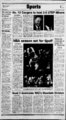
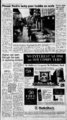
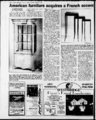
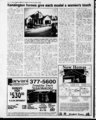
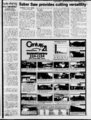
Show "f ,fcl.)IHlll II. I III1IIJ i.nn-- m " JI.IlllJit.iiiJWIM-ri- l The Daiiy Herald What are stress and tension headaches? Headaches arc one of the most common problems that people seek a medical professional's help for. The prevalence of headaches suggests multiple causes con. tribute to their development. Headaches can.be divided into two classifications, which are often confused by patients. Tension headaches refer to painful muscle contractions associated with stress. Migraine headaches imply the abnormality exists in the blood Cssfox By Dr. Valton Xing vessels of the head and neck. Complicating this simple scheme is the fact that many suffer from mixed headaches implying that the cause of their symptoms originates from both. It may feel as if there is one specific nerve center causing pain when there are actually several head and neck structures involved, producing painful sensations within this area. These include the cervical nerve roots, the vertebral arteries, the cranial periosteum - the area covering the hones that comprise the skull, the joint capsules and ligaments surrounding the vertebra, the outer membrane or the annulus fibrosis of the discs and the joint surfaces. Other areas capable of producing headaches include the sinuses, ears, eyes and teeth. There are also many generalized disease processes that produce headaches such as various types of infections and hormonal irregularities. The second cervical nerve root is the nerve responsible for sensation to the posterior aspect of the skull and may become entrapped, contributing to many headache syndromes. Psychosocial stressors such as poor communication in the home, financial pressures or dissatisfaction with one's job also seem to interact with the anatomic and physiologic abnormalities causing the development or exacerbation of headache syndromes. Most medical diagnostic tests do very little in demonstrating abnormalities that contribute to or cause headaches. Those tests commonly used by physicians include evaluation of movement and posture. computed tomography, CT scans, magnetic resonance imaging. MRI, bone scans, myelograms, arteriogram and electrodiagnostic testing of nerve function. Despite expensive diagnostic efforts, most headache syndromes are diagnosed principally by historyThe history should include any historical events such as trauma, work requirements, posture, social stressors as well as any family history of similar problems. The headache should be described in terms of its onset, duration, severity, location and treatments that tend to reduce or alleviate the symptoms. Only a very small percentage of ttening people have a life-thabnormality such as a brain 'mor. abscess 01 hemorrhage or a disease such as meningitis, which is the cause of their sy vrfoms. Treatments for headache vary widely. Successful treatment for tension headaches requires identifying the specific musculoskeletal abnormalities involved. Passive treatment modalities such as deep heat, massage, traction or spinal manipulation may be helpful provided they are combined with an appropriate, exercise program. Medications are also useful as another form of treatment but should never become the primary focus of all treatment for headaches. Questions for The Doctor Is In rolumn can he sent to Doctor Js in. C0 UVRMC Public Relations, J 034 N. 500 West. Provn. 84505 or All letters or calls call 371-720are anonymous. Doctors appearing in the rolumn will c hange according to the nature of the X-ra- re self-direct- 7. question. t , , , - - eftsin's surgery: NEW YORK Sometime soon, a surgeon will gently press a scalpel into the chest of the president of Russia. The blade will easily slit Boris Yeltsin's chest open, right down the middle, from one end of the breast bone to the other. Parting the skin and the fat layer below, it will create a valley of white with a few Ted patches of muscle. No blood will gush from this wound. A few severed capillaries will bloom like tiny roses. After the surgeon splits open the it takes about 10 breast bone seconds with a power saw that looks and sounds like a hand drill he'll be able to see his quarry. Covered with yellow fat, it will shift restlessly in Yeltsin's chest, t, right-lef- t, right-lef- ;- - ' , , , - , n n D, Friday, November 1, 1935 A By MALCOLM RITTER AP Science Writer right-lef- Is In w jofa U Landers 01 I3ArtsD3 Headaches can be complicated - irwnT.1 delicate job o f plumbing y p f'f yp 4 y a"' " a j 5 f T t. It's the most famous heart in the world, a marvelous pump with a plumbing problem. And the surgical team will set out to fix it. Yeltsin's upcoming coronary bypass operation has attracted worldwide interest because of its political implications. But the surgery itself is routine. It's basically plumbing. But instead of pipes, the surgeon deals with floppy tubes about as wide as soda straws, and procedures so intricate that he has to peer into the chest through magnifying lenses. Some of the arteries that snake over the surface of Yeltsin's heart are plugged, choking off deliveries of blood to parts of his heart muscle. The solution: Create bypasses around the obstructions, attaching new vessels to act as detours for the nourishing blood. For Dr. Alfred Culliford and for thousands of other doctors, in this hospitals around the world is routine surgery. And on an autumn morning, he and his colleagues at New York University Medical Center delve deep into the chest of a 72 year-old man to perform just such an operation, a triple bypass. Before he can fix the heart. Culliford needs some spare parts from his patient to use as grafts. He finds one behind the ribs: the mammary artery, which normally carries blood toward the diaphragm and abdominal wall. Other vessels could take over this artery's job. Culliford cuts it and teases it loose from the ribs, leaving it attached to its source of blood. Then he lifts the loose end out of the chest and puts it on a sterile pad. While Culliford works in the chest, another surgeon slits open the patient's left leg from ankle to groin and gently extracts another spare part: a vein, as long as the incision, that looks like a giant earthworm. It is long enough to supply a couple of tubes, six to eight inches long, for grafting to the heart. As it happens, this vein is defective. The patient's right leg yields an acceptable one. Now it is time to give the man's heart its first rest in 72 years, reducing the heart muscle's need for blood, helping it stay healthy when its blood supply is cut off for surcery. Culliford inserts a clear plastic the inch-witube into the aorta carries all the that superhighway and blood away from the heart another tube into the heart itself. machine is When the heart-lun- g turned on. blood drains from the heart tube, nicks un oxygen in the -- off-whi- te de " y 4 a. "If 1 APPhOtBB Dr. Alfred Culliford, right, operates during triole bypass surgery while another doctor pours cold salt water over the heart to reduce its need for hlood during the operation at New University Medical Center Oct. 21 in New The triple operation is similar to one that York York. will he performed on Russian President Boris Yeltsin. The surgery can foe described as very delicate plumbing job. through the edge of one of the vein sections and through the blocked artery near his slit. As he sews the needle passes back and forth tubes. Then Culliford cuts a slit at between his two twee7ers, pulling each end of the tubes so that the a very fine filament. ends flare out and flatten like a Finally the tweezers pull on both ends of the filament, drawing cobra's hood. With a scalpel, he prolies the one end of the tube down tight on heart's fat to find a place in one top of the artery , the cobra hood fitting over the hole. Culliford ties about half a dozen knots in the filament, making each with a quick motion of his hands and pressing it down to the graft with his forefinger. Now for the blood supply. Culh liford punches a hole about of an inch across in the empty aorta and sews the other end of the jrraft to it. The detour is complete. He attaches the other graft to another artery and the aorta the V 1 J same way. Finally, he sews the mammary artery to the third blocked heart artery. The triple bypass is complete. Now. it is time to back out of the chest. Writh a shock from a pair of paddles, tlie heart heats normally again. The tubes from the heart-lun- g machine are taken out. Culliford makes sure A nurse monitors a heart-lun- g machine during open heart surgery Oct. that his grafts aren't leaking, and 21 at New York University Medical Center in New York. Doctors in backwatches for clots in the blood oozman. ground perform a triple bypass on a into the chest cavity. His ing had of the been given blood thinline downstream until flattens. the patient plugged artery apart, The heart collapses into the blockage. He gently cuts a quarter-inc- h ner to keep his blood from clotting machine, and slit, which opens like a mouth in the heart-lun- g chest, no lonser inflated by blood. clots now would show that another The surgical team keeps pumping about to speak. as long as drug to counteract the thinner had in cold fluid and pours salt With two tweezers water over the heart from a stainchopsticks, able to reach deep into taken effect. he .begins to sew. He "When you see clots, you can less steel pitcher. The cold, like the the chest rest period, cuts the heart's need passes a curved needle, as tiny as a go home," observes Dr. Frank C. for blood. fingernail paring from a baby. Spencer, rhaiman of ttie surgery machine, and flows back through the aorta tube so it can make its normal rounds of the body. The heart pumps until still another tube injects a cold dose of potassium solution. Gradually the .heartbeat grows weaker and slower. The spikes in the green line on the electronic heart monitor grow weaker and farther and farther Now, more than two hours after the first cut in the patient's skin, it is time to install the bypasses. The leg vein is cut into a pair of, rr one-fift- is W ri long-handl- ed 0 ice-co- ld Mother in Mesa did what she thought was best Dear Ann Landers: 1 just fin- those children. They need her now No Name. No State ished reading the letter from Dear N.N.N.S.: Before you "U.M., Mesa. Ariz." and it made me cry. She said she wanted to purcondemn Mesar please make sue her dieams and wasn't able to sure you have the facts straight take care of her children. So she She did not abandon her chil- divorced her husband und gave him custody. 1 am the grandmother of two children whose mother walked out when her children were the same ages as "Mesa's." J can tell you the consequences of that mother's act because 1 have lived through it. Her husband will probably marry a woman who has her own children, as my son did. His stepchildren are Advice college graduates with promising careers. His own children are totally messed up high school dropouts. Mesa wa clinically One is an alcoholic. Both had drug dren. and sought professiondepressed in their teens. problems Who does "Mesa" think the al help. She planned to ee her children regularly and look the stepmother will favor, her own children or the stepchildren? No course of action she felt was hist wish lier welL for everyone. l woman's career is worth sacrificAnn Lander: Please Dear when lives :hey children's her ing need her. Tell her to forget uhout icprint the letlei uhout ilicr gill who u snake and it pursuing her dreams und raise picked up poisonous full-tim- e. iv,fe'" Leaders Columnist I'm a therapist and have used that story with patients who become involved in one after relationship another because they refuse to learn from experience. Thank you. Ann. Forewarned in Florida Dear Florida: Here it is, and I must say it's an excellent examThank ple of you for asking: A young girl was trudging along a mountain path, trying to reach her rrrundmothers house. It was bitter cold, and the wind cut like a knife. When she was within sight of her destination, she heard a rustle at her feet. Looking down, she saw a snake. Before she could move, the snake spoke to her. He said, "I am about to die. It is too cold for me up here, and 1 am freezing. There is no food in these mountains, and 1 am starving. Please put me under your coat and take me with you." "No." replied the girl. I know your kind. You are b rattlesnake. If 1 pick you up. you will bite mc. and bit her. ve your bile prisonous." "No. no." said the snake. "If you help me. you will be mv best friend. I will treat you differently." The little girl sat down on a rock for a moment to rest and think things over. She looked at the ticautiful markings on the snake and hud to admit that it was the most beautiful snake she had ever seen. Suddenly, she said. "I believe you. I will save you. All living things deserve to he treated with kindness." The little girl reuched over, put the snake gently under her coat and proceeded toward her grandmother's house. Within a moment, she felt a sharp pain in her side. The snake had bitten her. "How could you do this to me?" site cried. "You promised that you would not bite me. and 1 trusted you'" ' You knew what 1 was when you picked me up." hissed the snake us he sluhercd awav. department at the NYU School of. Medicine. 1 -Well, not quite. Culliford binds the breast bone back together with ; seven loops of stiff wire. And he " sews up the skin incision. .Even after a successful hypas; operation, doctors keep a close eye I on the patient. Within the next 2ST hours, dangerous bleeding could . begin. Or the heart, assaulted the surgery, could abandon h pumping rhythm and start quiver- ing like a dog shaking off water. This ventricular fibrillation could! kill within five minutes if not treat' ed. In all. 30 to 40 things can after the patient leaves thc . . . operating room. Spencer says. But he's optimistic aboifi; Yeltsin's chances. Judging from-- ; the reported comments of Dr. theiS Michael DeBukey renowned heart surgeon who has . been consulted in Yeltsin"s case - " Spencer said the Russian presi-- , dents chances of recovery are ' " around 95 percent to 98 percent. ,', 1 w-wro- ng Women need Pap test yearly By RICHARD TRUETT Orlando Sentinel f O. What is a Pap test? How often should 1 have one? K. The Pap test developed in the I ?(ls bv Dr. George Papanic-- 1 laou is one of the most common , tests in medicine and has con- tributed substantia!! to the reduc- 1 tion of cervical cancer deaths. " The lest consists of examining microscopic cells from the cervh ' of the uterus. Some women with abnormal cells delected by the tfst develop-- , cancer slowly or not at all, while others develop cuncer rapidly , Understanding the genetics of the human papilloma virus CHPV) has helped explain the difierenccs. li is possible to identify precancerous growths und determine HPV strains whether the high-risassociated with Tapid progression arc present. The frequency of the disease appears 10 b tin the rise, in part because of more sexual activity by younger people. The cancer also lends to iiccur in women with AIDS. Sexually activr women should start with annual Pap tests. The time between trsts can he increased for women who have three negative tests und only one. sexual partner. HPV is sexually transmitted. Sexually active women with multiple partners are advised to have Pap tests at least unnuully. The Pup test requires the services of a highly trained cytology, technician to txamine each -- k J! ! |