| OCR Text |
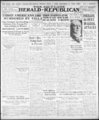
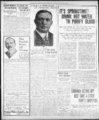
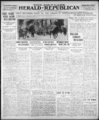
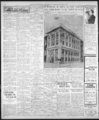
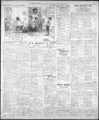
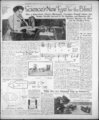
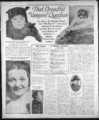
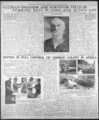
Show THE HEX? A LP-I- ? E PUBL1 CAN. SALT T.AKE CTTV. T7TAH. PUNDAV. APT! IT. 2 101G -- Blind Student Reading Printed Pace of a Book with tho Aid of the - -- Phonopticon, Which Gives Special Sound for Each Letter. I :'v:;::J XX ; ; HUM 1 " 5 vl iff ,11 u , i 2- - -- fed WW 1 4 , cms , ; ' - ' j -- : - -:-- . v lA&t -- 'J m "C. the upper crystal is deflecting the wheel, current into the right-hanthe one with the greater number of segments producing the higher tone. The main, circuits are indicated by heavy lines. The light lines trace the path of the deflected currents. As now constructed, the electrical connections and the sound producing device weigh 35 pounds, and the "eye" weighs but two pounds. But all the parts except the "eye" can be put into one box and the weight of the "eye" can probably bo reduced to a fraction of a pound. The practical value of the phonopticon will not end with the reading of print. A machine of this sort may ultimately be constructed to enable the blind to "see" pictures. "The selenium crystals, which wero perfected at our university, open up almost unlimited possibilities," says Dr. Brown. "I see no reason why the phonopticon cannot eventually be perfected so that pic- - . . . . - . ' " students and teachers of BLTND blind recently hae been made acquainted with a new Invention which seems destined to revolution'ze the education of the sightless. These students and teach ers had the unique experience ti reading the pages of an ordinary printed book by the sense of hearing. The new tr iracle of science is accomplished by a machine called the phonopticon. It Is the Invention of Dr. F. C. Brown, a professor In the physics department of the State of Iowa, who has been working for over two years perfecting an instrument which would convert Eight Impressions into sound sensations. In reading with the instrument the operator rnove3 a little box, called the "eye," over the line of print. Then through receivers fastened to nls ears he hears musical tones. Each letter gives out a certatn combination of tones, a sort of melody, and the more complex the shape of the letter, the more complicated is ill be the "tune." "W." instance, sounds like "Mi Do, Mi Do. Mi." or, in the key of C. liko Uni-'ersit- paratus with telephone receivers. Tne electrical circuits are so reguIated that when the "eye" passes over white paper only, no sounds are heaid. This Is because the sound producing devices are put Inabranch circuit, and the current goes into try-ou- ctruetor, after learning the princl- ple of the instrument, distinguished letters without Srtt being told how ' , . -- '1 i's -- -- J 1 - - : : example, "IJ"' will give out "Do" and ".Mi" together at first, then the "MP will be heard alone. Dr. Brown is planning a phonopti con of three or four selenium crj s- tals, the same number of segmentedwheels, to produce three or four dlf- , - " n.' ; - -- .v, . tm v um t.Hon miruuuceu mio cicui sisiance 10 us now is ,A the main circuit. The resistance in rangement Is necessary to detect the this case is furnished by Felenium more complex characters, .r.nd willcrystals. "When tho "eye" moves make reading a more exact opcra. 4$ 3 2. . How the Word Live" Sounds , V L Even Pictures May Yet Be "Seen by the Blind y "C C. K. O, E." The machine was given Its first t at the Berkeley, thorough California. Institute for the Deaf and Blind. Here, out of 20 blind pupKs only two failed to distinguish letters with the phonopticon. Hua Buckingham, Jr., an honor graduate of the University of California and a blind man. and Dr. Newell Perry, president of the National Society fcr the Higher Induration o: the Blind, examined the machine and were enthusiastic over its possibilities. I). i. WidtT. an industrial training In- - " - . raVA:;A , ; Through the Phonopticon. i "The selenium crystals open up almost unlimited I see no reason why the phonopticon possibilities. cannot eventually be perfected so that pictures can be readily distinguished by the blind." Dr. F. C. Brown, University of Iowa. i uw p & C 1 s f-- i n W I Notes of the Word T "with" as H Transmitted from the Printed Page to the Ear of the Reader. increases their resistance to the cur-fo- r r,.nt RO that si nart of the electricity shot Into the branch circuits where the tones are produced. The tones are produced by passing tho current through segmented wheels, which are similar to tho com mutators on ordinary electric motors. The current Is made and broken, or "interrupted," several ilraes a second by the broken rims of the wheels. The rapid interruptions of the current are changed into definite musical tones in the telephone receivers. There Is cne selenium crystal and one segmented wheel for each tone the machine gives out. The upper part of a letter affects crystal num- ber one. A current is shot into the whetl having the greater number of which focus the light on these and on the page, together with a smnll tungsten light, are all contained inthe "eye." The illumlone end of the "eye" is nated slit at over the letter "W" so that passing box-shape- rmm-- - ) i d tures can be readily distinguished by the blind." problem of changing waves Bound waves was Into light solved when Dr. Brown, after ten years' work, tucceeded In producing "The whole - - ' - How Paper Is Made of Wood. x .APER derives its name from the Y-fact that it was originally made A by the Egyptians from papyrus, a mush-likplant formerly common In Egypt along the Nile. Today paper is largely made from vegetable fibres and cellulose. When it was found that the fibres the cotton and flax plants were best adapted for making paper, and the uses ,of paper were" few. the rag- man did a flourishing business in old rags to keep the paper manufacturers supplied with raw ma-terial. The rags were first allowed to rot to remove the substances en-the cellulose and were then beaten into a pulp to which, water was added. Tho pulp was then placed in a sieve and drained, and subjected to heavy pressure which united the fibres and produced paper. By the modern method the rags are boiled with caustic soda, which separates rpllulosfi fibres, and nlaced In, .a thp a. U III ill lit; in v ia.i,lx t uiici a OGI WilU s e Mllb 'Hill vjjeu 11,1,1 11 ir,.a ' u i-jia- l Various Parts of the Phonopticon. The" EYE" Diagram Illustrating the Principle of the Phonopticon by Which Printed Letters Are Transmitted as Sounds to the Ear of the Eeader. W V 1 MAIM CIRCUITS SELENIUM CRYSTALS FOCUSING J.EMSES ILLUMINATED SLIT PASSIM G OVER. LETTER ... W f j 23 . TELEPHONE RECEIVERS Lr , Ul PRODUCING APPARATUS producing the they were expected to sound. Since segments, then-foreof nr. or blind a In a ml similar tone. way the persons, highest that time have lower anothe.' Iowa sets an a of them letttr part iie Ijv.jer. wheel going which results in a lo .ver .r.Krd Dr. fJrown for an equipment. box."Z.f d'V.'Ic? consists, of the pitch. With a letter having an upot electrical right stein, like "W or "'TV both high "j.-e"eye. a uc nvl a souivl prod Ins ey- and low tones are heard at oucc. For , st coa-rxectio- r? mj " IKJU. V U V5 a large-sizeselenium cryBtal. Thega wo as have seen, are so crystals, sensitive to light that a change to darkness as small as a stem of a letter so affects them that they force on electric current into the apparatus which produces tho sound. ' A similar instrument, the optophone of Fournier d'Albeperfected in 1913, was' not successful because the simple selenium which he used was not nearly as sensitive as the crystals. d The War Disease of "Trench Foot" fact that the present war from previous conflicts that foot 'troubles to be guarded against come not from excessive marching, but from too much standing still. Is responsible for the recognizable malady, which has come to be known to the military surgeons as "trench foot" This disease is due to standing all day in the cold mud and slush of the trenches, and has been thought worthy of special attention by the French Academy of Medicine, which has issued a special series of leaflets to the solders, telling them how to avoid It. After pointing out that such lesions occurred particularly in the feet, owing to standing in, water, liquid mud, or melted snow, to wearing damp boots, to contraction of the leather and consequent constriction of the foot, Interfering with tho circulation and producing swelling of the foot and the lower part of the leg, the leaflet proceeds to make certain recommendations. It advises that the men should make every effort to render the bottom of the trenches as dry as possible by means of drains and catch-pitand laying down shingle or hurdles; that men should not remain standing or sitting longer than is necessary; that they should wear large boots; and that it is worth while to wrap the feet with strips of paper under the sock and to keen two naira of boots ana SOcks, so that those not in use can be dried. The most. important point, however, is to take the boots off at least onco a day, and to rub the feet and lower parts of the legs thoroughly for ten minutes, while at the same time the toes and ankles are moved energetically. Afterward. a dry pair of socks should be put on. The soldiers are counselled to use the opportunity of being in camp or billets to give particular care to their feet and boots, washing the feet and rubbing them at least once a day. The boots should be cleaned of all mud, dried without hardening them by bringing them too near the fire, Bad greased. Further, if he has rea- son to fear that his feet are begin-o-f Blag to suffer from cold, the soldier is advised to take off his boots, rub the feet gently, put on sabots filled with straw, and see the medical THE of-buyi- Acer at once. prof. Sheridan Deleplne discusses the prevention of "trench foot" from a scientific point of view and scribes a waterproof silk bag for the foot and leg, to be worn inside the boot. He considers that a wter proof top boot, so devised as to leave a fairly wide air space between the foot and ankle and lower part of the leg, would be more efficient and nrob tha" ably more convenient, provided . ... a iiittLtuicu uacu was iigni ana aid not interfere with movements. de-crusti- ng ; les -- ( ) , V.'- A SOUMD U White Mice that Safeguard Lives on Submarines. 3Ub-mersib- tl ( il accompanying musical how the words "LIVE" and "WITH" sound to the ears of the blind with a phonopticon of -netrnmnrti mice are kept on board come upon entering garages filled .victim . having three crystals. . , , Auuiiu. uio 0.0,.0 ui. me ueaa man aa with fumes. The "eye" can be regulated to fit made the following report: pink as if he were alive and as gasoline to guard the As the result of an autopsy on a 'The victim was found dead on the blood had been whipped into hi" any size of type. Also, if necessary, crew against the dangers of a grooved device can be atached to the d00r of his garage. The cheeks by a walk in the cold wind." enable tha reader to keep to the line. death by asphyxiation from the deadThe findings of post mortem engine or tne car was still ly fumes of gasoline. While the and the small room were: running was filled with gas fumes. are at sea the mice are Lens Arrangement at Point "Marked lividityofa pinkish color "Fifteen hours will. after at Where Reading Slit Passes all death to run internal organs congested; liver about permitted full of fluid blood "and brain Over Letters. The fumes of gasoline (abroad It is known as petrol) being heavier than air sink, to the bottom of the A Suhmarine Officer and His White Mice. ves3el and gradually ascend as they A ,j SELENIUM Increase in volume. White mice are CRYSTALS extremely sensitive to these fumes and immediately set up a lusty a squealing which M'arns the submarine sailors of the approaching .'V;-- : J ' V ,. LEN5 danger. Without such an alarm, it 13 t said, the deadly fumes would so crew that overcome the stealthily they would sink into unconsciousness before they had a chance to eave themselves from asphyxiation. The wide use of gasoline is re4 I! STIt .V new a fatal for and usually, sponsible t although arter a little practice a malady known as "petromortis." It blind person of ordinary ability, can is simply asphyxiation from gas or i kit follow the line of print without dif- automobile gas fumes. A cases of of number petromortis ficulty. The accompanying diagram shows have been reported from various the scheme of the phonopticon. ,The sections of the country. These were selenium crystals, and the lenses chiefly automobllists who were over show y i . ; . knives tear the rags to pieces am mix them with water to make a pulp, This pulp Is bleached with chloride of lime and mixed with alum and a kind of soap to give a smooth sur face. The way man's discoveries operate to supply his needs in the progress of civilization is notably illustrated In the production of paper. Under the old method the big supply re- quired today for" newspapers and other uses could not have been pro-duced. The discovery that pulp could be made from the trunks and limbs of trees came to the rescue. It was found that by boiling wood shavings In strong solutions of caustic soda, in receptacles that would withstand very high pressure, the wood fibres were separated, and a. very good quality of cellulose for paper manu- facture produced. As a result of this nsner fnior ic mn,n uittuo disnnvprv wanj' WHITE CIRCUITS Pjti The notations DEFLECTED U n s, over the blaclc line of a letter, this cutting oft or light from the crystals tlon. 1 ' ' 3r ;)vorx a tkasS 1 ' f d : ax Remarkable Electric Mechanism Translates Pr in fee? Letters In to Sounds Quickly Learned by the Sightless, and Removes All arriers Between the Blind i :! and the World of Print ' U' 'V v- CX )rff v v 4 ! 3 . jy-- . . |