| OCR Text |
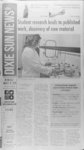
Show tivEu 6 DIXIESUNNEWS.COM Shawn lenevan uses radio toe BY create student opportunities BY CODY ECKMAN ' - 4 0 , Uni- . .4 . , full-tim- JL day-to-d- 1 L 1 t ' , i ,,,) i ,,, , '' i , t ,, , . ''': - t , , , h, 1 , , I i , , i, 1 , :.,' - ji Palo , lathen i .t, - , . 1 ' ' ' 3eorge jolt of ;tate U , - i , ) '1 I , ' , . . , ' ' ? 1 - 1. 7 , 1 It i , - n 1 C 40 CP ow ,,,,,,,w, ; t :I' "4,'' ,,, oltl,ti - nail c , brane x ' I '.--, 4' ''''' f i.t "As club e Z edam iution ( 'wt. ''i vu( ens trs ont , . opp( your There x 1 7-- si ''' rn I , 7Ant: libtthetY:destehc ant ay campus. His time has seen some heavy changes, which he's spearheaded. Two years back, he oversaw a change out of nearly all the equipment at the radio station and last summer brought new automation software and hardware to bring the station up to date with all the major local stations. "We aren't using Radioshack mixers and iTunes," Denevan said. "These were all pipe dreams seven years ago... Now they're here." DSU hosts two radio stations: 91.3 - Radio Dixie, which plays alternative and indy music during the day in the p and rap and 100.3 and KDXI, evenings, a classical music which has focus at day and plays jazz at night. Radio Dixie is owned by the university hip-ho- . eno 1ot 4 Radio at Dixie State versity has changed dramatically in the past seven years, and Shawn Denevan has been there for all of it. When Denevan started at DSU in late 2010, he took a 60 percent pay cut to work part time in hopes of the job becoming something better for him. After working his way through a master's program and putting in his dues e at DSU, he's now staff and as the Director of Radio Dixie, he takes care needs of of the on housed the radio stations Whet nuch ti holds a Shawn Denevan, director of Radio Dixie, goes over national news during his morning radio show Jan. 25. Denevan Dixie in it at State his seven University. and has radio years station impoved for the continually vision The I iranch roxirn while Utah Local Radio owns 100.3 and leases it to DSU to add to the variety of stations and increase opportunities for student involvement. Because there's so much available airtime, Denevan welcomes volunteers, students and professors who have some radio experience and want to be involved. "We're on the air 247, so when someone approaches me with an idea for programming, I always have time to fill," Denevan said. "These community volunteers come in on their own time, are paid nothing and produce quality programming." Students who take Denevan's radio course are expected to be on the air weekly. Other programming you come to him with an idea he'll say, 'Let's make it happen; let's figure it out." Denevan's vision for Radio Dixie is completely He said DSU has the best student radio experience in the state, if not the comes from local talent and even some of the staff at DSU. Matt Eschler, Bob Oxn ley and Matt are a few of the number of professors who host talk shows on the air. Melanie Sponaugle, human resources coordinator at DSU,D.Is for 91.3 Saturday nights from 6 p.m. to 9 p.m. "When I moved to St. George, I heard the music at 91.3, and I got excited," Sponaugle said. "It was more to my tastes than the other stuff. We're playing the best music in town." Her interest caused her to seek out the radio course and get involved with campus radio where she met Denevan. Smith-Lahrma- student-oriente- d. region. "You can go to BYU and watch, or you can come here and do," Denevan said. His main concern is exposure and letting everyone on campus know DSU has a radio station and that there are opportunities for student involvement. Denevan encourages anyone and everyone to come sign up for his radio course, MDIA 2380R. "I think everyone should take it," Sponaugle said. This semester, the radio ever-growi- "Shawn's amazing," Sponaugle said. "He really facilitates our ideas. When ng course boasts a class size of four students. Denevan said that many students on campus haven't heard anything about Radio Dixie. "I really appreciate the classical music they play," said Leighton Ipson, a freshman music major from Washington. "No one else in town really has that." Denevan wants more students to come and be in- volved with the radio, invite their friends to listen to the programming, and become a part of DSU's identity. He has a goal to make more rgam bentio 'ion-p- e rl mo be onc p r Hu: onal on de omes vert: Ever pport oug 5rgsy ervic( with ti Con iSA is able in coming years. "I get to come and do what I love every day, and they pay me for it," Denevan said. "I just want to spread that around." St M I Check please: DSU's JAN. 31 1865 - Congress passes the 13th Amendment, abolishing slavery in America (passes 121-24- card-unfriend- i I , , t t , ; R 1 1 s.. 1995 - President Bill Clinton authorizes a 520 billion loan to Mexico to stabilize its ri economy. I I Source: onthisday.com C RDS. Qt mi SPECIAL DAys NEXT moNTH',.;,F,i A Xf: 1st February Freedom (from Started slavery) Day. by Mayor Richard Robert Wright Sr. to celebrate the freedom of all , z ,. I 13th Amendment outlawing slavery. In a thousand years they willstill celebrate Freedom Day, as long as Futurama is accurate. 5th February Shower with a Friend Day. Do you remember the early days of Facebook? Do ' student tries to pay their fees with cash and card. At Dixie State University, students are unable to use cards at the cashier's office and incur a fee when paying online. A 1; BY JONN HOLLAND trippyjedi you recall liking at least a thousand pages with titles like "Let's make tomorrow national SLEEP day!!" This is what happens when you click like to anything you find funny. Now we have a Shower With A Friend day. Do you want to tell your best friend? Source: thefoctsite.com Instead of credit or debit cards, students paying tuition and fees at the cashier window are required to pay with cash or check, which is something they don't have easy access to. Dixie State University students are accustomed to using plastic in their every day lives. They use cards at the gas station, when buying groceries, or out with friends at the movies. Mary Foremaster, a junior dance major from St. George, said she doesn't always have cash on hand or use a checkbook, and for students who try to pay a fee, it can be a hassle when they are told they have to pay with cash or check. "Barely any people really policy ly ). Americans, and commemorates Abraham Lincoln's signing of the I scholarship positions avail- use checkbooks anymore or have cash at all everyone just uses cards," Foremaster said. Students who are not eligible for federal loans and pay tuition with their own money are the most affected by the inability to use debit cards. Foremaster said: "If someone's like 'Hey, you can only pay with cash and that's ie... It's definitely not the preferred thing." Christy Jensen, head cashier revenue specialist, said the decision to only accept cash or check payments was made by Business Services because there is a fee for processing debit and credit cards. Scott Jensen, executive director of business services, said there is a lot of cost associated with accepting cards, which come from banks and the Payment Card Industry, who charge businesses a significant fee to process those types of payments. The administration had to look at the whole picture and decided it is cheaper for the school to not take card payments at the cashier window. "By accepting cards at the window and not having a convenience fee, like this third party does, it increases the cost for the student who wants to pay cash or check because now they are basically supplementing those charge card fees," Scott Jensen said. According to an article called "The Complete Guide to Credit Card Processing Rates and Fees," on the Merchant Maverick website, the credit card companies Visa, Mastercard and Discover to name a few charge businesses a percentage of each transaction, plus a 2.10 percent flat rate. The business can account for some of this cost to them by charging the customer a convenience fee or For r nts, pay the flat rate. ater Other fees, according to the With article, are charged by PCI, forlcir the WS, terminal fees, pay- the list Dixl ment gateway fees e am goes on. With all these fees, frown providing the ability to pay with a card can get expensive. tuden le fly Scott Jensen said, "The y the biggest three reasons we went IA hey that direction a few years ago eir a were budget cuts, the simple ha cost of managing personal i data the required protec- fore tion of that and just the fact that we needed a different HI solution to manage our busi- be ness." love Christy Jensen said not accepting cards at the cashier incl al window forces students who need to pay with a credit card, n to pay online where they o i would be required to pay the t Nant accompanying fee. orevc There are other options Whi available to students needing to pay fees other than the ca- - I efts Demob shier window. They can go to gra du make and select my.dixie.edu there a payment, where they will agi be given the option to pay ywl with credit card, debit card or Ka) electronic check. Banks such SU as Wells Fargo and Mountain ore, America provide school loans Fetvei for students who are eligible. ,ith The ability to pay with a desic, card at the cashier window trig will not happen in the foresee- depay able future, but having the tnedi option to pay online is a step speci toward making the payment process easier for students. 1t, . - L |