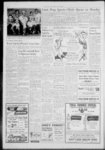
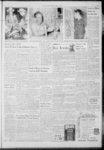
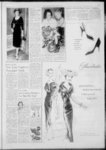
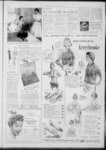
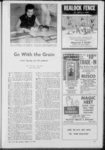
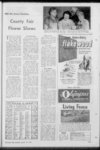
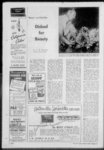
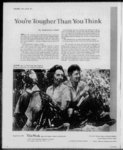
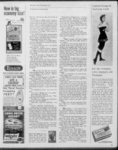
| Show ' r" - '- rr - 4 ' LI ' ' iv W01 - ‘ - " r ' :: -- w Terms Available — 36 Months to Pay Expert Erection Ssrvico — Fr Estimate Visit Our Sales Office f HA ' 'V Mrs Lea Erickson Jr 278 N Main SL marks out a pattern before cutting She INgcrsol 13th SOUTH 112 7-54- 20 know that a perfect fit depends first on careful placement of pattern to fabric WEST The Colorado Fuel and STREET Iron Corporation “ $nnoo Yes Give Yea $10 mm YOU A when laying out the pattern by Susan TRADE - IN Sewell Tvlbuiu hewing WrtUr FIRST step hi the actual making a garment is to lay the fabric out a level surface being sure Pie grain runs straight and true The various pieces of the pattern are then placed on the cloth The pattern grain markings torresponding accurately to the grain of Pie fabric Smooth out with a barely warm Iron any wrinkles In the pattern that win hinder an accurate layout On the pattern guide sheet rirde the layout plan matched to your pattern sie view and fabric width Be sure to watch if your fabric has a nap Adequate allowances should be provided tor when cutting a garment This is so that minor alterations in fit and design can be made if necessary The following are seapi seams for unallowances for cutting: derarm (blouse sleeve) shouldgr and waistline of blouse Vinch seam within the silhouette (yokes panel edges and skirt gores) waistline of skirt and neckline seams for the sleeve and blouse armholes and seams to be enclosed within facing Allow two inches for hems In sleeves and three inches for hems in skirts THE a MARKER by notching a piece MAKE for each seam allowance When laying each pattern piece check It lor the following: a length-wisgrain posh Oon b whether or not to place on a fold a whether or not to duplicate (collars cuffs to provide facings) d whether to cut singly or through two layers Place the large end of the pattern W the cut end of the material This Is so tMt all the remaining fabric is in the uncut area Place the stralghter edge of a pattern next to the straight edge of the fabric toolvage or fold) Plan the positions of the large pieces first These usually determine the fabric cloth layout Leave no unnecessary unused allowbetween pattern parts Let the seam ance edge of one part touch that of the next whenever possible Dovetail outjutting parts of one piece with those of another also narrow parts of one with wide parts of another Try to have scraps left in one piece rather than in two To do this you may have to make a lengthwise fold which is off center and Just the width of the pattern section e pep-him- s Salt Lake City Sunday August 19 1956 We FOR YOUR OLD SCREEN OR STORM DOOR lif- - ON PURCHASE OF A Or place a pattern section which does not need to be cut on a fold next to the sejvages leaving the uncut portion next to the fold Flan the entire layout before cutting XVTHEN cutting duplicate sections at one tV time for the right and left sides of the body have the two right or wrong sides of the fabric face to face When cutting duplicate sections from a fabric that is opened out to a single layer reverse the pattern piece This way the marked side of the pattern is face up for one piece and face down lor the second Pin the pattern to the fabric when you have completed the plan for the layout Begin at the cut end where the layout waa started Recheck the grain position of each pattern piece before pinning Pin the grain position first Make sure that the grain line marked on the pattern is the same distance at both ends from the selvage or the fold line Pin the pattern to the fabric at the two ends of the grain line Pin the outside edges of the pattern to the fabric at approximately three to intervals This will prevent shifting of the fabric In cutting as well as marking Place the pins at right angles to the pattern edge The distance that pins should be placed from the edge depends upon the method of marking seams and the effect of the pin marks on the fabric If the fabric is satin velvet taffeta or some other texture or delicate color which will readily show pia mai-kpin through the seam allowance Only needles or the finest silk pins should be used within the garment pieces TIIE cutting line whenever the CHALK allowance is to be extended beyond that on the pattern Use the seam allowance gauge to chalk even distances from the seam line Join the marks with a smooth line Cut to give a perfectly smooth edge and an even allowance throughout the length of a seam Cut curves In one stroke but turn the shears as you cut Notches are Intended to indicate matching points on seam lines not on outside edges of seam allowances Therefore for quicker and more accurate results translate the notches on the pattern to the crossmarkings on the seam line NEW “ PICTURE WINDOW COMBINATION DOOR! T W wMtx Inta SEAT THE MIC! mmykitrtiy town on (hit OooM ALi-MET- Hr Cmplt Awning Window boar Hnd Carport Until Jan 1957 Pay Nothing Tfcfl Only $500 a Month SUNDAY PHONE El 9 8397 or KU nusco COMBINATION m - CO ImB Wn loho CWy Utah Hionot Eotory nri W- CO I Nam Addr WW j poil I J I ftM City HEET five-inc- h GIVES YOU FULL TIME COMFORT HEATING GLASS LINED HEAT GLASS CANT s A MODUCT Of A O WASATCH INTERCHANGES: RUST SMfTM JMMAftCIf FURNACE & APPLIANCE 4444 SO STATE SH I ! yatioN Marmot ion oboot dib —no- I Hfot ftUSCO EM !M NO- Sdl Ub WINDOW ia SPECIAL MICE ON COMBINATION WINDOWS I— -- MAH THIS COUPON WINDOW RUSCO COMBINATION J 7 44 Woe Sih Sooth I City Utoh nr d I Nmw wifHovt THE EASY AM 47 WAY WITH THE "HOME MAGAZINE' II i 7 |