| OCR Text |
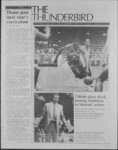
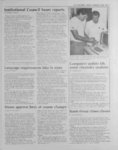
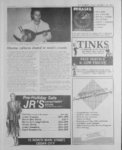
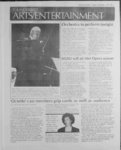
Show THE THUNDERBIRD MONDAY NOVEMBER 23, 1987 PACE 9 r i Orchestra to perform tonight The SUSC Orchestra will present a variety of musical works in a concert tonight in Thorley Recital Hall. The student-performe- d concert which will include the works of Jacques Offenbach, Bela Bartok, Antoly Liadov, n Pietro Mascagni, and the VV.A. Mozart is free to the public and begins at 8 p.m. The concert, under the direction of Virginia K. Stitt, begins with Offenbach's overture to La Belle Helene. This bubbling, happy overture by the composer of the famed Parisian Can-Ca- n set the mood for one of the funniest operas ever penned, a spoof of the famous Creek story about Helen of Troy, the face that launched a well-know- thousand ships. Cowboy's Lament by the great Hungarian composer Bartok was originally part of a set of pieces for young pianists. It was later arranged for small orchestra and wider audience by Bartok's friend and pupil, Tibor Serly. The Legend of Kikimora is by Liadov, a 20th century Russian composer. Most of Liadov's orchestral music is story related, based on early Russian fairy tales. Among the memorable moments n in this piece is a hauntingly beautiful melody played by the English horn. The concert ends with some pieces from Mozart such as his Symphony No. 31, Paris. well-know- KGSU will air Met KGSU-Fthe radio voice of SUSC, will once again carry the TexacoMetropolitan Opera broadcast series, scheduled to start this season with a special four-hoMet Marathon Saturday. The live performances will be heard Saturdays, in stereo, over the 10,000 watt student-operate- d station that is headquartered on the SUSC campus. The radio broadcasts usually start at noon, KSGU-FManager Ben Felix said, but occasionally start earlier if the operas are particularly lengthy. KSGU-Fhas sponsored the TexacoMetropolitan Opera Radio Network broadcasts for several years. The opera will be followed again this year by syndicated Chicago Symphony Orchestra broadcasts to round out KSGU-FM- 's "Classical Saturdays." As a prelude to the 1987-8- 8 broadcast season, the Met Marathon ur Joseph Silverstein, who also played a few violin solo pieces , conducts the Utah Symphony Orchestra during its performance at Cedar High School on Thursday. Silverstein performed 'Rondo in A major for violin and string, D. 438' by Franz Schubert and Antonin Dvorak's 'Romance in F. Minor, Opus I V for his violin solos. The event , attended by a number of SUSC by ASSUSC and Cedar City Music Arts Committee. students,was Opera season will feature highlights from past Met broadcasts as well as interviews with Metropolitan Opera artists. It starts at noon on the SUSC station, 91.1 megahertz on the radio dial. Texaco has sponsored the Met broadcasts for 48 consecutive years making the TexacoMet relationship one of the longest in radio hestory. The regular Met season starts Dec. 5 with Puccini's "Tosca" and ends April 16 with "Werther," Massenet's opera of unattainable love. KSGU-Foperates weekdays from 7 a.m. to 11 p.m. with "Top 40" programming interspersed with news, public service announcements and special programs such as "Dimensions in Science" and broadcasts from the National Aeronautics and Space Administration. "Classical Satuidays" start at 10 a.m. and end following the Chicago Symphony broadcast. The station does not broadcast on Sundays. 'Octette' cast members grip cards as well as audience THEATRE REVIEW BY NICOLE BONHAM The cast of The Octette Bridge Club, under the watchful eye of student director James Loder, gripped the opening night audience and kept a firm hold. Sometimes humorous, always emotional, the Stage Two drama dealt with alcoholism, insanity, aging and insensitivity all in the comfortable setting of a postdepression era living-rooConnie, played by Erin Yaei, provided ample humor, while comedy with her Oprah Winfrey-styl- e Cheryl Ann Cluff played the bitter, narrow-minde- d oldest sister Martha to perfection. Alice, Ann and Lil, played by Fran Knorr, Susan Harp and Kathleen Etor respectively, served as the strength of the play, occasionally drawing attention to themselves, while acting as the support for the other roles. Chrissie Scoville's roie of Nora provided an example of the ideal middle-clas- s mother, sister and wife, which brought into perspective the oddness of the rest. Possibly the two strongest characters in Octette were Mary, played by Lisa Berger, and Betsy, played by Enid Atkinson. Atkinson did an excellent job of slowly drawing the audience into the plight of her character. I Although dragging at certain points through out the first act, the bridge players caught the audience's attention in the beginning of act two. The development of many of the main characters had been slow to this point, with good purpose. This allowed the audience to suspect the problems among 32T Mwwmuiras!! Enid Atkinson was among those actors in 'The Octette Bridge Ciub' who drew the audience into their plight, f the women, without them being confirmed. Then in the second act, the jealously, resentment and discord that had only been hinted at, became apparent. Bitterness and insensitivity that had been building up between Martha and Betsy came to a head, with the audience startled at the emotion involved. In spite of the problems Betsy develops, the audience was able to identify with this character more than any other. Perhaps because she is the youngest and is reaching maturity in a time of change, 1934 to 1944, the audience is aware of a quality in Betsy that is not seen in the other roles. This character, in spite of supposedly suffering a nervous breakdown, emits a sensible normalcy that calls attention to the stiff, traditional beliefs of the other women. Believable humor prevents the play from creating a dark mood. One particularly good scene is when Connie chronicles her experience of being left on the ground, temporarily paralyzed, with only her corset to shield her from the rain. This character's outrageous humor helped move the play along. Soft lighting, along with mellow period music that played between acts, helped establish a warm, intimate atmosphere. pictures and detail and to attention showed furniture period created an authentic set. The Octette Bridge Club opened with a responsive audience. The closeness of the cast showed through in the ease of which they performed together. This, along with an emotional conclusion, held the audience's attention to the finish. Knick-knack- s, 1 |