| OCR Text |
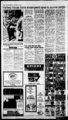
Show B, Landers B2 Weddings B3 Th Dally Herald 133 Sunday, April 21, President "When you're desling with families, you have to be able to give a little. All it takes is a little patience, a little understanding and time." Max Robison needs to allow welfare reform Family Friends volunteer A of mine recently observed that Washington, D.C. completely shut down for days during last winter's snowstorm because they could not plow their way out of the mess. Utah received more snow than Washington, D C, yet the roads were immediately plowed, and most Utahans noticed n co-wor- v II ii little disruption. The administration of welfare programs is a lot like snowstorms. While Washington has been trying storm of to plow through a r welfare bureaucracy and red tape, in 3 years, Utah has plowed a clear for thoupath to sands of welfare recipients. However, the Clinton administration is currently trying to place more roadblocks in the way. The Congressional welfare reform bill which President Clinton contained vetoed on Jan. 9, a funding mechablock grants nism which would eliminate the entitlement status of welfare and 60-yea- 19. ( I A--' : V A Targeting Social Issues would allow states the flexibility of designing programs w hich assist the poor. With block grants, the federal government would continue to fund welfare, but would allow the people of Utah to design and administer the program. While ample child care dollars and the security of children are necessary for successful welfare reform, in no way can these political excuses be used as reasons to wield the veto pen. Rather. President Clinton should have signed the Congressional welfare reform bill for the following reasons: jLa " (!) it . ; v 'v V v' 1 ' a m Flexibility to design appropriate programs. Washington's approach has not worked in welfare. Many different programs such as Aid to Families with Dependent Children (AFDO, Food Stamps and Medicaid have conflicting rules and regulations, making it difficult for recipients to become Utah's Single Parent Employ- ment Demonstration Program (SPED) has received 56 waivers of these rules and regulations from the federal government in order to deliver services in a manner which is conducive to Utah. With block grants, these time consuming waivers would not be necessary. A focus on employment rather than entitlement. By the year 2002, the Congressional bill ends the entitlement status of welfare and sets a broad mandate that at least 50 percent of the recipients "on AFDC must be in some type of a work program. If a recipient wants financial help, he or she must work or participate in activities that directly lead to work. This is in stark contrast to current welfare laws which recipiexempt many ents from participation in work related activities and entitle all eli- - gible individuals to benefits. Coordination of many different programs. One of the great frustrations with the current wel- fate system is that many programs w hich are targeted at low income families have rules which conflict with one another, t For example, recipients who f s work their way off AFDC may still need medical assistance for their ! tfafldren. but they become ineligible for Medicaid because they are , no longer on AFDC While mov- V ing off AFDC is the goal, the supportive services needed in order to ' accomplish this are unavailable. ' "Block grants would allow stales to ' alleviate many of these conflicts. cWelfare reform will protect chil- rdjen and help families because more people will be assisted by (&Jtes that are better able to meet needs of their unique popula- able-bodi- ed ,t I'ft 'm Presided Clinton just needs to allow it Masm Bishop u currently the Ugislatiw coordinator for the Office of Family Support, Department of Human Services and an adjunct Instructor in political science at Stilt Lake Community Col- - . if gt . Sarali Robbina, 10. of Provo, play Junior Monopoly with Max Robison. latt, IPirogram By JANET HART Daify Herald Ufestyte Editor Like any child, Sarali Robbins just wants to keep up and be friends with the other children in her Provo neighborhood. But unlike many children. Sarali faces challenges in her life which make keeping up a little difficult Because of the effects of spina bifida and hydrocephalus, the must spend most of her in a wheelchair. And while day Sarali can maneuver that chair with the best of them, some of the everyday activities of childhood are beyond her abilities. "Sarali really wants to play with kids and gets out a lot... but a close personal friend is something she needs." said her mother, Janice Robbins. Thanks to a program from the Easter Seal Society. Sarali now has that close friend. As a volunteer with Family Friends, Max Robison visits her every week to play games, go places or just hang out. The Family Friends program started in Utah County in January of last year and is designed to help families care for children with chronic illnesses or disabilities. Volunteers with the program must be 5 old or older and be willing to commit to a specific child who is or younger for at least nine months. Max started viadrj Sarrii ia November and norrnatfy spends two hours twice a week with her. The retired Orem man said working with a physically disabled child is something he's wanted to do since moving to Utah County in the -- mid-1980- s. wkPro-as- of Oram. Max visits Sarali avary a voluntsar with tha Family Frianda gram through the Easttr Saal Socisty of Utah. Tha program matchaa senior vol- - marches seniors Tm handicapped myself and I know the stigma attached to someone with a handicap. I know what the problems are. at least some of them." said Max. who used to be a social worker in California. When Max heard about the Family Friends program, he contacted Utah County Program Coordinator, Stephanie Sparks, and set up a preliminary interview and training. Most of the training involved various situations a volunteer might encounter and the reasons behind Family Friends. They try to get the kind of child you want to work with and 1 said a girl 10- - to It took a while, but they found Sarali." said Max. Tm supposed to be a friend to the child and a help to the family. They need lots of extra help with just ordinary things. I can't lift her (Sarali) but I can spend time with her.' he added. The time Max and Sarali do spend together gets divided between a number of activities. Board games are a favorite when the two decide to stay around the Robbins' household, but they've also traveled to the University Mall and the Peppermint Place in Alpine. Max said the two also have plans to go to Salt Lake City and visit Temple Square. They also want to visit the Orem Recreation mal LesureoniTa.rt.ri,-.- u - 1 fl " ,"V "- ''. V-- ; . - V " . d ' ' ' , y .. V r" ? f V ' ." d- - " - L ( . "tu i Y .. , " i S - i - ) - V ' tt . . -- k,with activities oast Sparks to eliminate any possible problems. SpaiVs said another important part of being a Family Friends volunteer is providing respite for the parents. After three months. children in needl nMh parents can choose to leave the child in the care of the volunteer while they take a nap or run errands. Many times having an older person in the home also gives the parents a needed sounding board. Sparks added. "My house used to be a mess. With Max coming. I have more and more time freed up to take care of things around here." said Janice, who must also keep track of husband Francis, daughter Lena. 6. and son. Nate, 7. "He entertains all my kids. They all get excited w hen Max is coming." Max encourages other seniors in the community to look into the program. He said all anyone really needs to have is a little time, patience and understanding. "When you're dealing with families, you have to be able to give a little. All it takes is a little patience, a little understanding and time," he explained. Sparks said there are a number of children in the County w ho could use a Family Friend. Examples of those on the w siting list include a Payson boy with epilepsy who loves baseball and animals; a Orem girl with Down's Syndrome w ho loves puzzles and old premature books; a baby in Provo; and a untaars with child ran who hava various disabilities. hewvo,vlsiK. a Family Friends volunteer may 8 contact Sparks at or Ann at or write to the Easter Seal Society at 638 East Wilmington Avenue. Salt Lake City, Utah, 84106. 763-849- SaraN Robbina, of Provo. rtdoa her aoeciaJhr daaianad Mcvda naighborhood aMawalk. SaraN he aptna WCMa and hrtro-cepha- iu and struc-i- ie at tknaa to kaeo uo with atttar eMdm hmr own ago. Tha Family Frianda Program haa ghton her a cfoaa trtond ht of her own. |