| OCR Text |
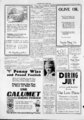
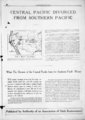
Show THE TIMES-NEW- S, NEPIII, UTAH. CENTRAL PACIFIC DIVORCED FROM SOUTHERN PACIFIC "These acts (that is, the Pacific Railroad Acts) The Supreme Court of the United States said: Railroad Pacific Company and Union Pacific Railroad CompTTvided that these'two railroads (Centra neither should descriminate In favor of or pany) should be operated as one continuous line, and that against the other ' ' system of transporta"The Central Pacific, with its eastern connection at Ogden; forms one greatconnections and steamand roads with its tion between the east and the west, and the Southern Pacific, to coast coast from for transportation transcontinental system boat lines, forms another great ' some parts These two great systems are normally competitive for the carrying trade in and norcentral from and to traffic the and for moving from the east to the middle west to the coast, coast destined on lands the traffic, which thern California, including a great volume of ocean-born- e is desor eastern and western points, intermediate and seaboard across the continent to the Atlantic tined from the latter points to foreign ports via SanFrancisco or other Pacific coast points." t " PHr$ "The proof Is ample that the policy of the Soutern Pacific system has been to favor transportation on its lines by securing for itself, whenever practicable, the carriage of freight which would normally move eastward or westward over the shorter line of the Central Paciflic Railroad and Its connections for rule its own much longer and wholly owned southern route. This course was limited by an arbitrary Pacific from the stock purchase in 1901 until the Southern Pacific domnated Union time the the during Pacific case. The the 'unmergef in 1913, as a result of the decision of this court in the Union The Southern Pacific owns and controls the is obvious. course conduct of this of motive compelling freight transportated by its road southernly route, and receives 100 per cent of the compensationa for of the freight, because the fraction but it route receives Central Pacific the Over lines. water and to the east. from Ogden take the up carrying Union Pacific with Its eastern connections Southern Pacific lines. the haul the for by of longer and freight the solicitation procurment dictates of the congress regulating interare eliminated legislation by While many practices, formerly in vogue there are state commerce, and through rates and transportation may be had under supervision, of freight and delivery the carrying prompt elements of competition in the granting of special facilities, the ready and agreeable adjustmtnt and settlement of claims, and other elements which that legislation does not control. Self-intere- st THIS MAP SHOWS the territory covered by the Southern Pacific lines, the Central Pacific Railroad and th Union Pacific Railroad, and graphically discloses the position of the Central- Pacific Railroad, affected by the recent decision of the Supreme Court of the United States. "It is conceded in the brief of counsel for the defendants that 'it is true of all such systems that, other things being equal, freight is preferentially solicited for the 100 per cent haul" "We reach the conclusion that the stock ownership in the Central Pacific acquired by the Southern " Pacific is violative of the Sherman act within the principles settled by this court "We direct that a decree be entered severing the control by the Southern Pacific of the Central Pacific by stock ownership or by lease. What The Divorce of the Central F acific from the Southern Pacifh Means THE money necessary to be spent for shops, teix minals, double track lines, and all necessary improvements connected with a heavy volume of traffic ' depends entirely upon the routing of such traffic; likewise the employment of men, the use of coal, materials and supplies of all kinds, including farm products necessary for the subsistance of men employed on the railroad. The distance from Sacramento to the Utah gateway is 694 miles, and from San Francisco 782 miles, as against Sacramento to El Paso 1261 miles, San Francisco to El Paso 1283 miles; Sacramento to Galveston 2149 miles, San Francisco to Galveston 2171 miles; Sacramento to New Orleans 2454 miles, San Fran cisco to New Orleans 2476 miles. The Supreme Court states that the Southern Pacific admits, "It is true of all such systems that, other things being equal, freight is preferentially solicited The Supreme Court itself says: "The proof is ample for a 100 per cent haul." that the policy of the Southern Pafific system has been to favor transportation on its line by securing for itself, whenever practicable, the carriage of freight which would normally move eastward or westward over the shorter line of the Central Pacific Railroad and its connections, for its own much longer and wholly owned southern route. - - The compelling motive of this course of conduct is obvious. The Southern Pacific owns and controls the southerly route, and receives 100 lines per cent of the compensation for freight transported by its road and water Over the Central Pacific route it receives but a fraction of the freight because the Union Pacific with its eastern connections, takes up the carrying from Ogden dictates the solicitation and procurement of freight to the east. Any interference with the for the longer haul by the Southern Pacific lines." Self-intere- st Supreme Court would rob Utah and Nevada of their just rights. Published by Authority of an Association of Utah Businessmen |